IT'S NOT A WILLPOWER PROBLEM
Your cravings aren't random. They're hormonal.
One short night raises ghrelin (hunger) and lowers leptin (fullness) — your body is chemically pushing you toward the pantry.
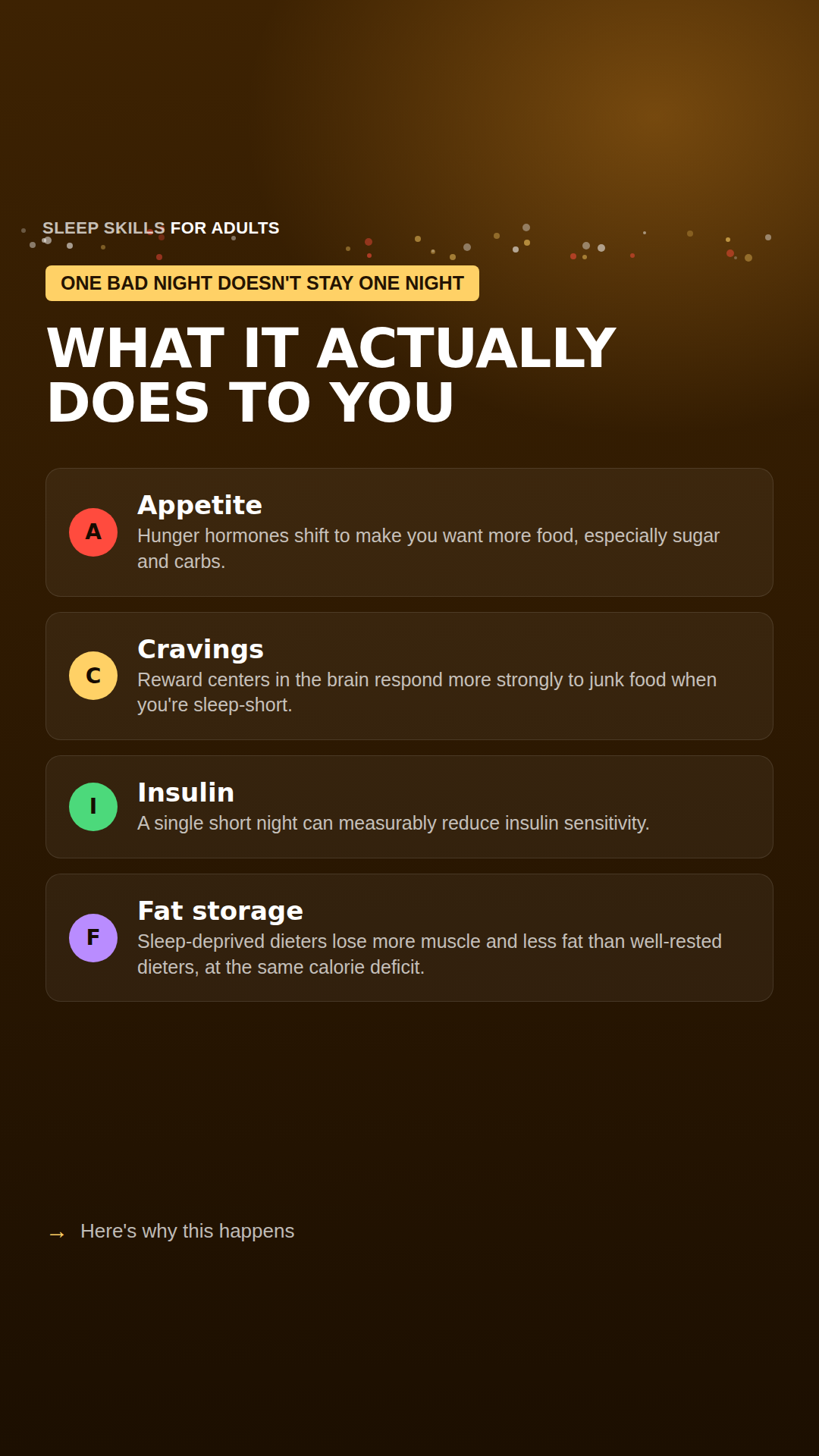
What It Actually Does to You
Appetite — Hunger hormones shift to make you want more food, especially sugar and carbs.
Cravings — Reward centers in the brain respond more strongly to junk food when you're sleep-short.
Insulin — A single short night can measurably reduce insulin sensitivity.
Fat storage — Sleep-deprived dieters lose more muscle and less fat than well-rested dieters, at the same calorie deficit.
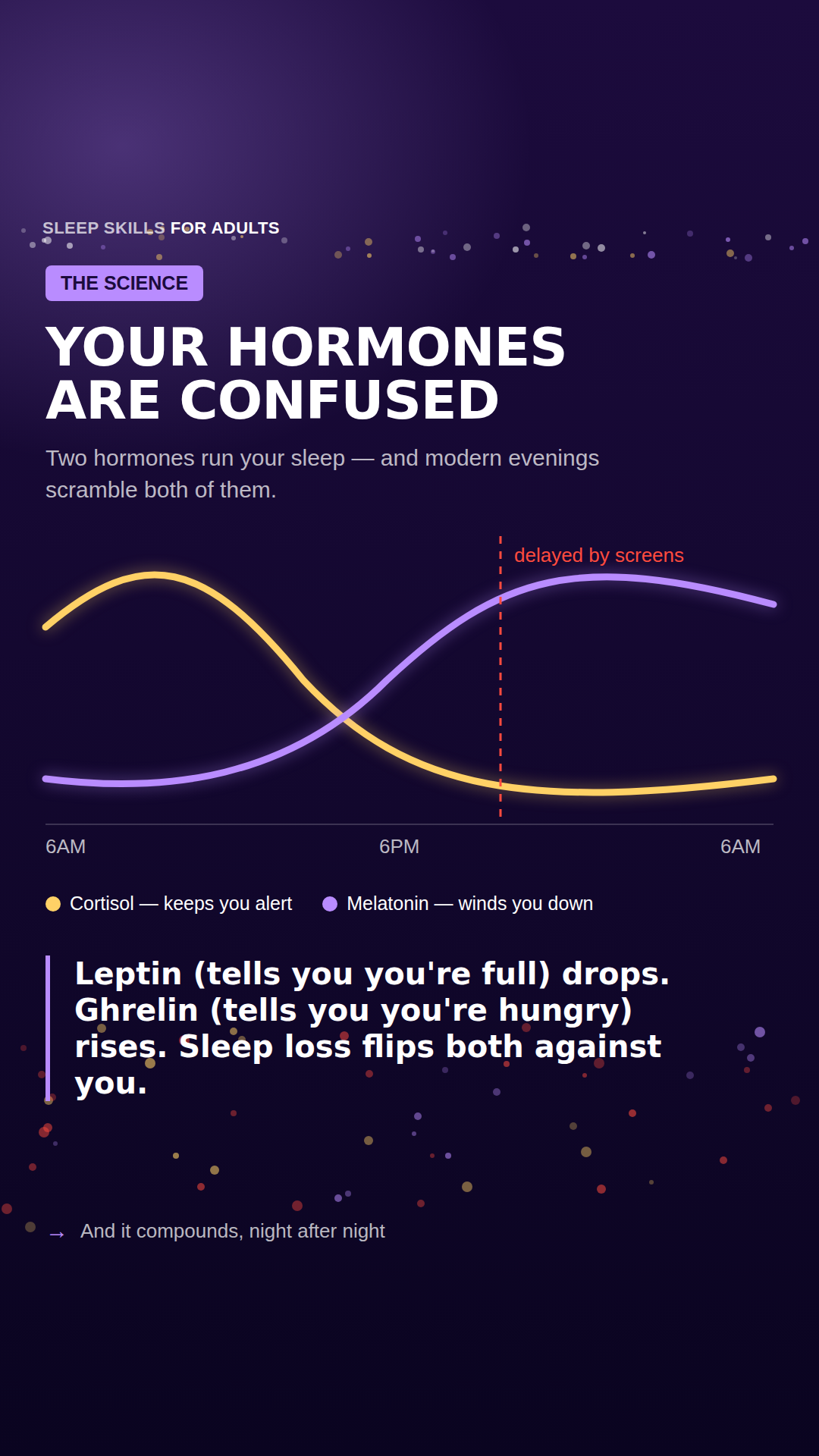
The Science
Two hormones run your sleep — and modern evenings scramble both of them. Cortisol keeps you alert; melatonin winds you down.
Leptin (tells you you're full) drops. Ghrelin (tells you you're hungry) rises. Sleep loss flips both against you.
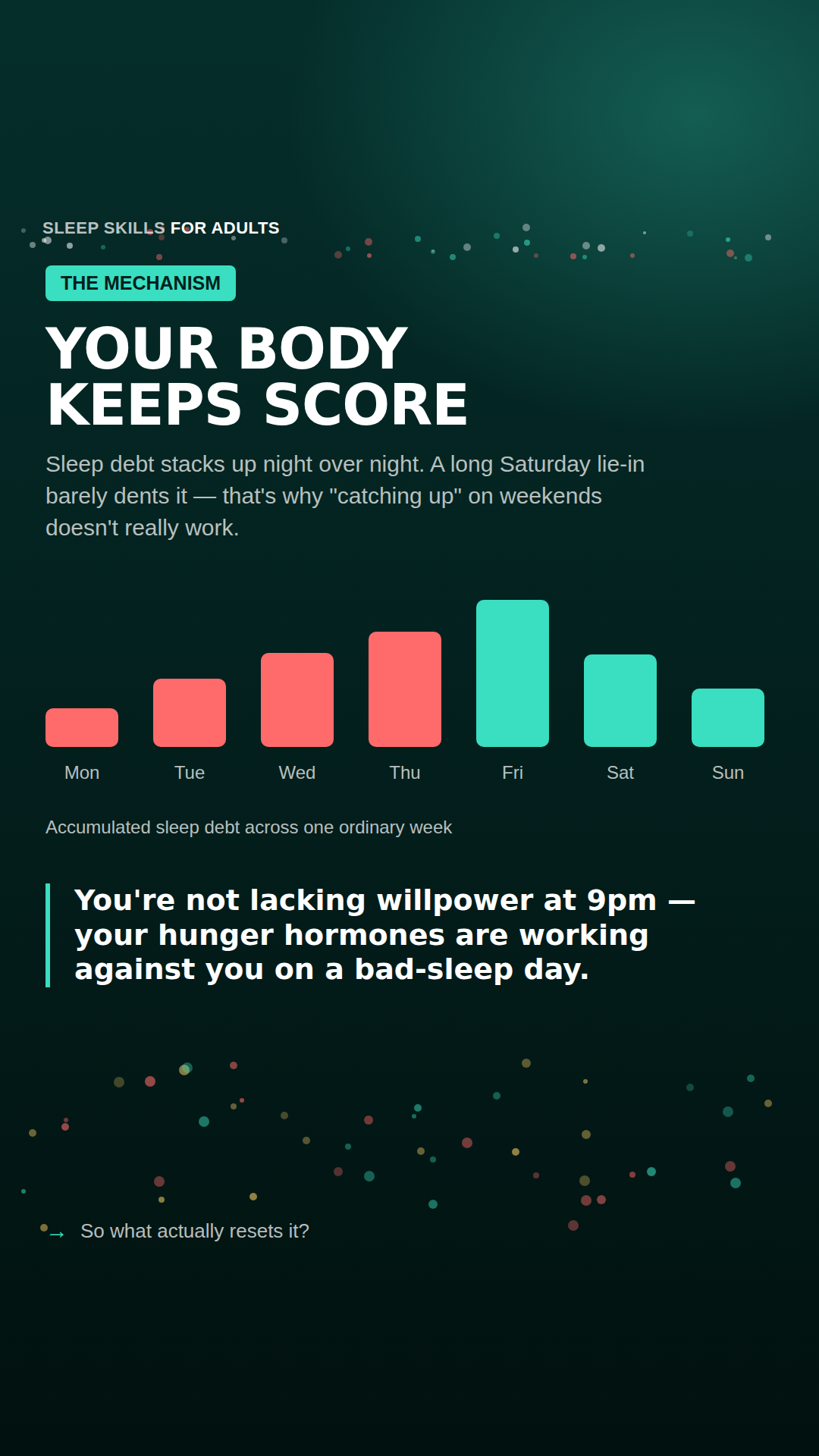
Your Body Keeps Score
Sleep debt stacks up night over night. A long Saturday lie-in barely dents it — that's why "catching up" on weekends doesn't really work.
You're not lacking willpower at 9pm — your hunger hormones are working against you on a bad-sleep day.
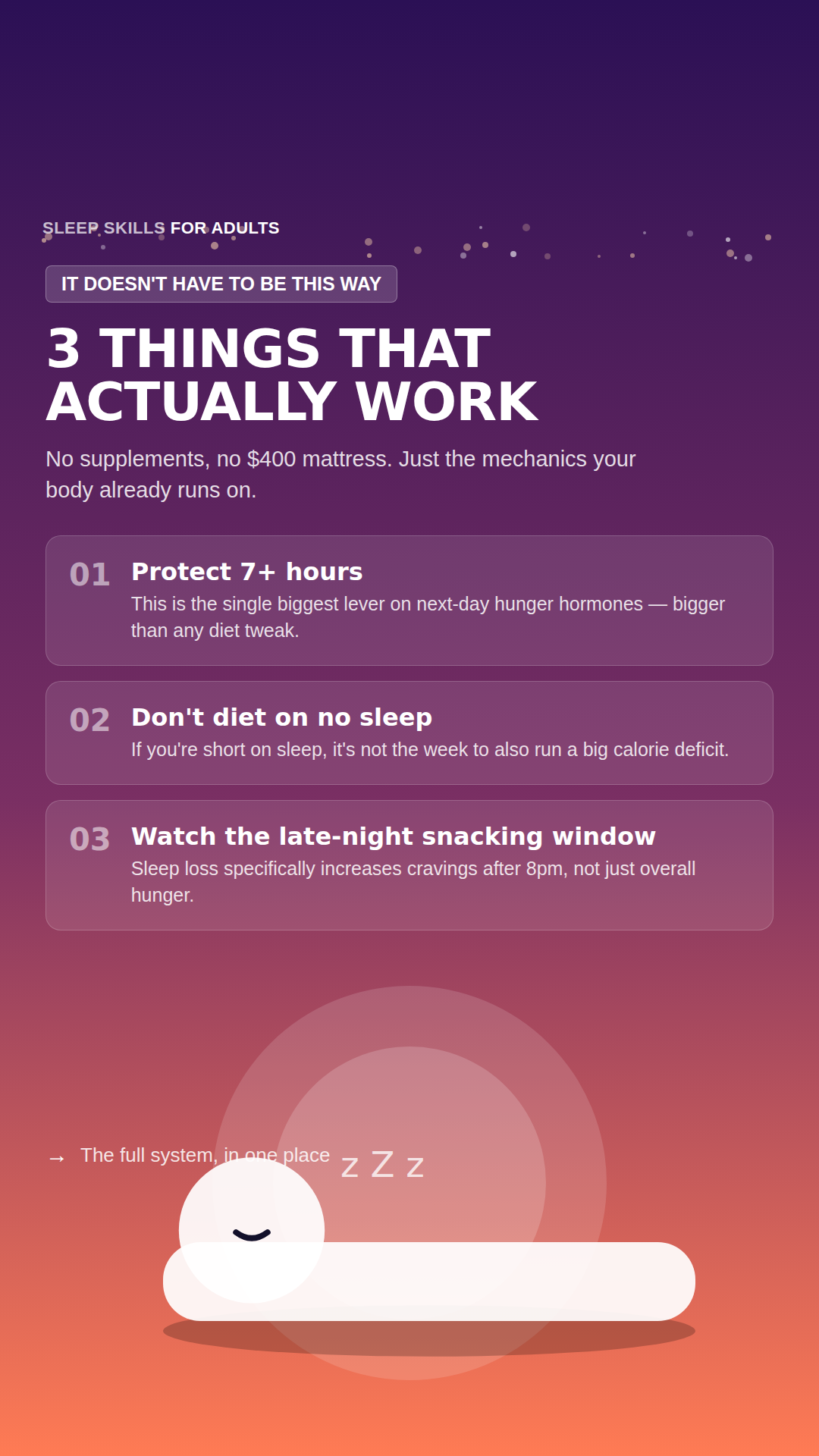
3 Things That Actually Work
- Protect 7+ hours — This is the single biggest lever on next-day hunger hormones — bigger than any diet tweak.
- Don't diet on no sleep — If you're short on sleep, it's not the week to also run a big calorie deficit.
- Watch the late-night snacking window — Sleep loss specifically increases cravings after 8pm, not just overall hunger.
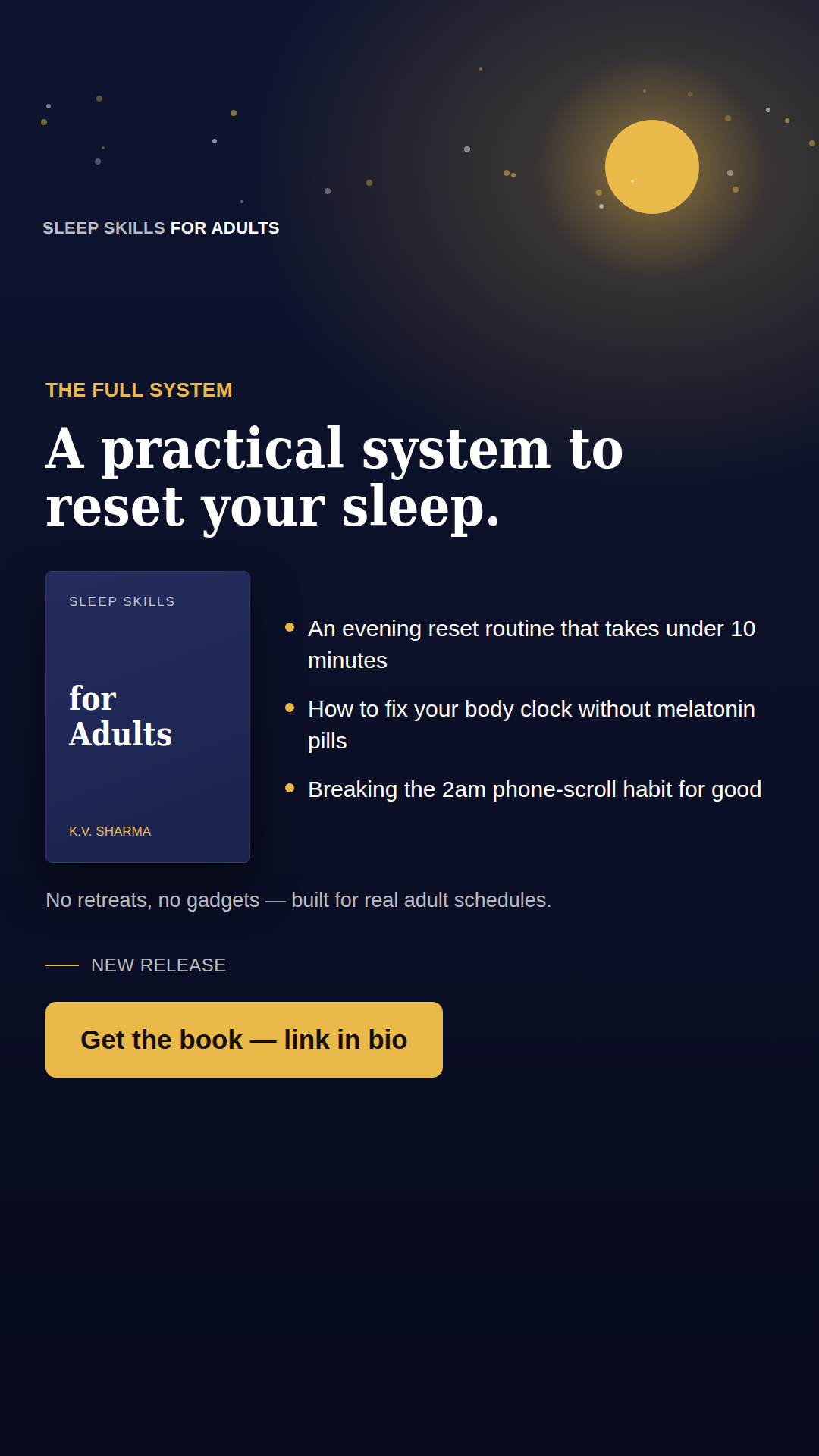
A Practical System to Reset Your Sleep
Sleep Skills for Adults — no retreats, no gadgets, built for real adult schedules. Inside:
- An evening reset routine that takes under 10 minutes
- How to fix your body clock without melatonin pills
- Breaking the 2am phone-scroll habit for good