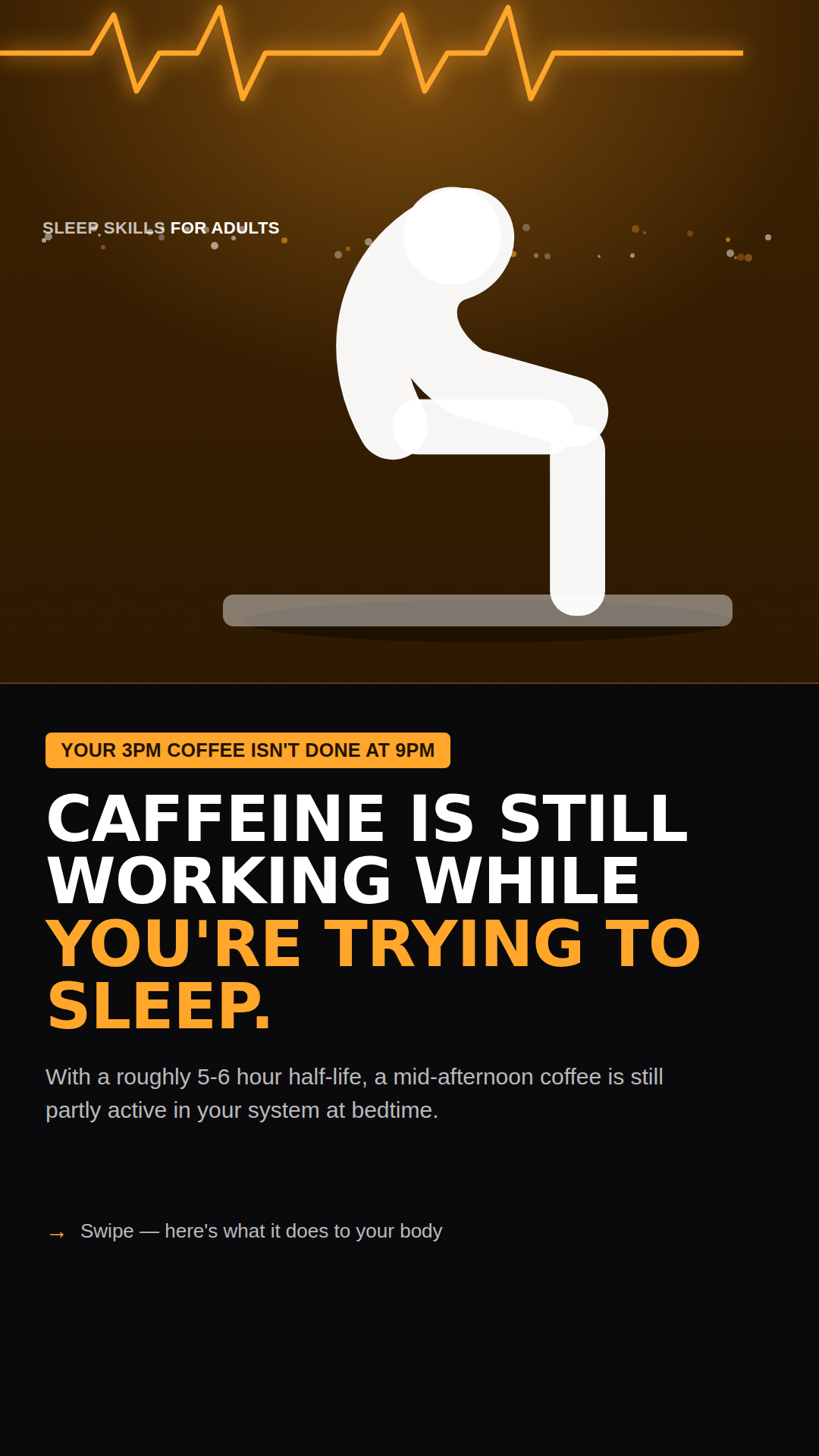
YOUR 3PM COFFEE ISN'T DONE AT 9PM
Caffeine is still working while you're trying to sleep.
With a roughly 5-6 hour half-life, a mid-afternoon coffee is still partly active in your system at bedtime.
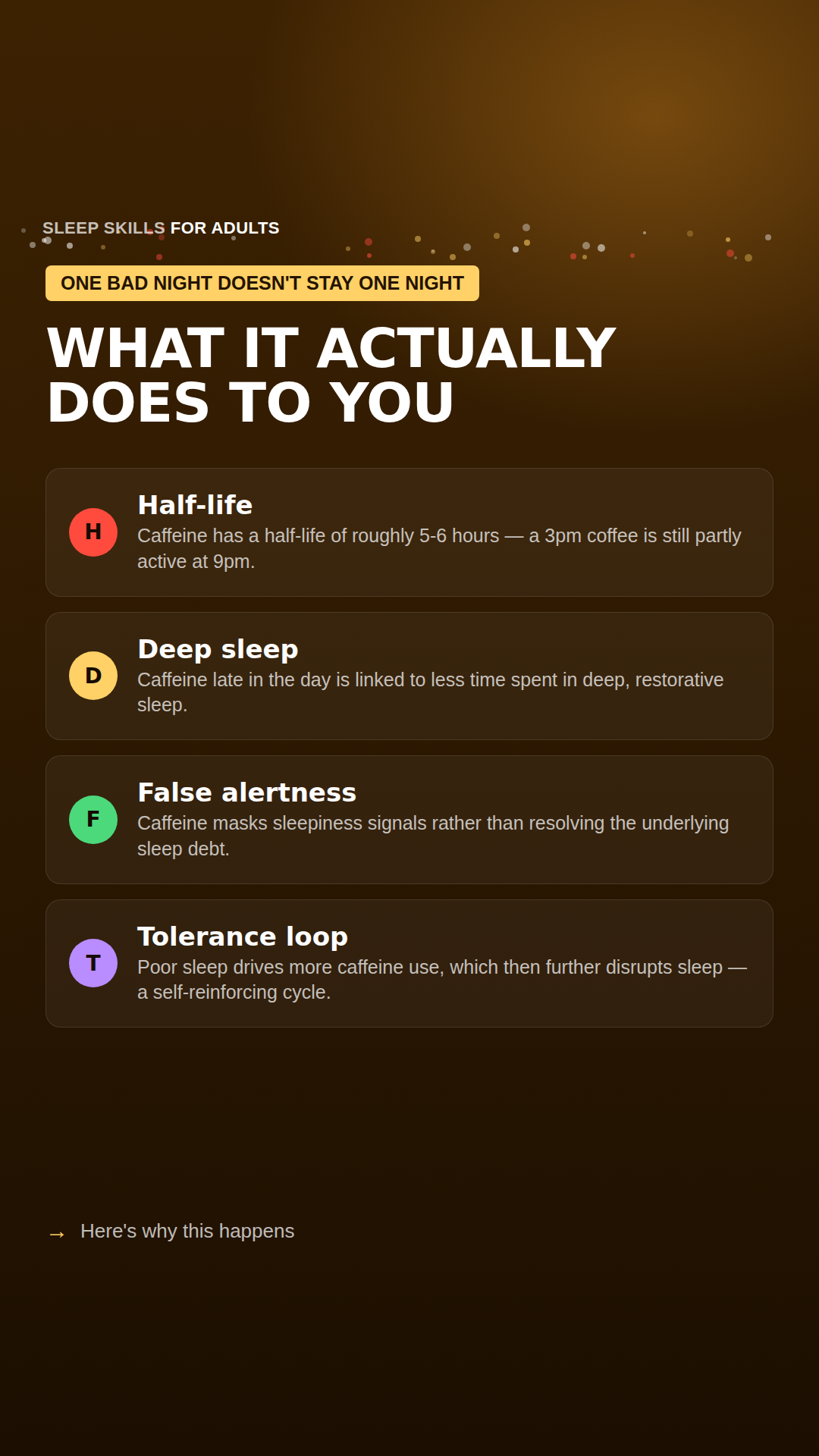
What It Actually Does to You
Half-life — Caffeine has a half-life of roughly 5-6 hours — a 3pm coffee is still partly active at 9pm.
Deep sleep — Caffeine late in the day is linked to less time spent in deep, restorative sleep.
False alertness — Caffeine masks sleepiness signals rather than resolving the underlying sleep debt.
Tolerance loop — Poor sleep drives more caffeine use, which then further disrupts sleep — a self-reinforcing cycle.
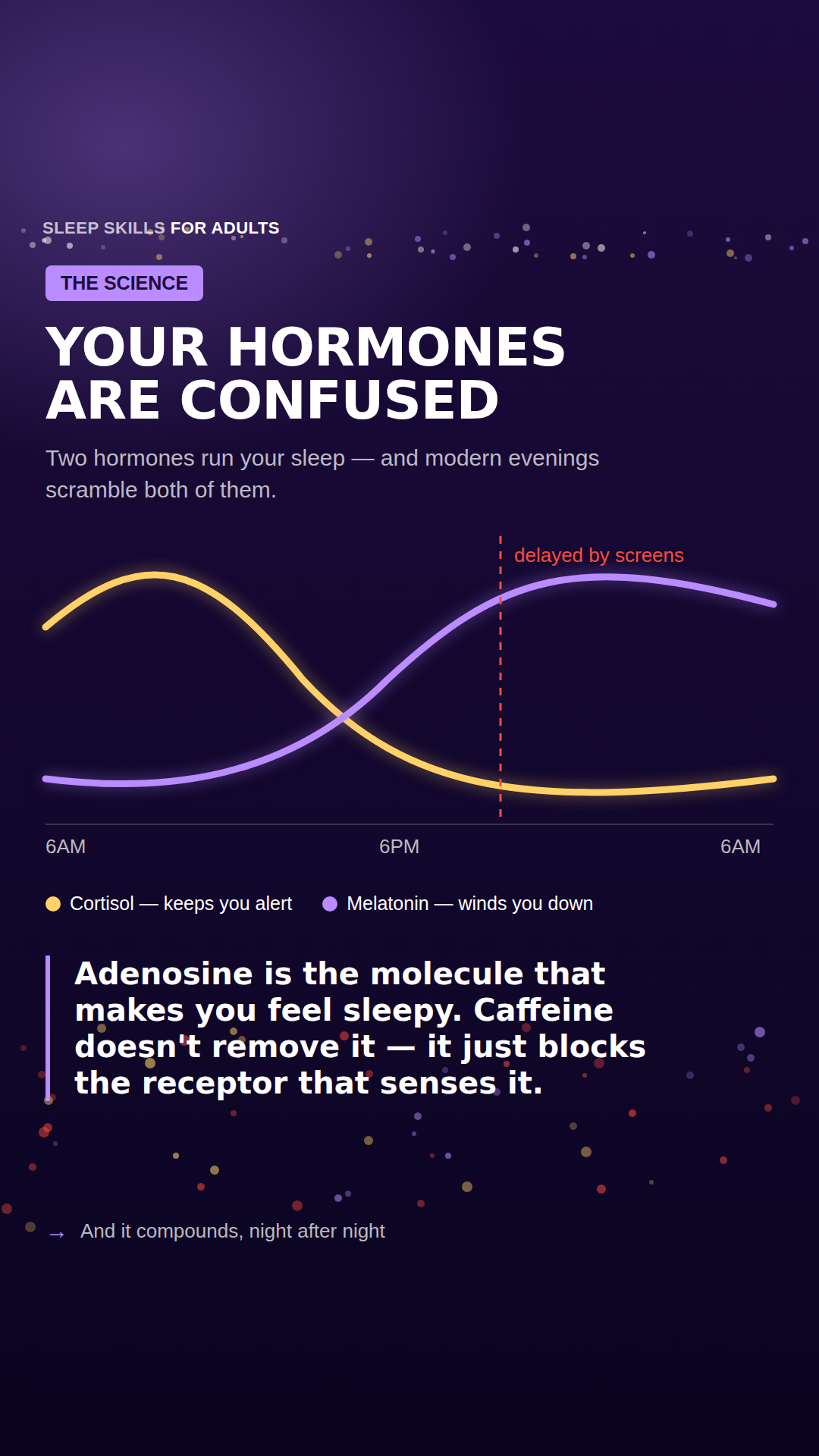
The Science
Two hormones run your sleep — and modern evenings scramble both of them. Cortisol keeps you alert; melatonin winds you down.
Adenosine is the molecule that makes you feel sleepy. Caffeine doesn't remove it — it just blocks the receptor that senses it.
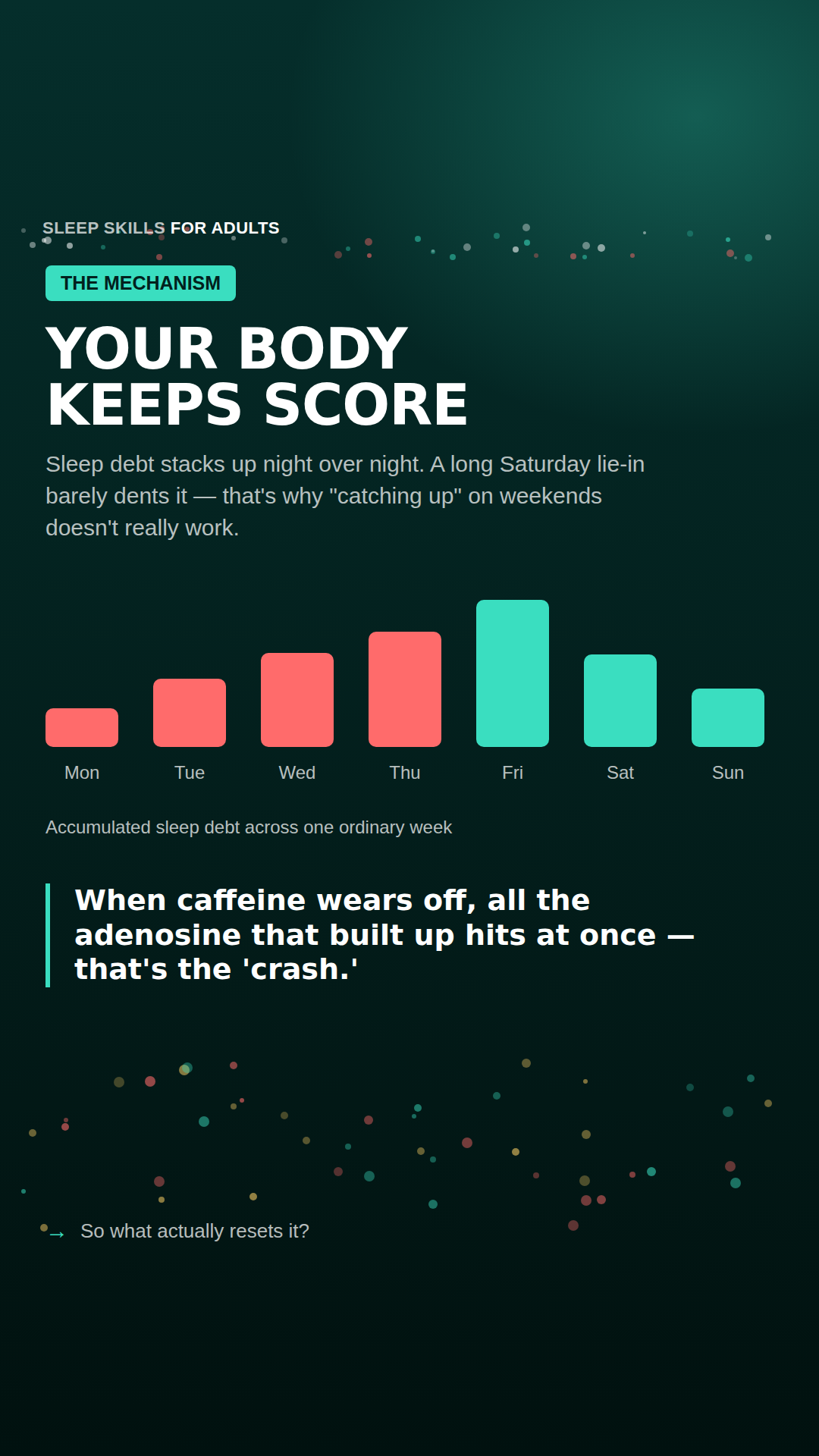
Your Body Keeps Score
Sleep debt stacks up night over night. A long Saturday lie-in barely dents it — that's why "catching up" on weekends doesn't really work.
When caffeine wears off, all the adenosine that built up hits at once — that's the 'crash.'
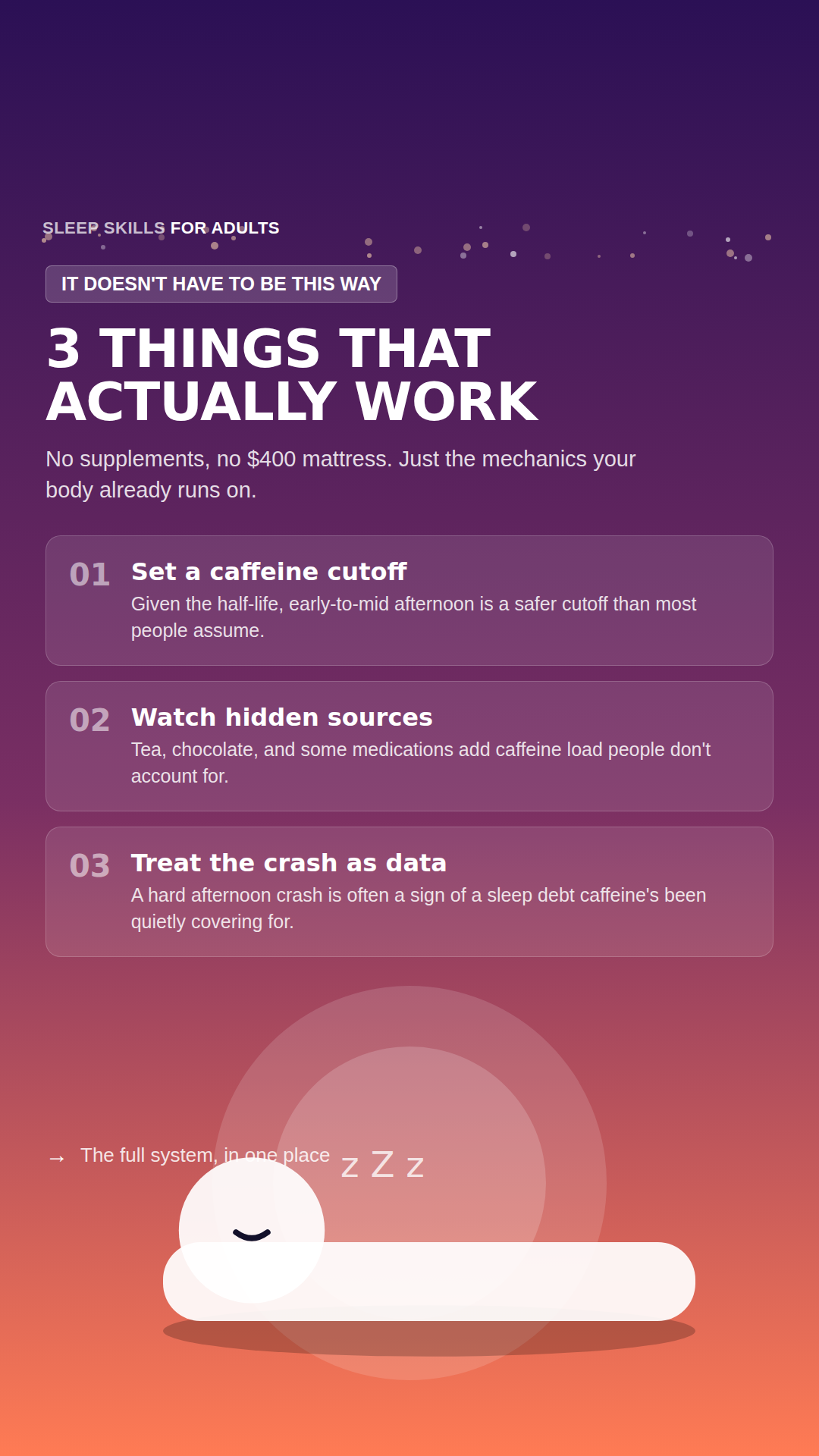
3 Things That Actually Work
- Set a caffeine cutoff — Given the half-life, early-to-mid afternoon is a safer cutoff than most people assume.
- Watch hidden sources — Tea, chocolate, and some medications add caffeine load people don't account for.
- Treat the crash as data — A hard afternoon crash is often a sign of a sleep debt caffeine's been quietly covering for.
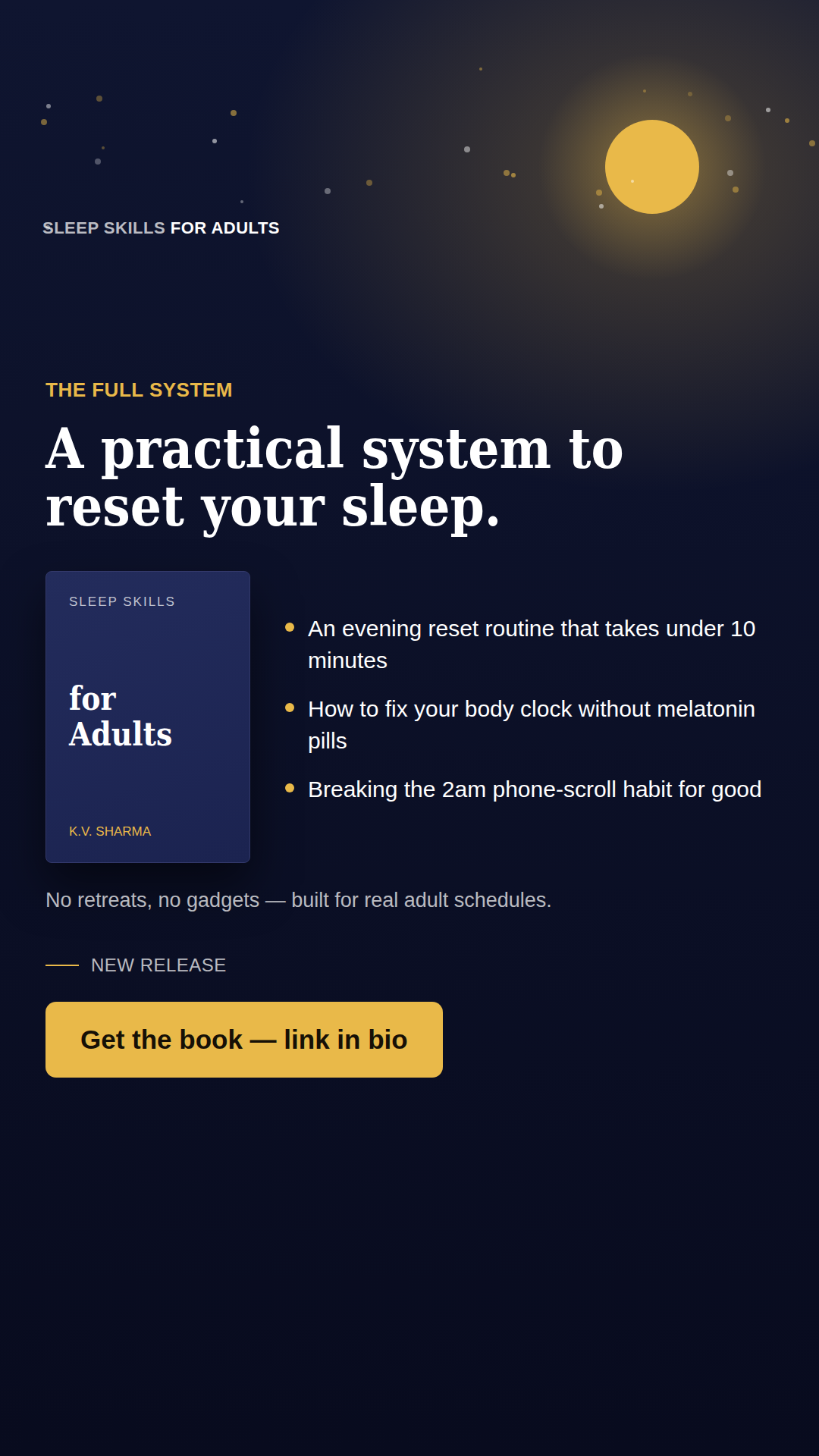
A Practical System to Reset Your Sleep
Sleep Skills for Adults — no retreats, no gadgets, built for real adult schedules. Inside:
- An evening reset routine that takes under 10 minutes
- How to fix your body clock without melatonin pills
- Breaking the 2am phone-scroll habit for good