SEDATION ISN'T SLEEP
A nightcap makes sleep worse, not better.
Alcohol can help you fall asleep faster — while making the sleep you actually get measurably worse.
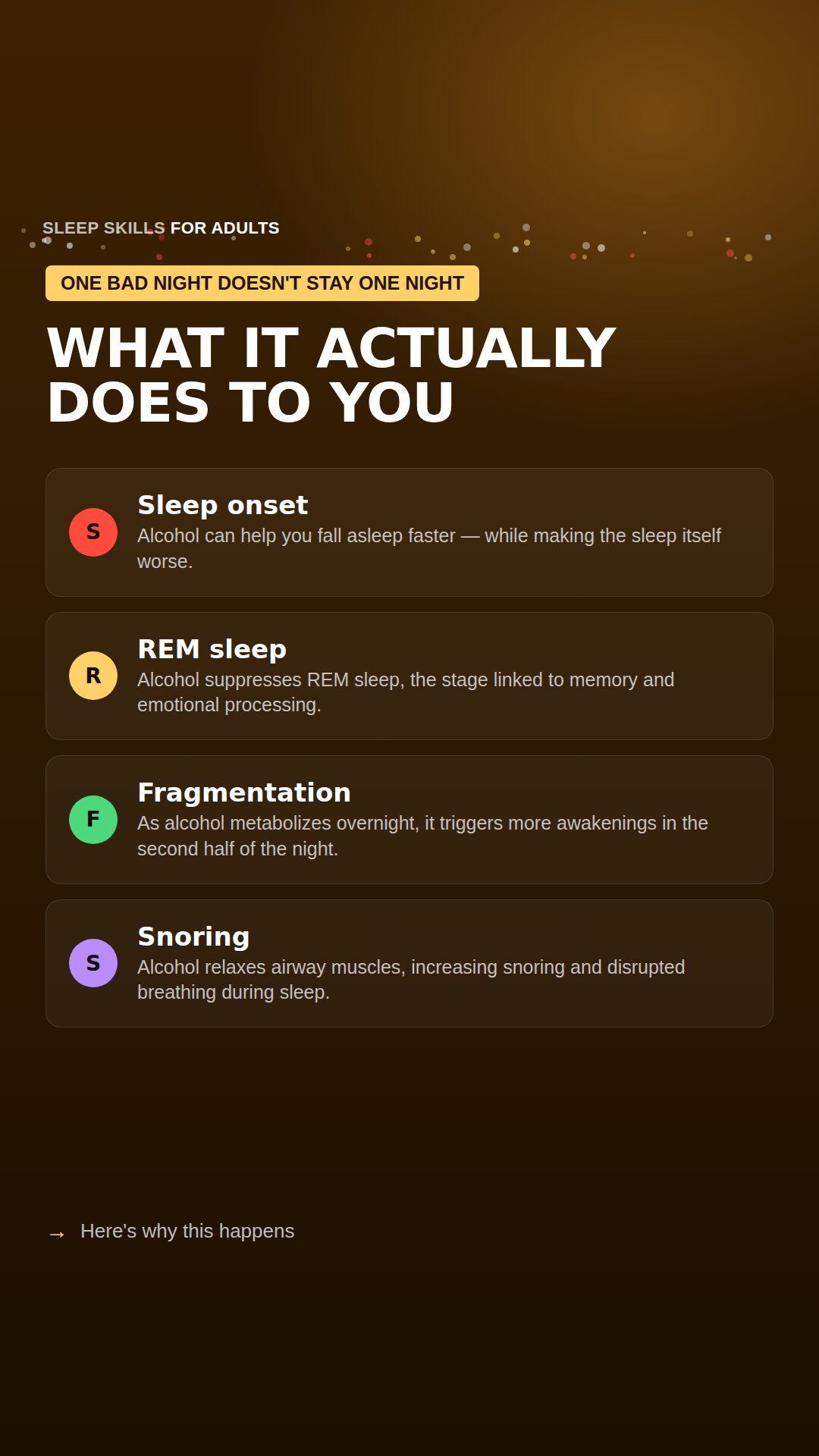
What It Actually Does to You
Sleep onset — Alcohol can help you fall asleep faster — while making the sleep itself worse.
REM sleep — Alcohol suppresses REM sleep, the stage linked to memory and emotional processing.
Fragmentation — As alcohol metabolizes overnight, it triggers more awakenings in the second half of the night.
Snoring — Alcohol relaxes airway muscles, increasing snoring and disrupted breathing during sleep.
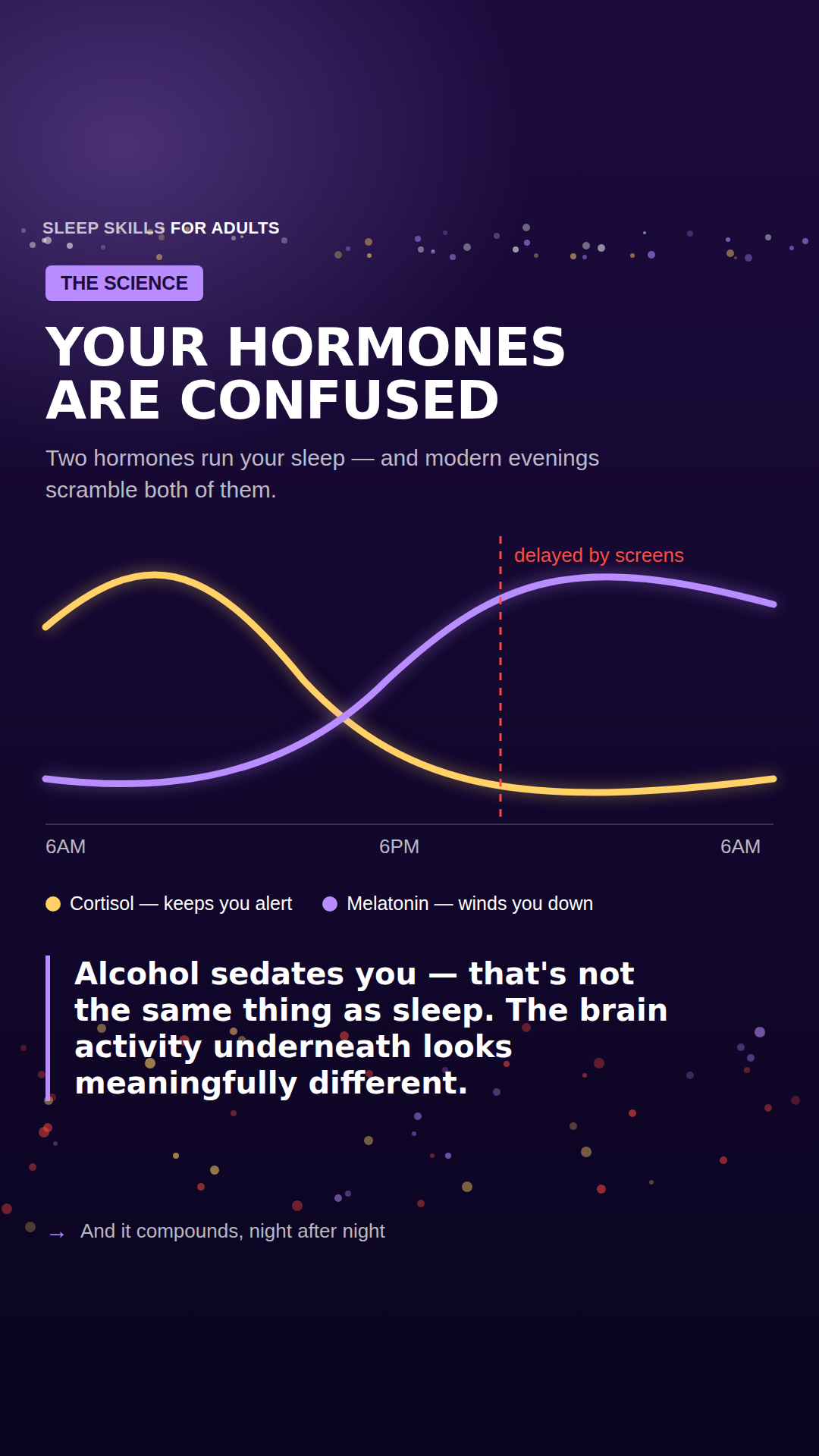
The Science
Two hormones run your sleep — and modern evenings scramble both of them. Cortisol keeps you alert; melatonin winds you down.
Alcohol sedates you — that's not the same thing as sleep. The brain activity underneath looks meaningfully different.
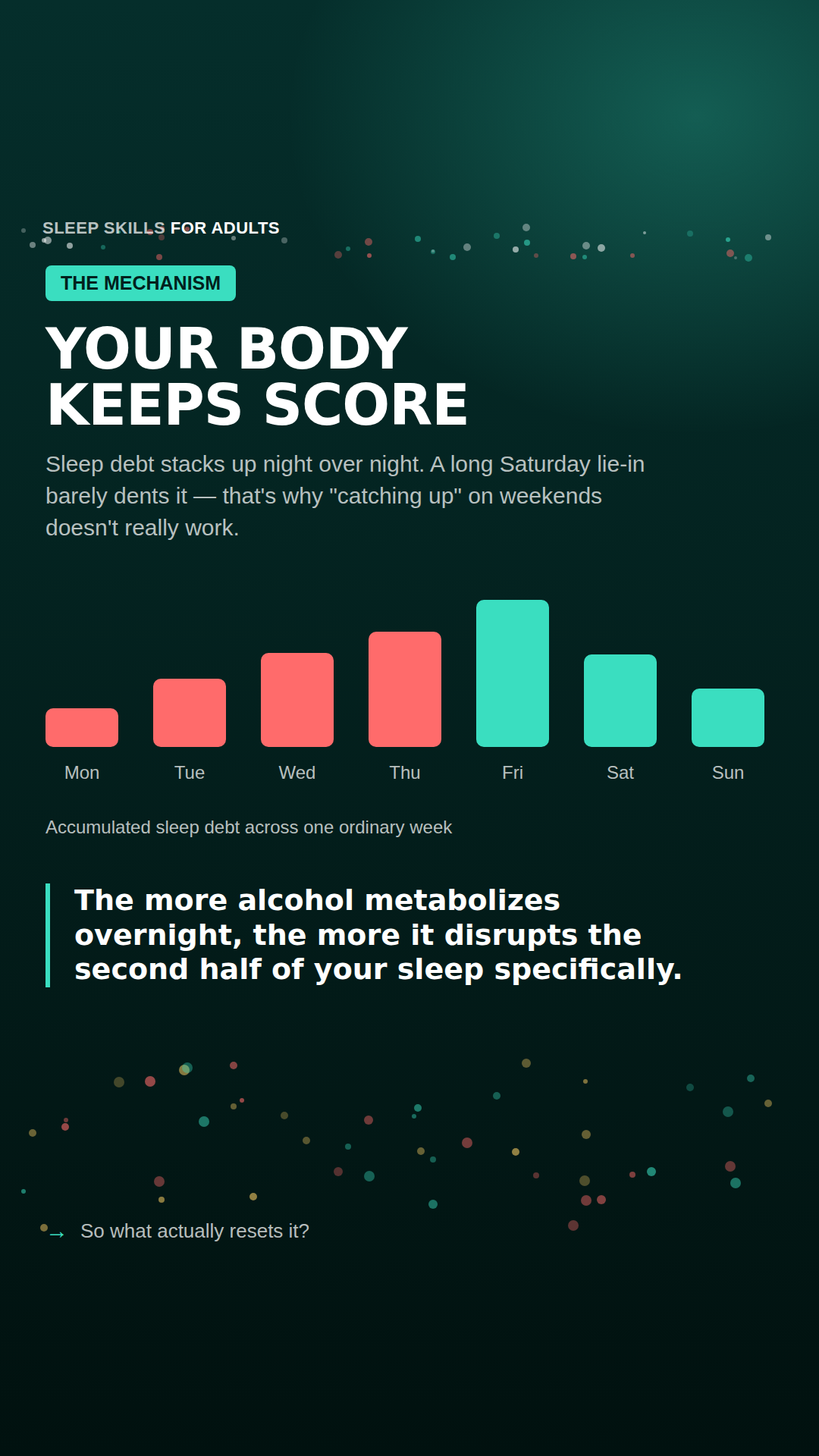
Your Body Keeps Score
Sleep debt stacks up night over night. A long Saturday lie-in barely dents it — that's why "catching up" on weekends doesn't really work.
The more alcohol metabolizes overnight, the more it disrupts the second half of your sleep specifically.
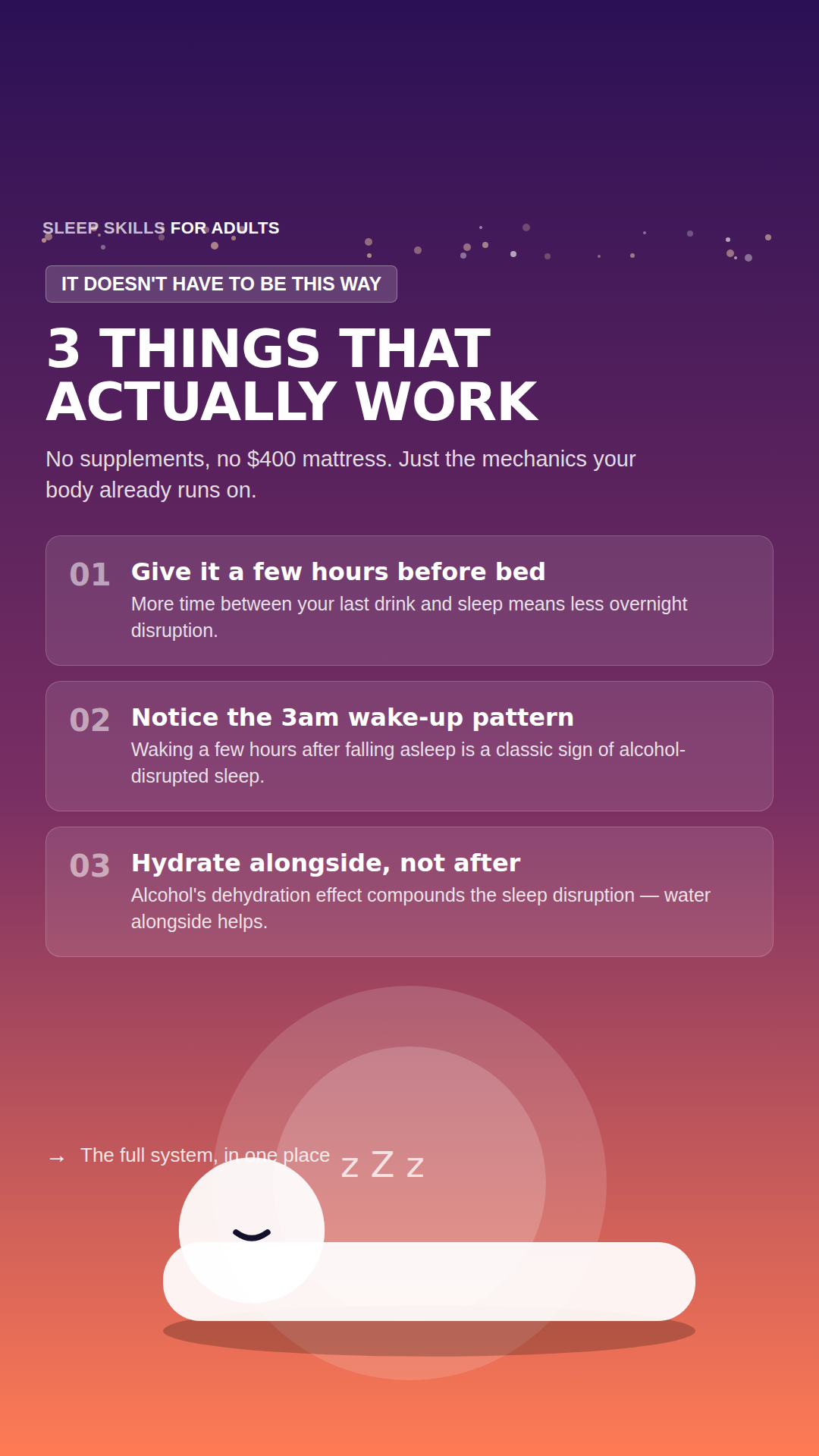
3 Things That Actually Work
- Give it a few hours before bed — More time between your last drink and sleep means less overnight disruption.
- Notice the 3am wake-up pattern — Waking a few hours after falling asleep is a classic sign of alcohol-disrupted sleep.
- Hydrate alongside, not after — Alcohol's dehydration effect compounds the sleep disruption — water alongside helps.
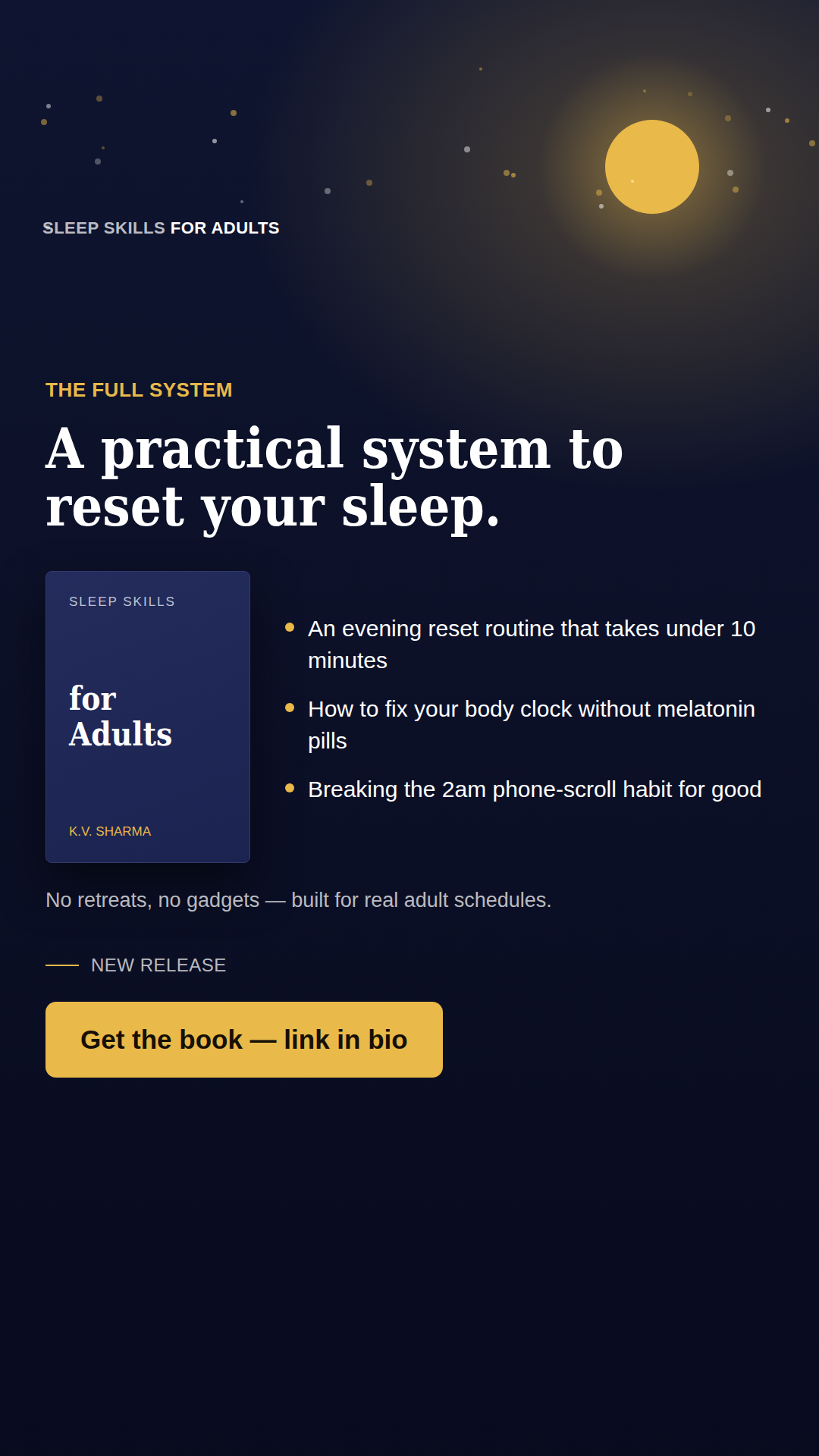
A Practical System to Reset Your Sleep
Sleep Skills for Adults — no retreats, no gadgets, built for real adult schedules. Inside:
- An evening reset routine that takes under 10 minutes
- How to fix your body clock without melatonin pills
- Breaking the 2am phone-scroll habit for good