SKINCARE CAN'T FIX THIS
Your $80 serum can't outwork bad sleep.
Growth hormone — the main driver of overnight skin repair — peaks during deep sleep. Short sleep blunts that peak entirely.
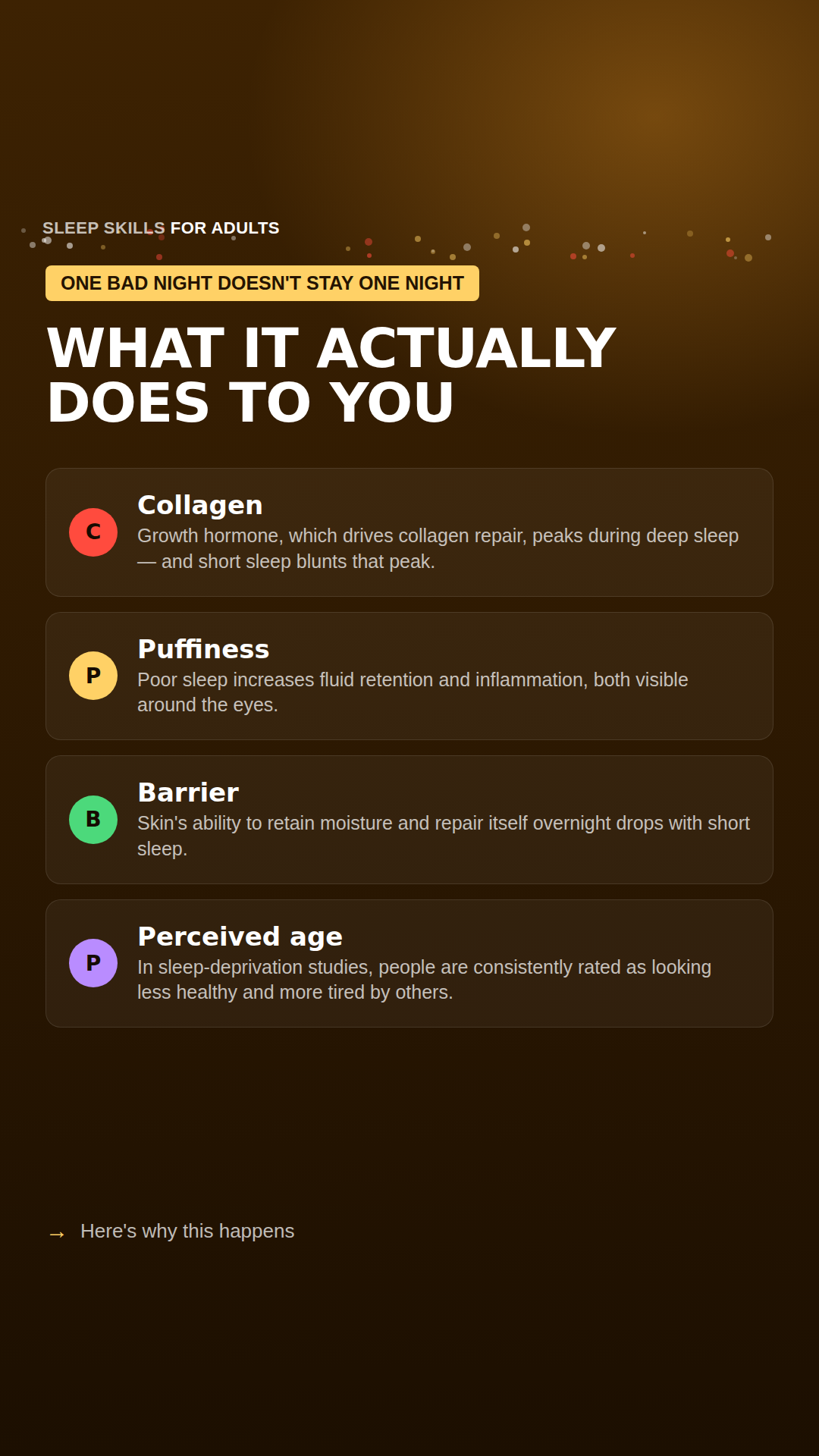
What It Actually Does to You
Collagen — Growth hormone, which drives collagen repair, peaks during deep sleep — and short sleep blunts that peak.
Puffiness — Poor sleep increases fluid retention and inflammation, both visible around the eyes.
Barrier — Skin's ability to retain moisture and repair itself overnight drops with short sleep.
Perceived age — In sleep-deprivation studies, people are consistently rated as looking less healthy and more tired by others.
The Science
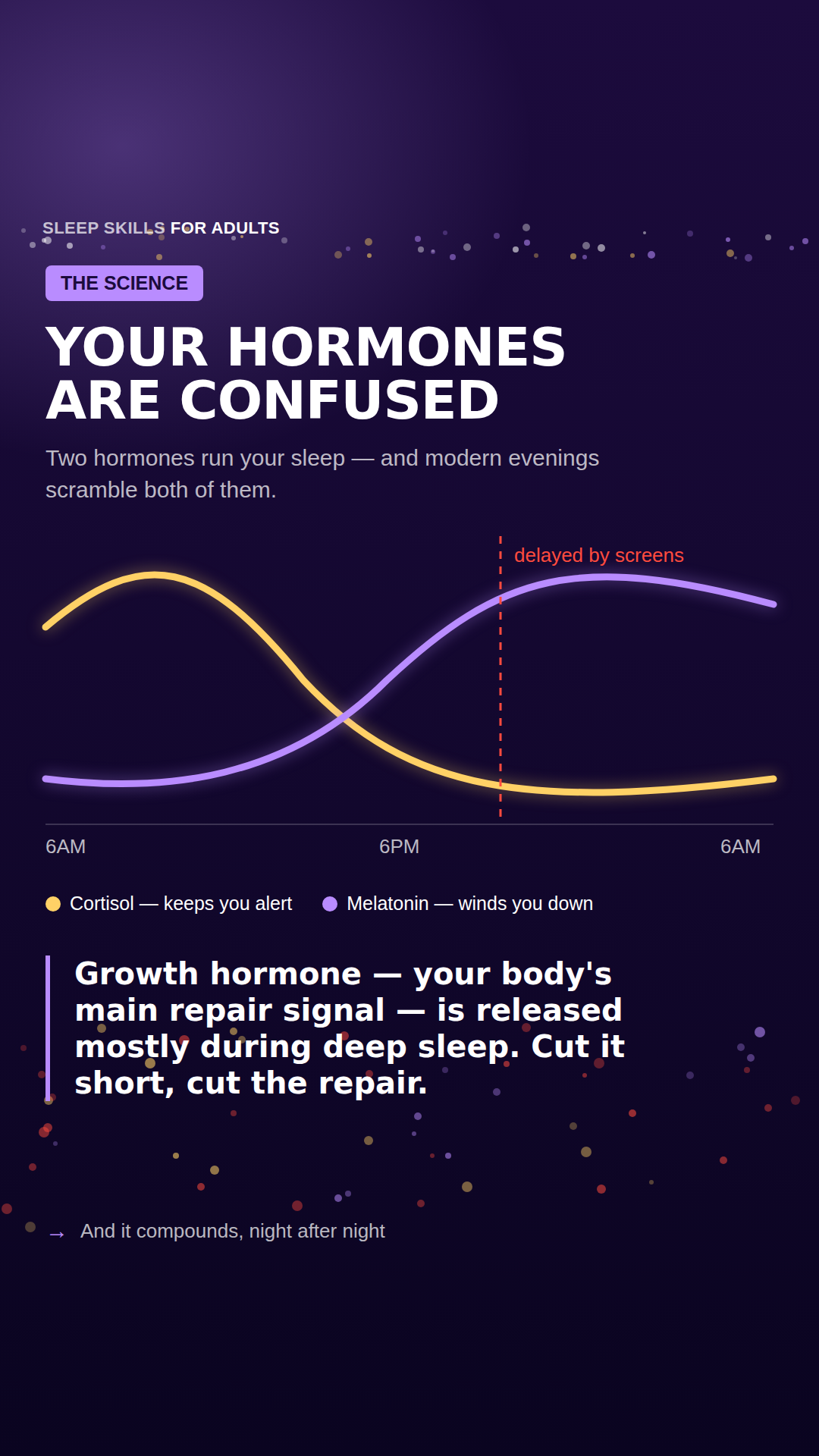
Two hormones run your sleep — and modern evenings scramble both of them. Cortisol keeps you alert; melatonin winds you down.
Growth hormone — your body's main repair signal — is released mostly during deep sleep. Cut it short, cut the repair.
Your Body Keeps Score
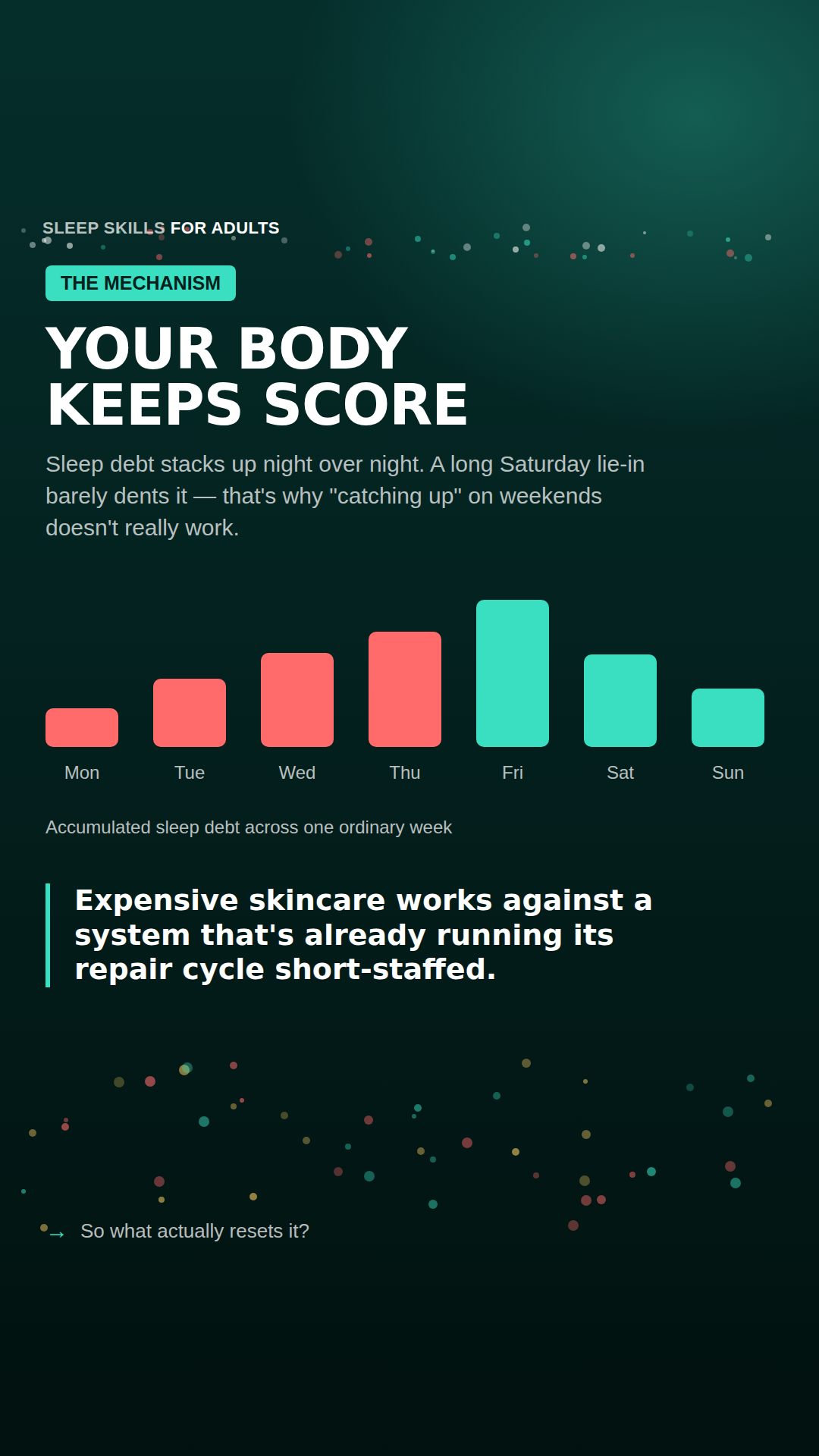
Sleep debt stacks up night over night. A long Saturday lie-in barely dents it — that's why "catching up" on weekends doesn't really work.
Expensive skincare works against a system that's already running its repair cycle short-staffed.
3 Things That Actually Work
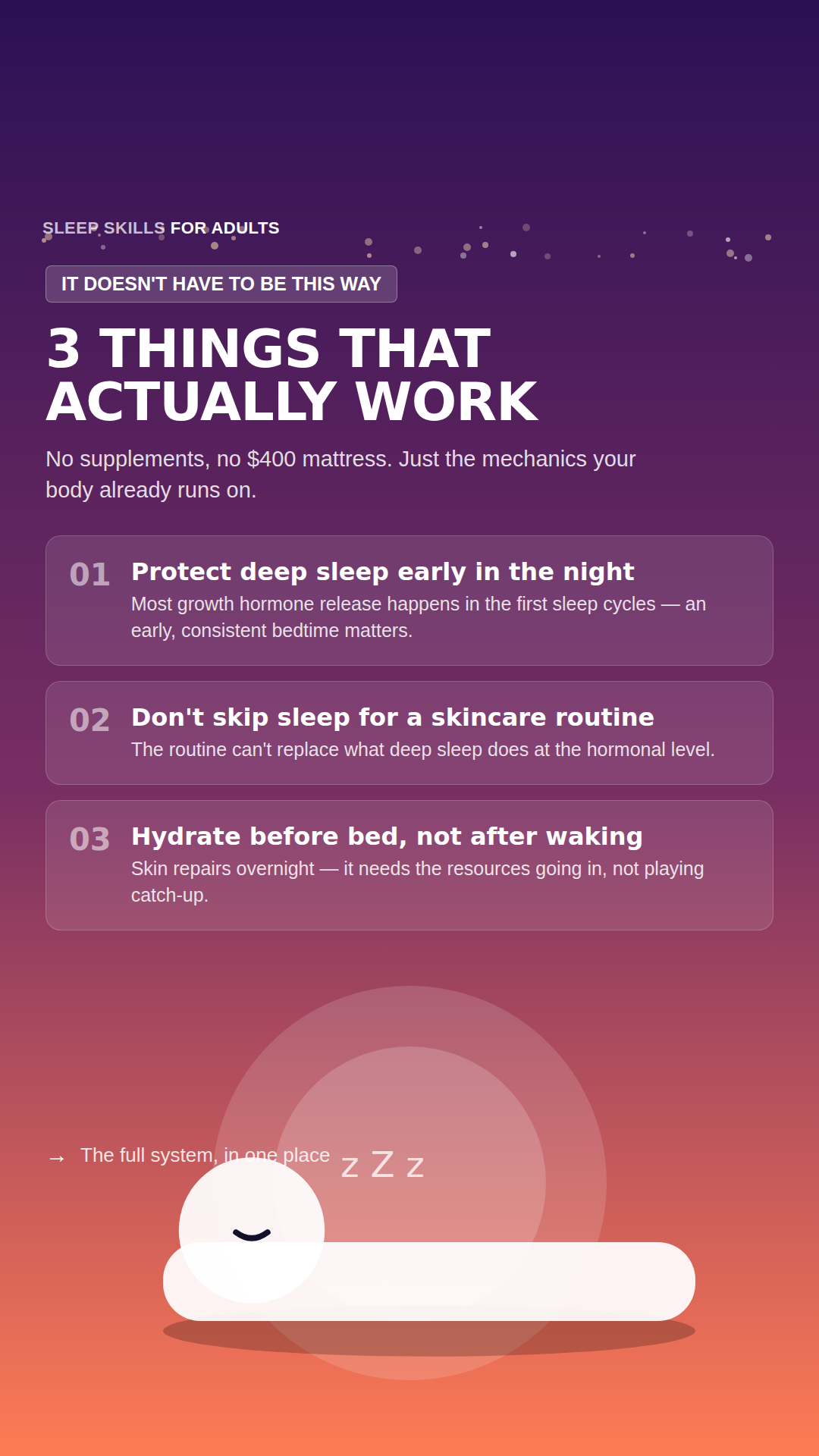
- Protect deep sleep early in the night — Most growth hormone release happens in the first sleep cycles — an early, consistent bedtime matters.
- Don't skip sleep for a skincare routine — The routine can't replace what deep sleep does at the hormonal level.
- Hydrate before bed, not after waking — Skin repairs overnight — it needs the resources going in, not playing catch-up.
A Practical System to Reset Your Sleep
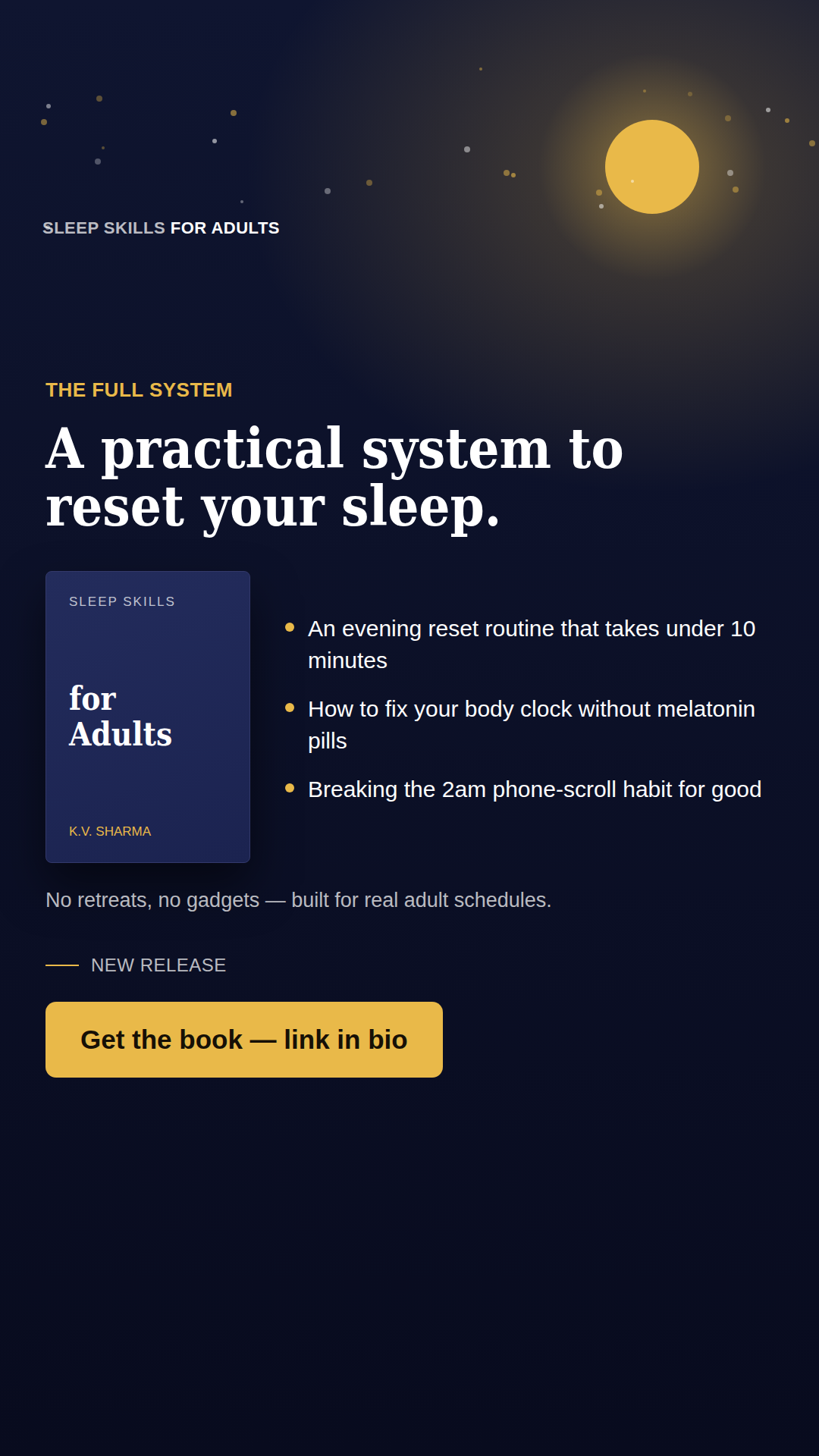
Sleep Skills for Adults — no retreats, no gadgets, built for real adult schedules. Inside:
- An evening reset routine that takes under 10 minutes
- How to fix your body clock without melatonin pills
- Breaking the 2am phone-scroll habit for good