IT'S NOT ABOUT TRYING HARDER
Your body clock never fully adapts to night shifts.
Even after years on nights, circadian rhythm doesn't fully shift — daylight exposure keeps pulling it back.
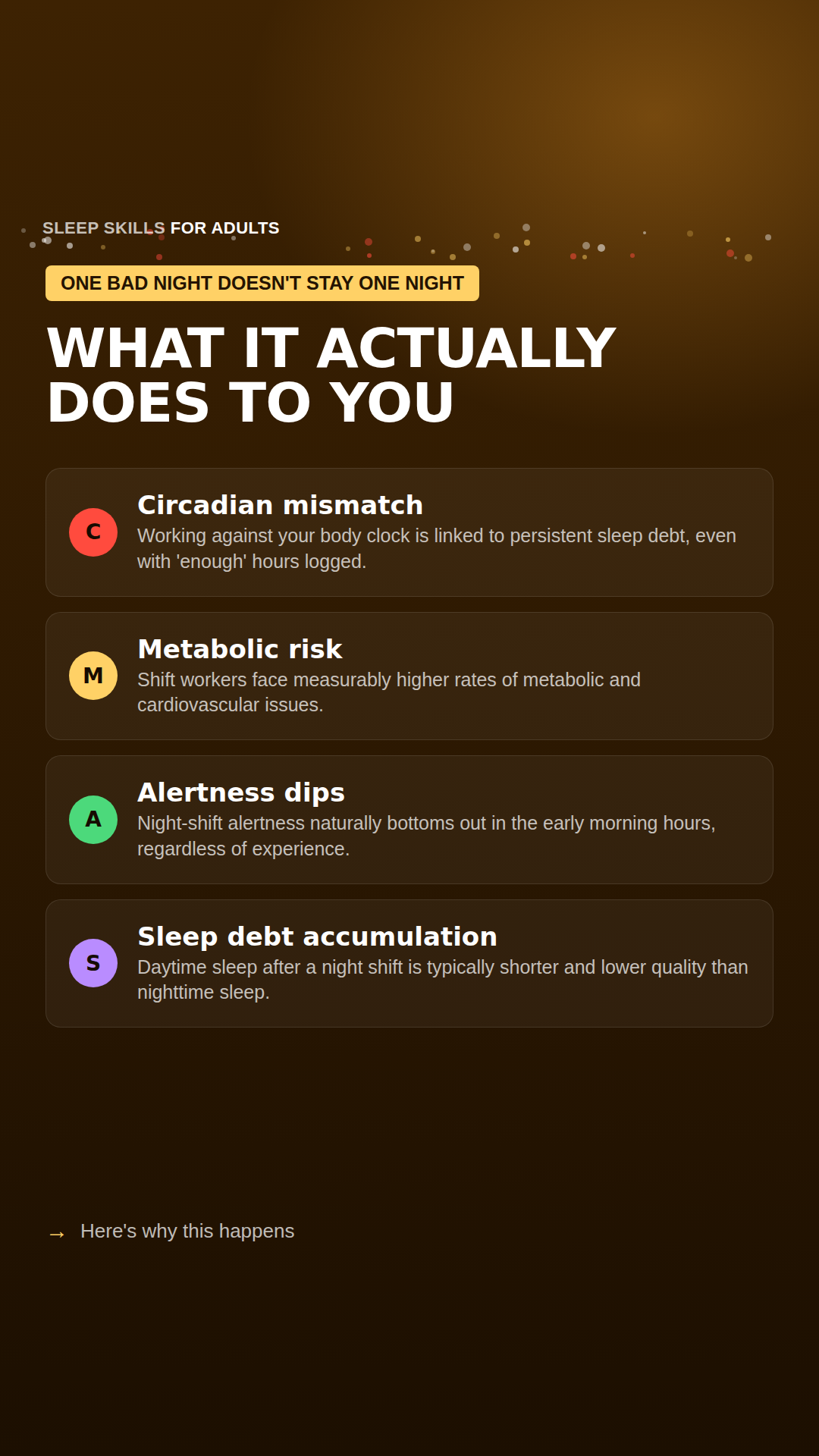
What It Actually Does to You
Circadian mismatch — Working against your body clock is linked to persistent sleep debt, even with 'enough' hours logged.
Metabolic risk — Shift workers face measurably higher rates of metabolic and cardiovascular issues.
Alertness dips — Night-shift alertness naturally bottoms out in the early morning hours, regardless of experience.
Sleep debt accumulation — Daytime sleep after a night shift is typically shorter and lower quality than nighttime sleep.
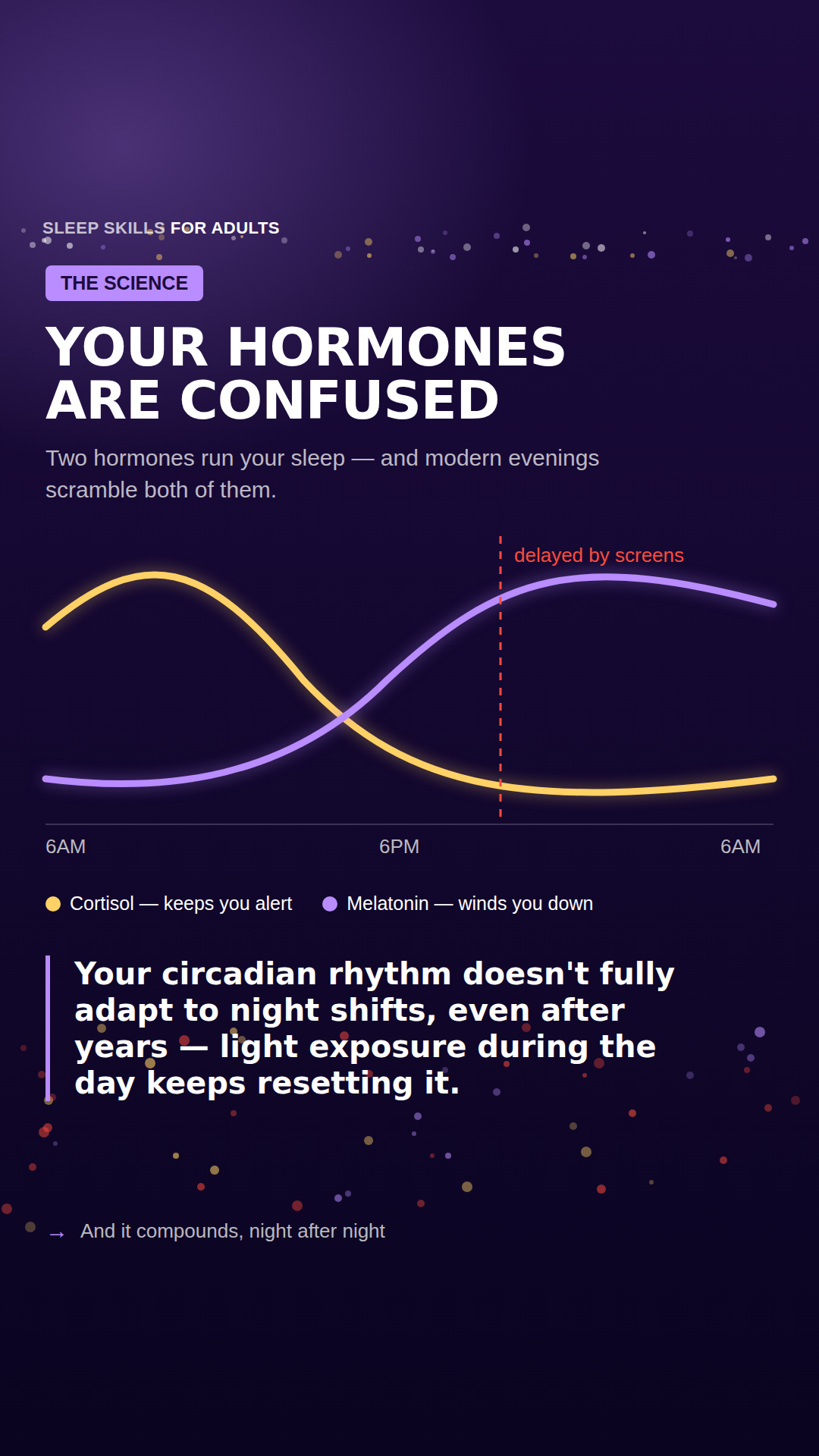
The Science
Two hormones run your sleep — and modern evenings scramble both of them. Cortisol keeps you alert; melatonin winds you down.
Your circadian rhythm doesn't fully adapt to night shifts, even after years — light exposure during the day keeps resetting it.
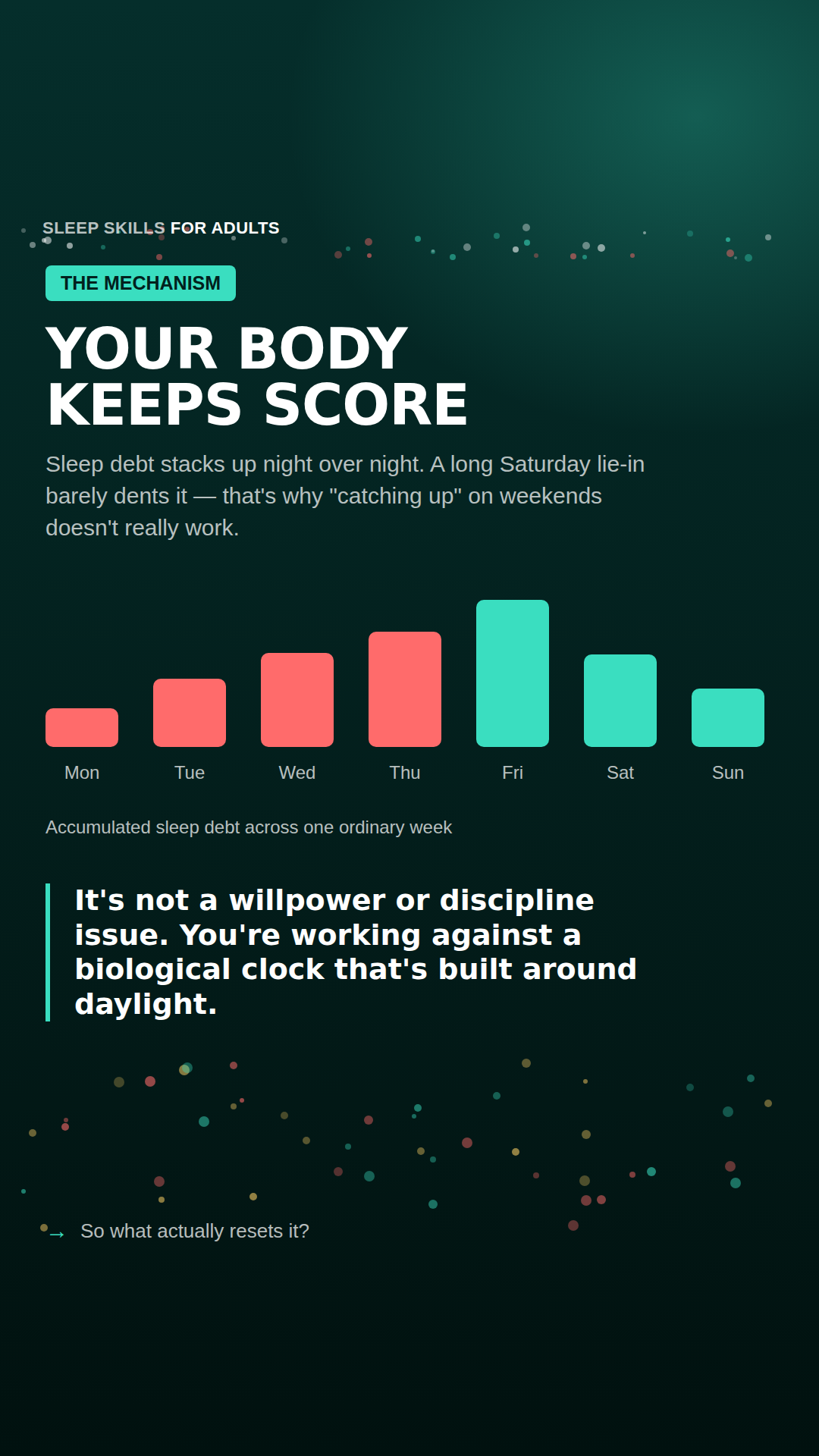
Your Body Keeps Score
Sleep debt stacks up night over night. A long Saturday lie-in barely dents it — that's why "catching up" on weekends doesn't really work.
It's not a willpower or discipline issue. You're working against a biological clock that's built around daylight.
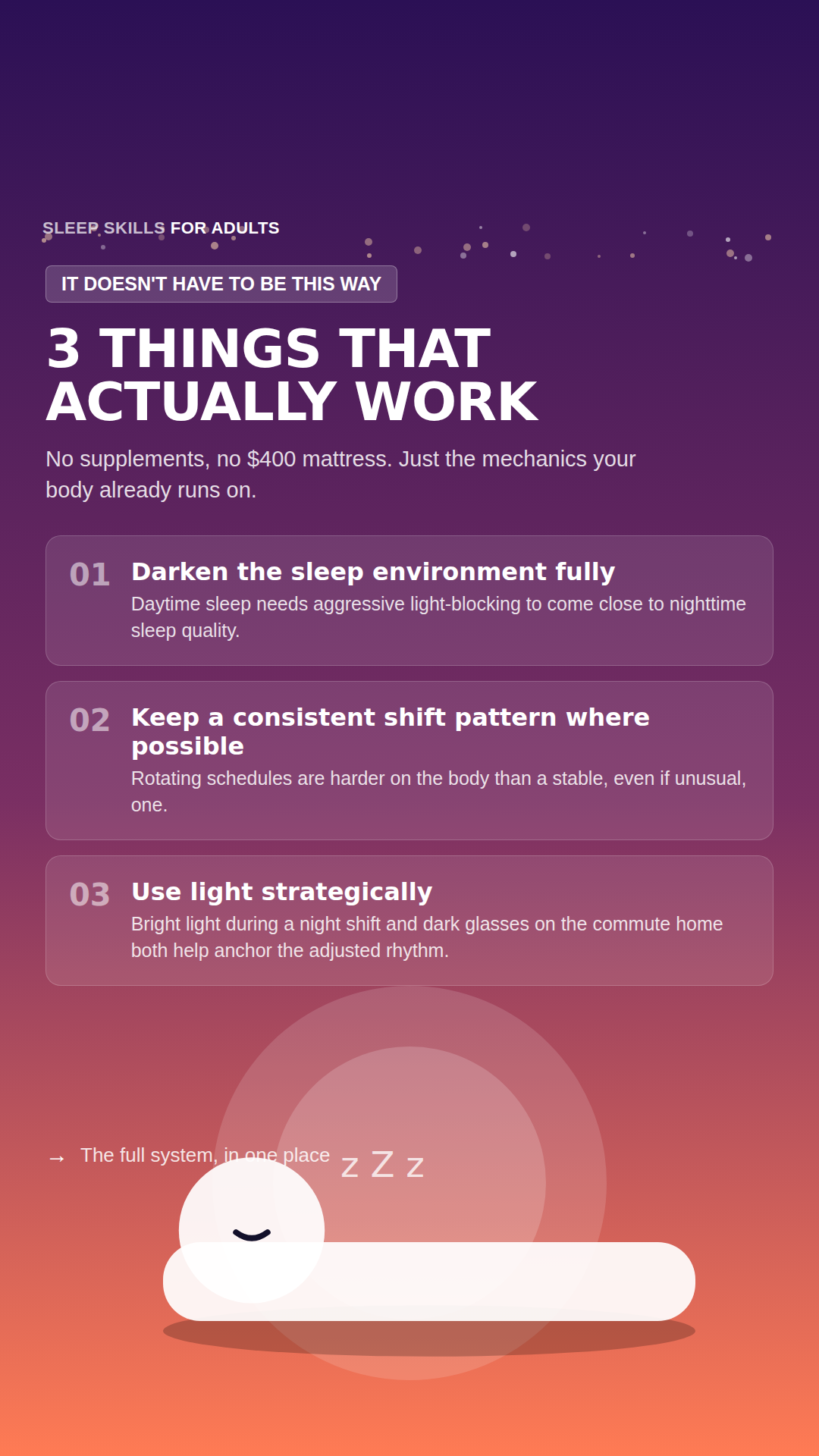
3 Things That Actually Work
- Darken the sleep environment fully — Daytime sleep needs aggressive light-blocking to come close to nighttime sleep quality.
- Keep a consistent shift pattern where possible — Rotating schedules are harder on the body than a stable, even if unusual, one.
- Use light strategically — Bright light during a night shift and dark glasses on the commute home both help anchor the adjusted rhythm.
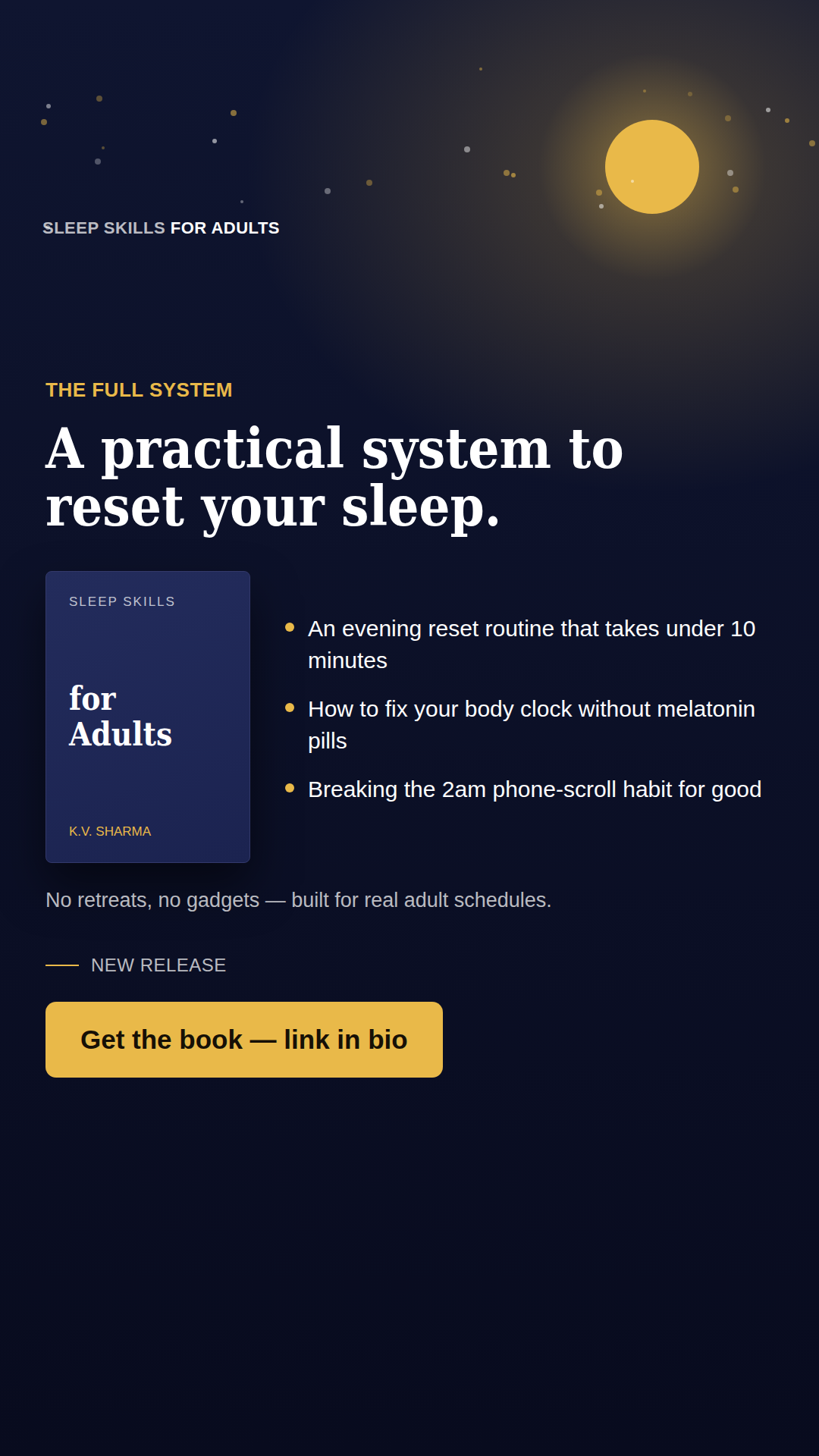
A Practical System to Reset Your Sleep
Sleep Skills for Adults — no retreats, no gadgets, built for real adult schedules. Inside:
- An evening reset routine that takes under 10 minutes
- How to fix your body clock without melatonin pills
- Breaking the 2am phone-scroll habit for good