YOU KNOW EXACTLY WHAT THIS IS
'Just one more episode' is costing you tomorrow.
Revenge bedtime procrastination is real — staying up for 'me time' costs the same sleep debt as any other reason for being up.
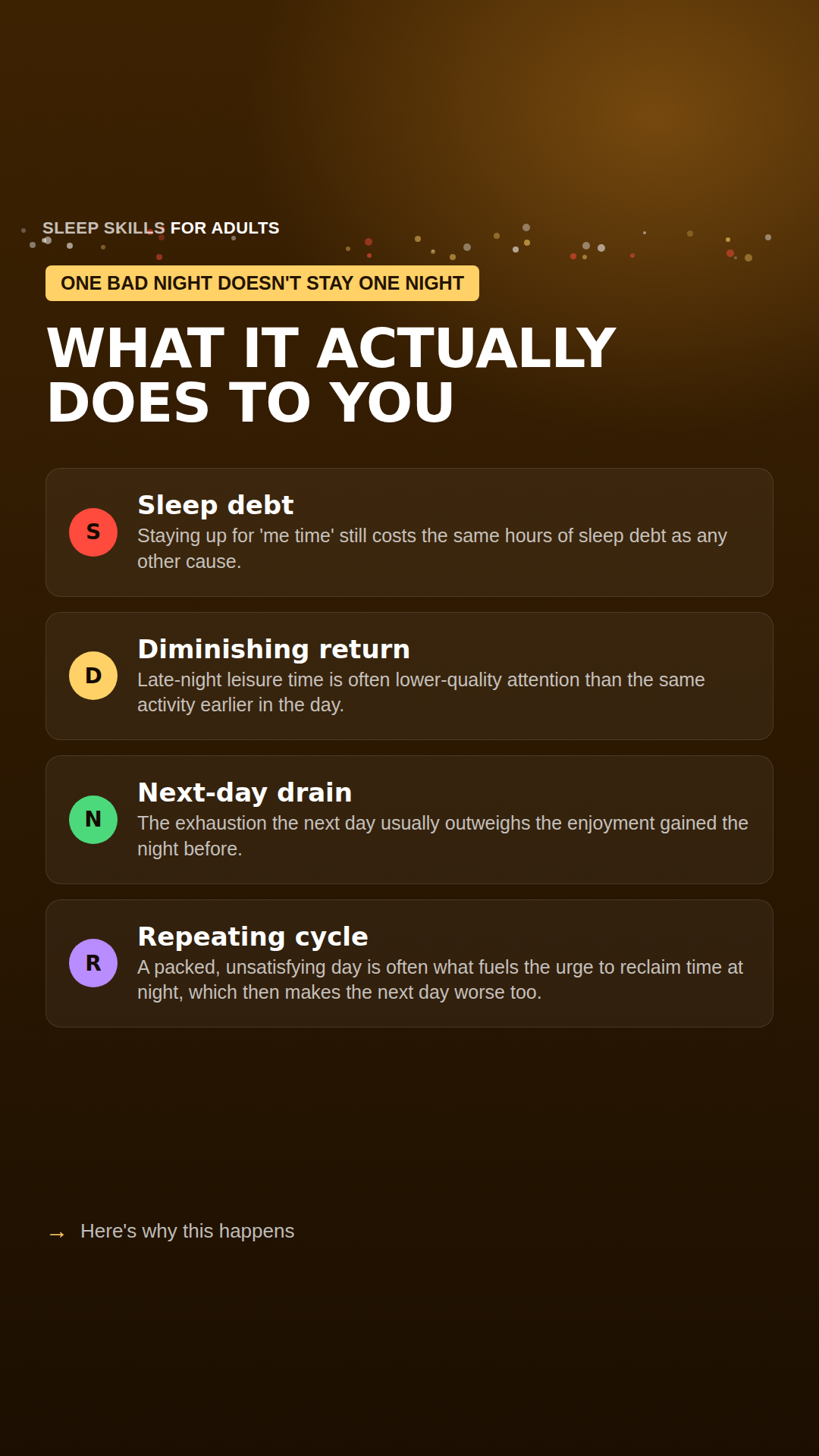
What It Actually Does to You
Sleep debt — Staying up for 'me time' still costs the same hours of sleep debt as any other cause.
Diminishing return — Late-night leisure time is often lower-quality attention than the same activity earlier in the day.
Next-day drain — The exhaustion the next day usually outweighs the enjoyment gained the night before.
Repeating cycle — A packed, unsatisfying day is often what fuels the urge to reclaim time at night, which then makes the next day worse too.
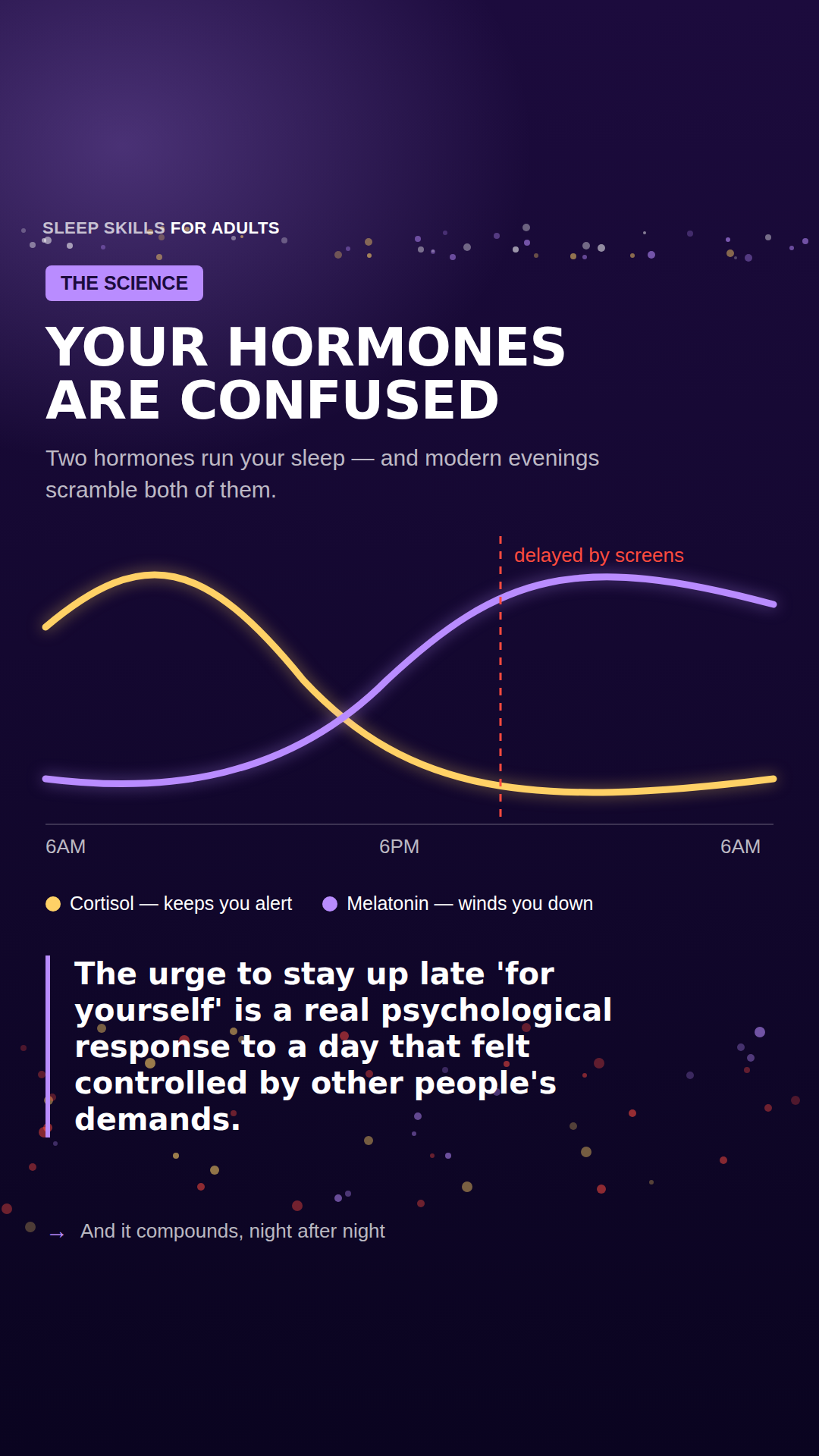
The Science
Two hormones run your sleep — and modern evenings scramble both of them. Cortisol keeps you alert; melatonin winds you down.
The urge to stay up late 'for yourself' is a real psychological response to a day that felt controlled by other people's demands.
Your Body Keeps Score
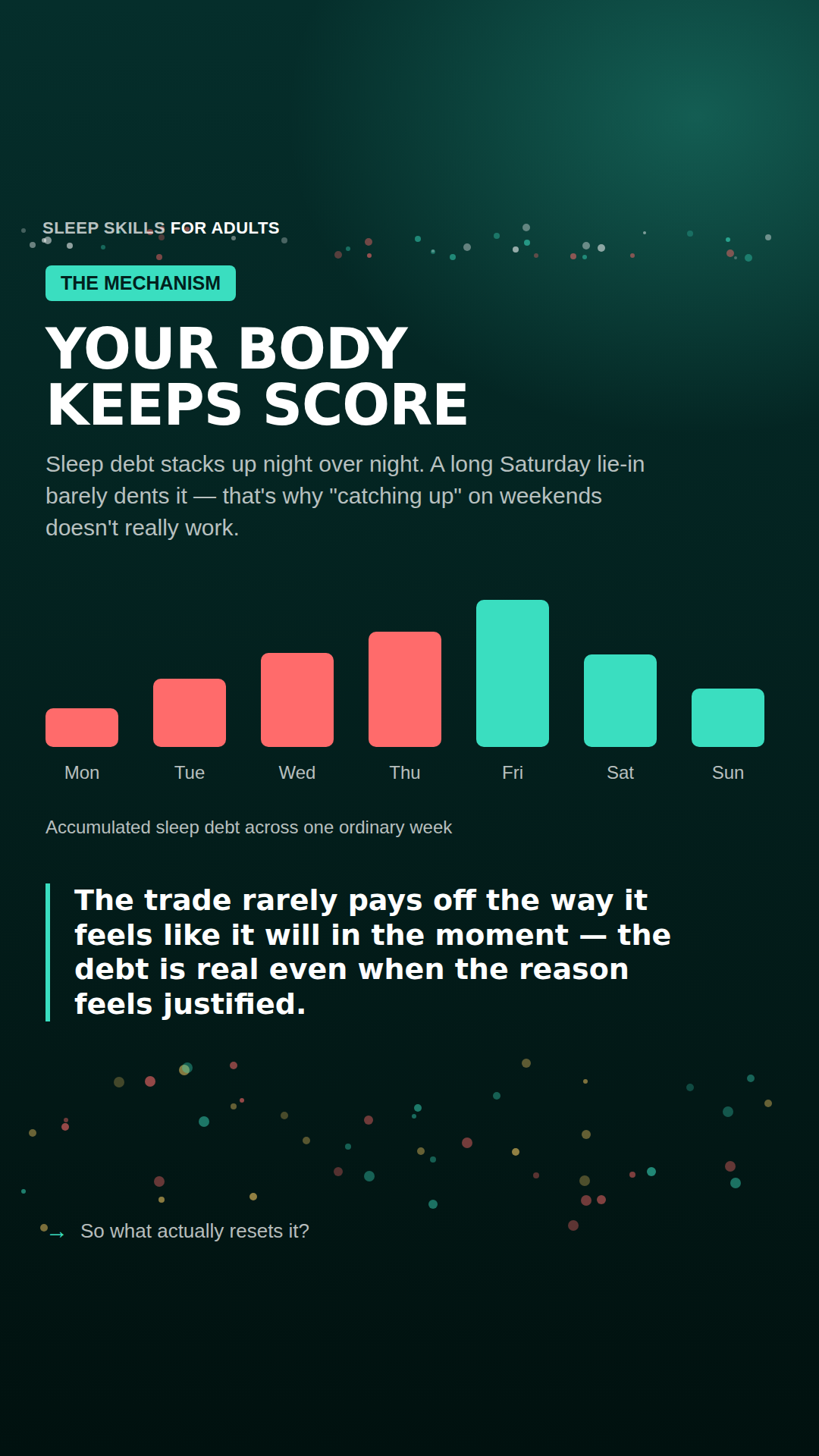
Sleep debt stacks up night over night. A long Saturday lie-in barely dents it — that's why "catching up" on weekends doesn't really work.
The trade rarely pays off the way it feels like it will in the moment — the debt is real even when the reason feels justified.
3 Things That Actually Work
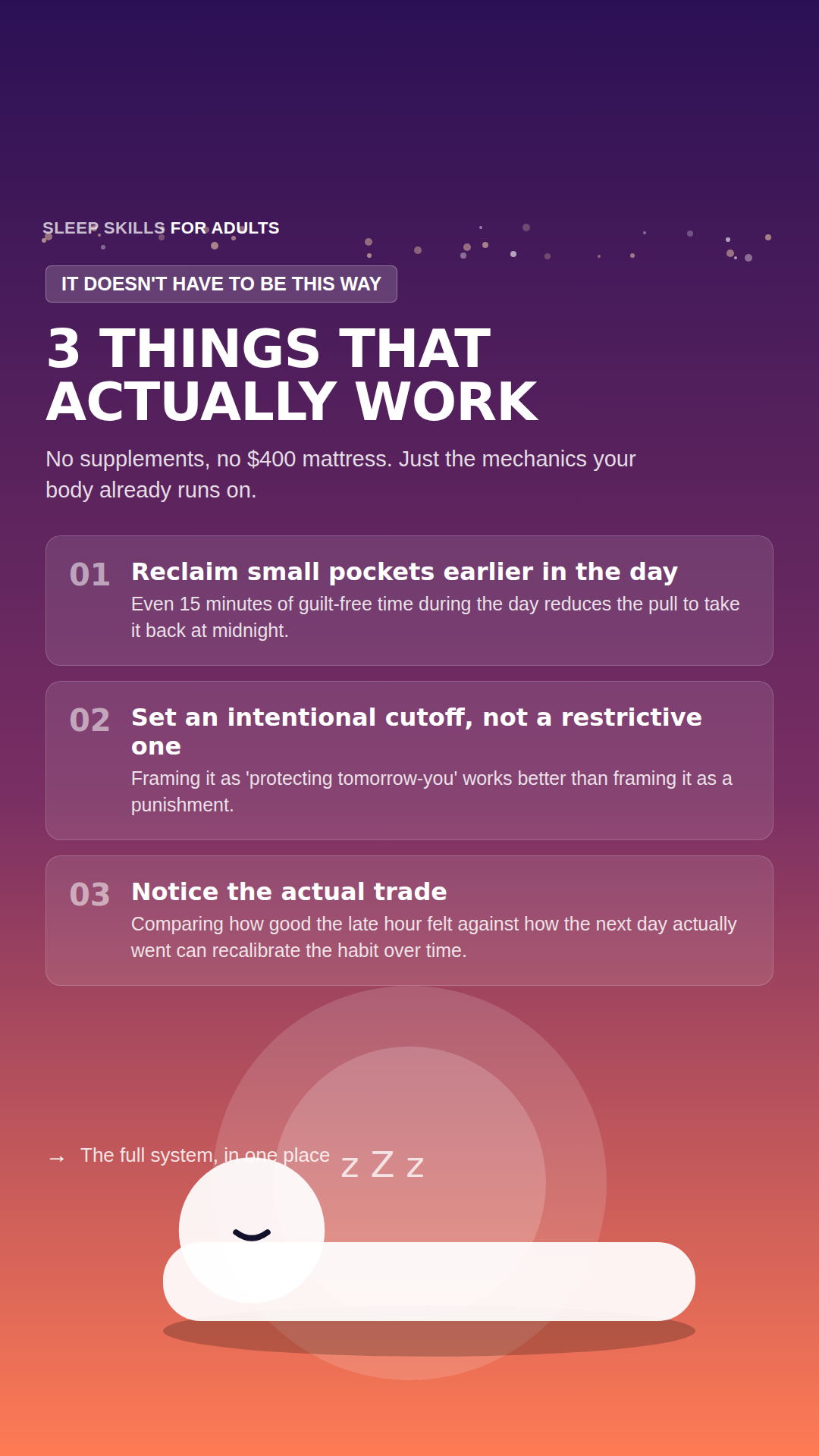
- Reclaim small pockets earlier in the day — Even 15 minutes of guilt-free time during the day reduces the pull to take it back at midnight.
- Set an intentional cutoff, not a restrictive one — Framing it as 'protecting tomorrow-you' works better than framing it as a punishment.
- Notice the actual trade — Comparing how good the late hour felt against how the next day actually went can recalibrate the habit over time.
A Practical System to Reset Your Sleep
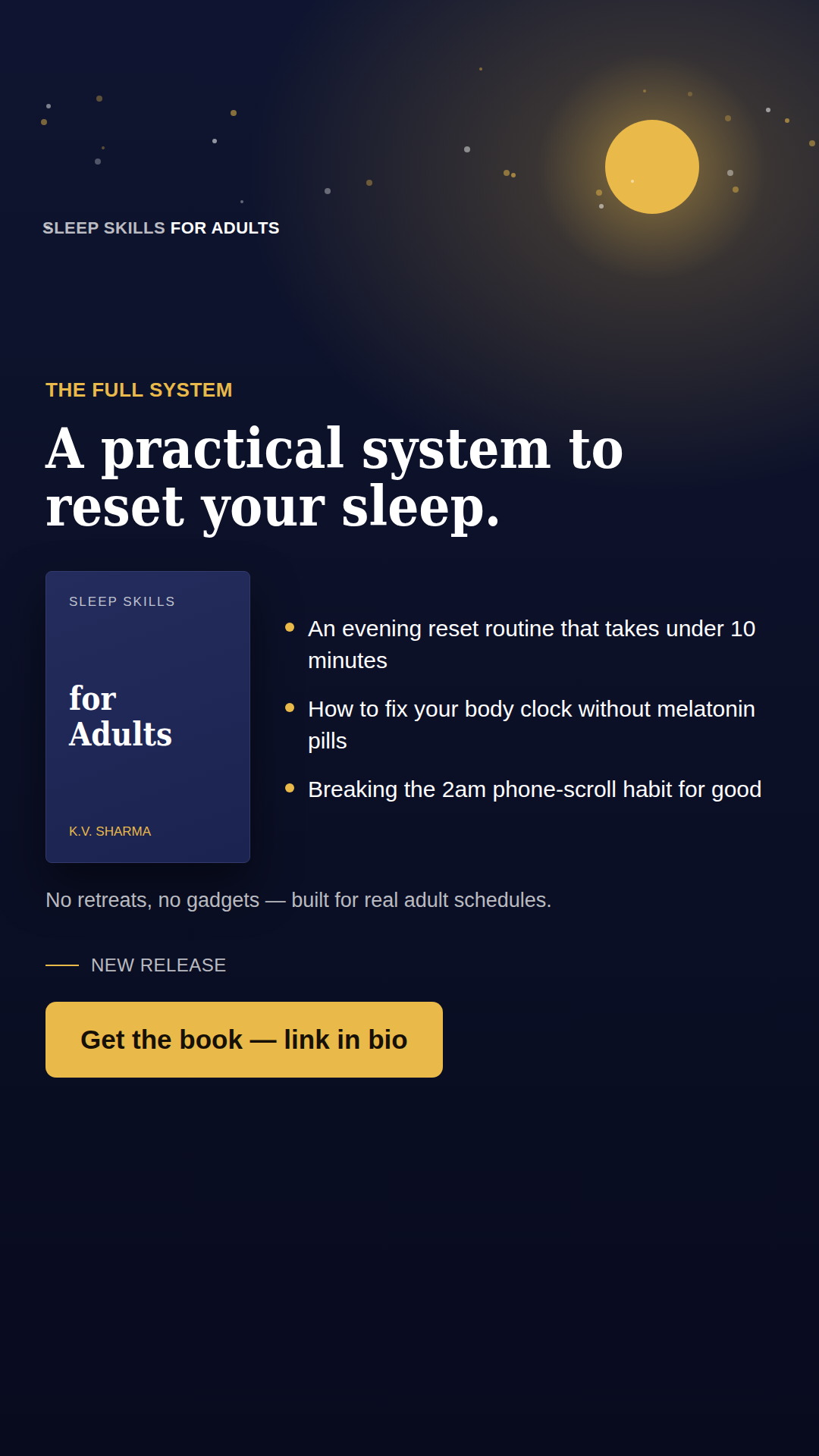
Sleep Skills for Adults — no retreats, no gadgets, built for real adult schedules. Inside:
- An evening reset routine that takes under 10 minutes
- How to fix your body clock without melatonin pills
- Breaking the 2am phone-scroll habit for good