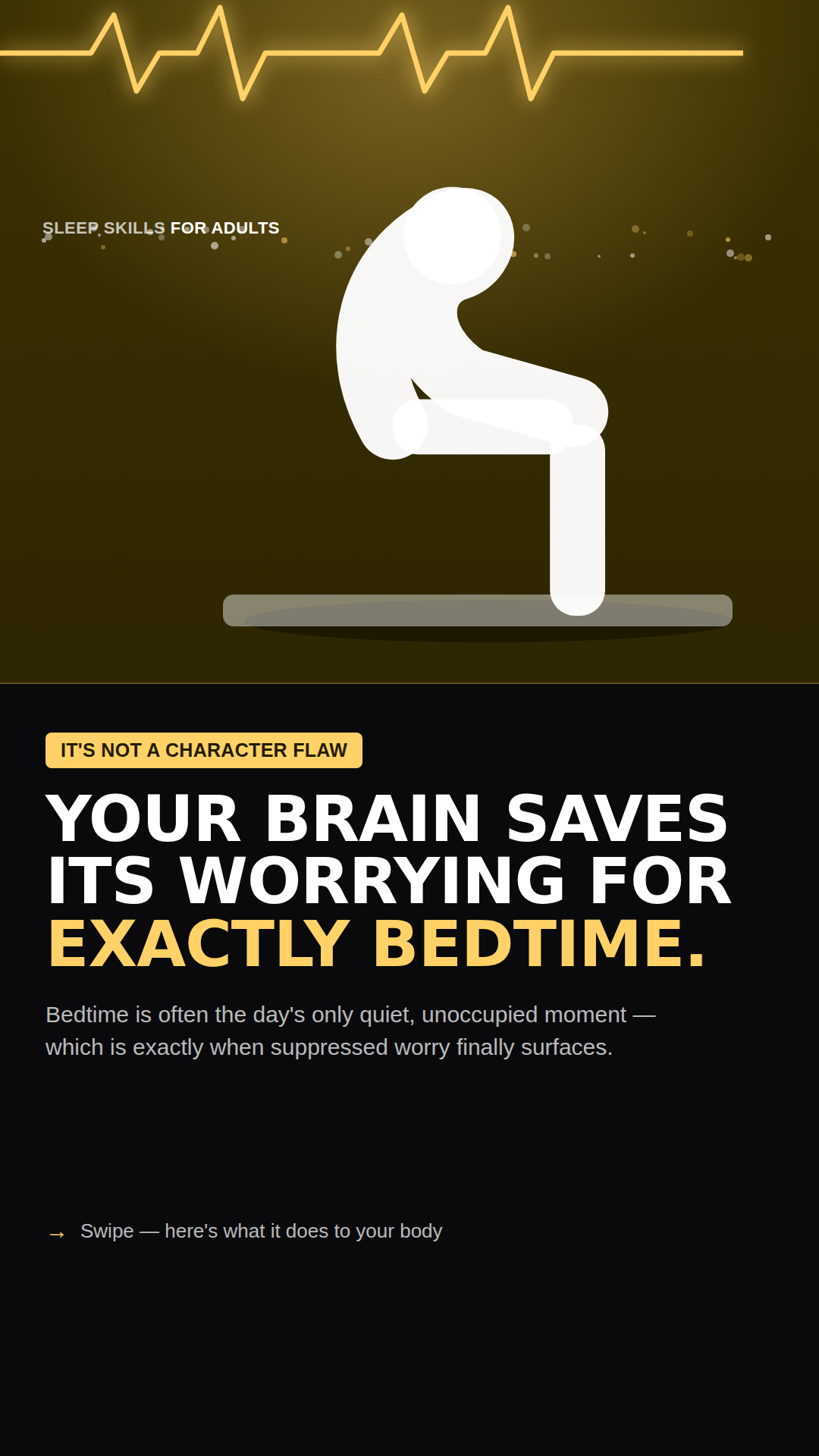
IT'S NOT A CHARACTER FLAW
Your brain saves its worrying for exactly bedtime.
Bedtime is often the day's only quiet, unoccupied moment — which is exactly when suppressed worry finally surfaces.
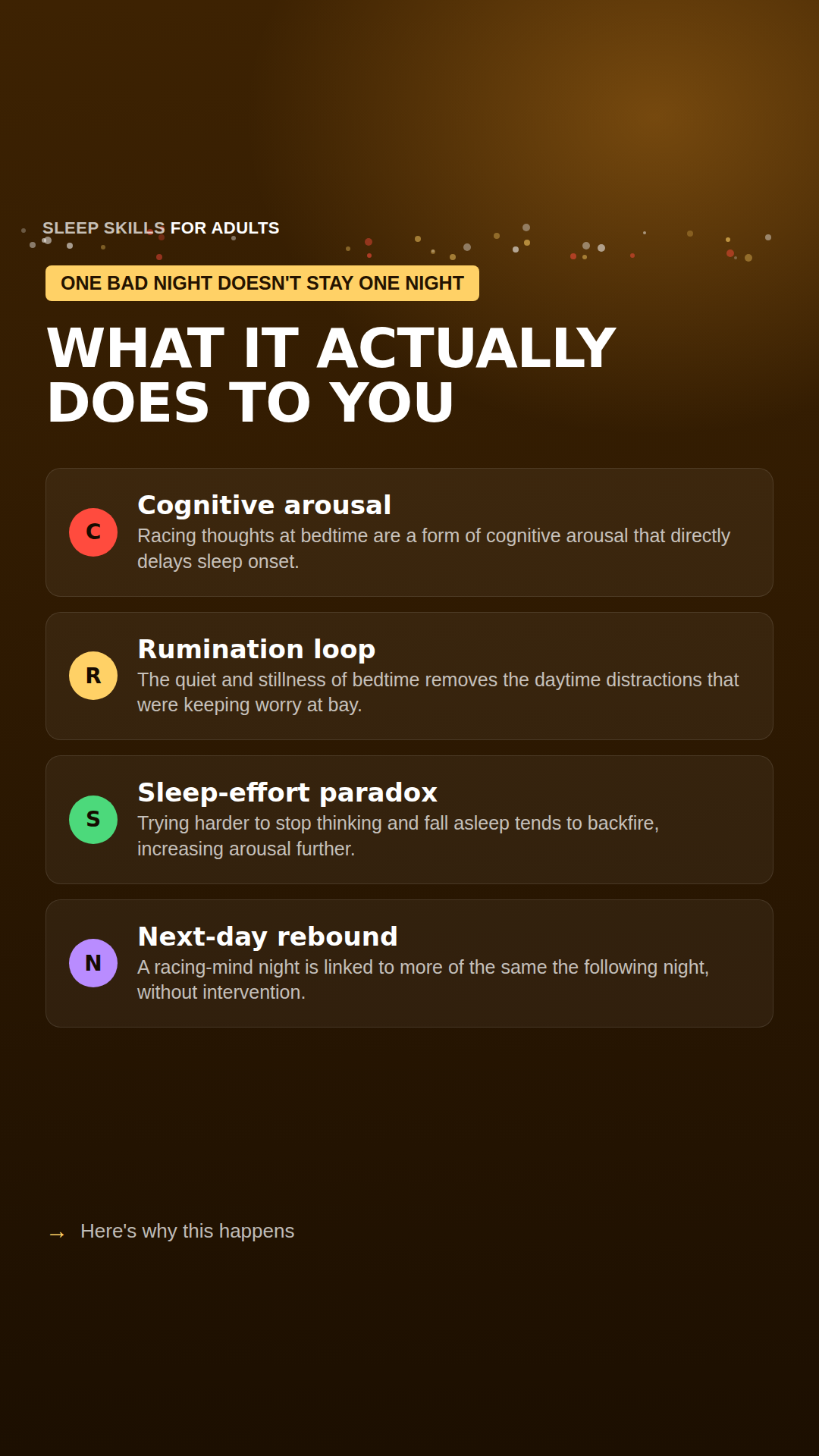
What It Actually Does to You
Cognitive arousal — Racing thoughts at bedtime are a form of cognitive arousal that directly delays sleep onset.
Rumination loop — The quiet and stillness of bedtime removes the daytime distractions that were keeping worry at bay.
Sleep-effort paradox — Trying harder to stop thinking and fall asleep tends to backfire, increasing arousal further.
Next-day rebound — A racing-mind night is linked to more of the same the following night, without intervention.
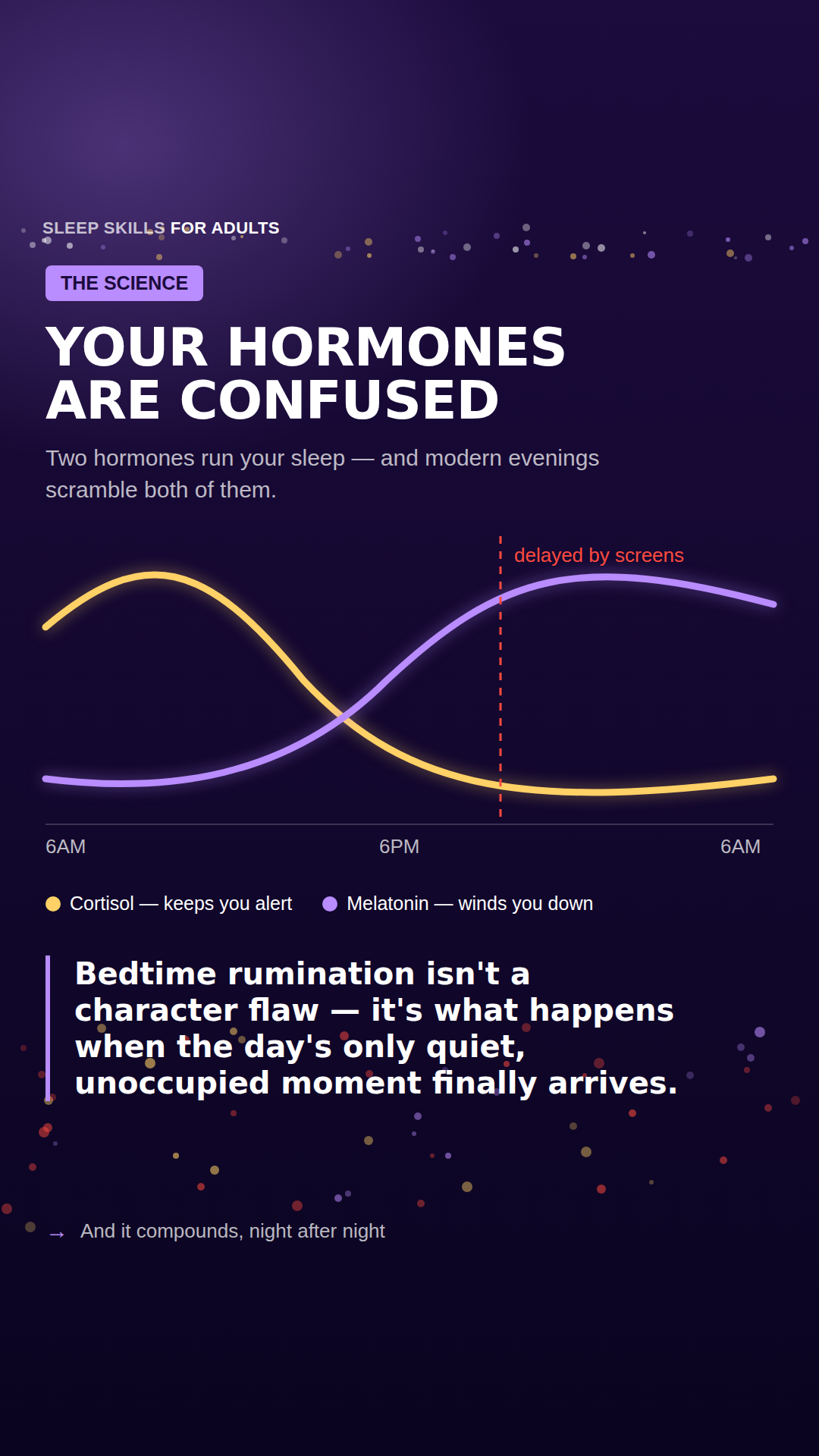
The Science
Two hormones run your sleep — and modern evenings scramble both of them. Cortisol keeps you alert; melatonin winds you down.
Bedtime rumination isn't a character flaw — it's what happens when the day's only quiet, unoccupied moment finally arrives.
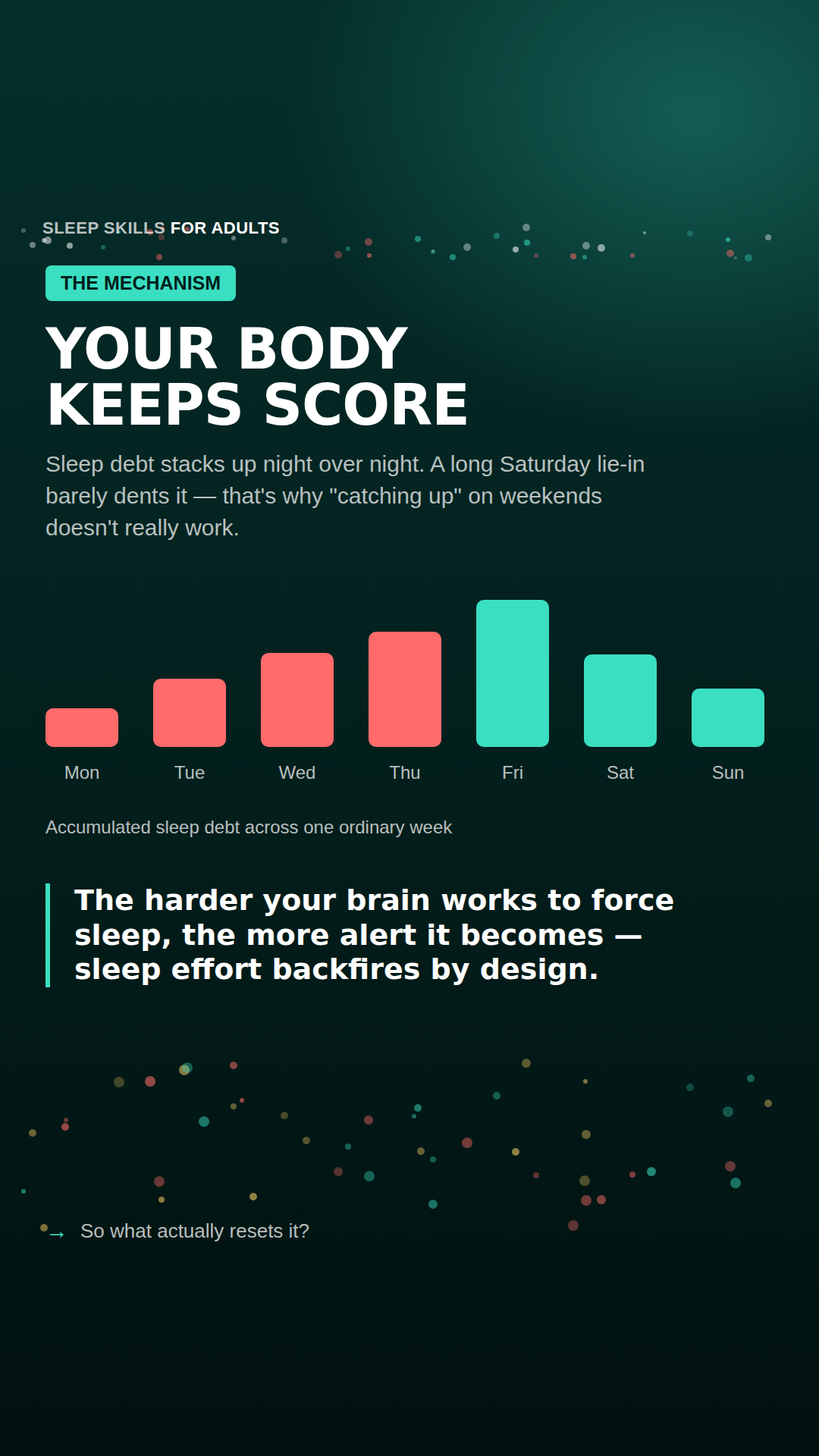
Your Body Keeps Score
Sleep debt stacks up night over night. A long Saturday lie-in barely dents it — that's why "catching up" on weekends doesn't really work.
The harder your brain works to force sleep, the more alert it becomes — sleep effort backfires by design.
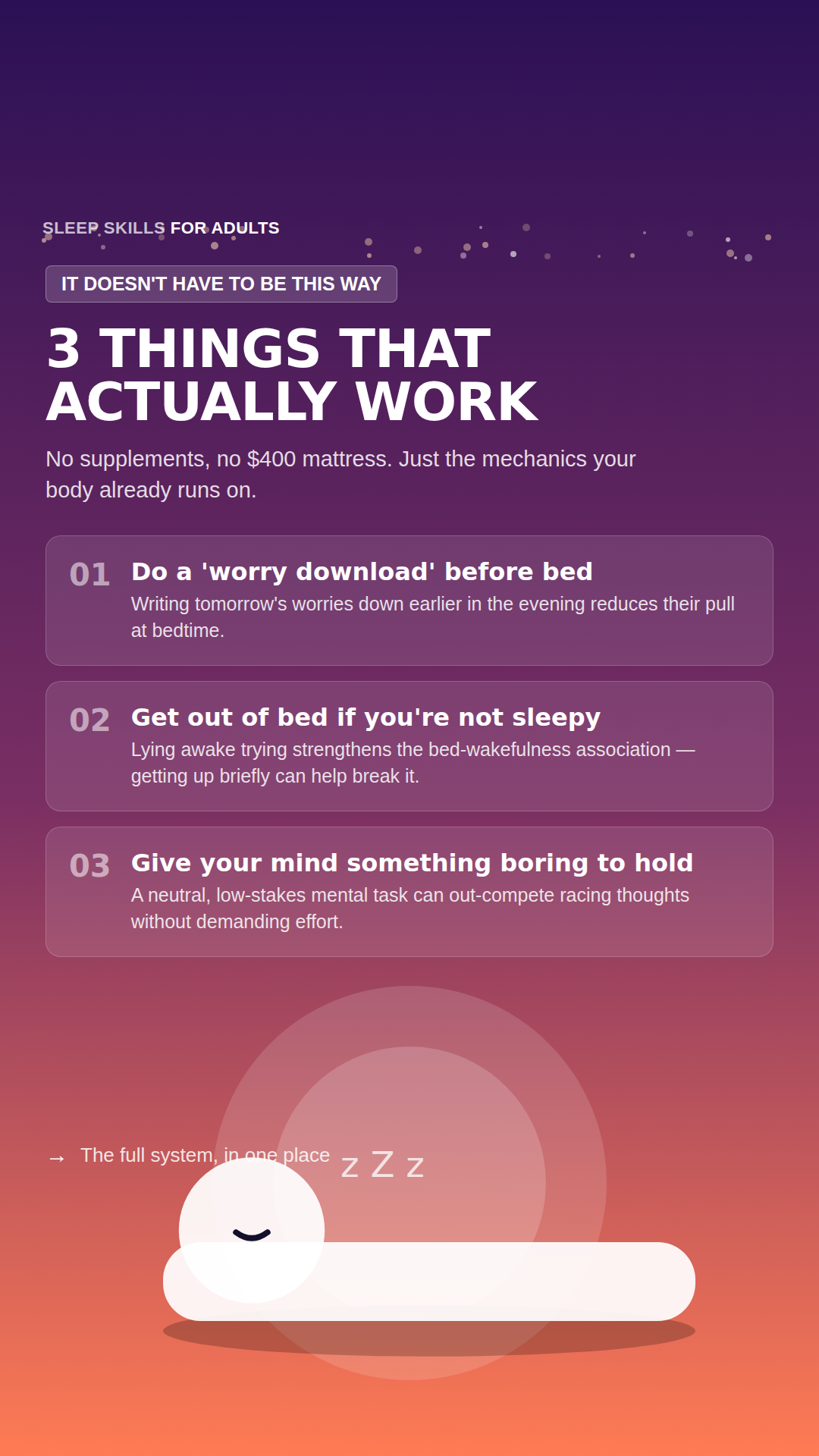
3 Things That Actually Work
- Do a 'worry download' before bed — Writing tomorrow's worries down earlier in the evening reduces their pull at bedtime.
- Get out of bed if you're not sleepy — Lying awake trying strengthens the bed-wakefulness association — getting up briefly can help break it.
- Give your mind something boring to hold — A neutral, low-stakes mental task can out-compete racing thoughts without demanding effort.
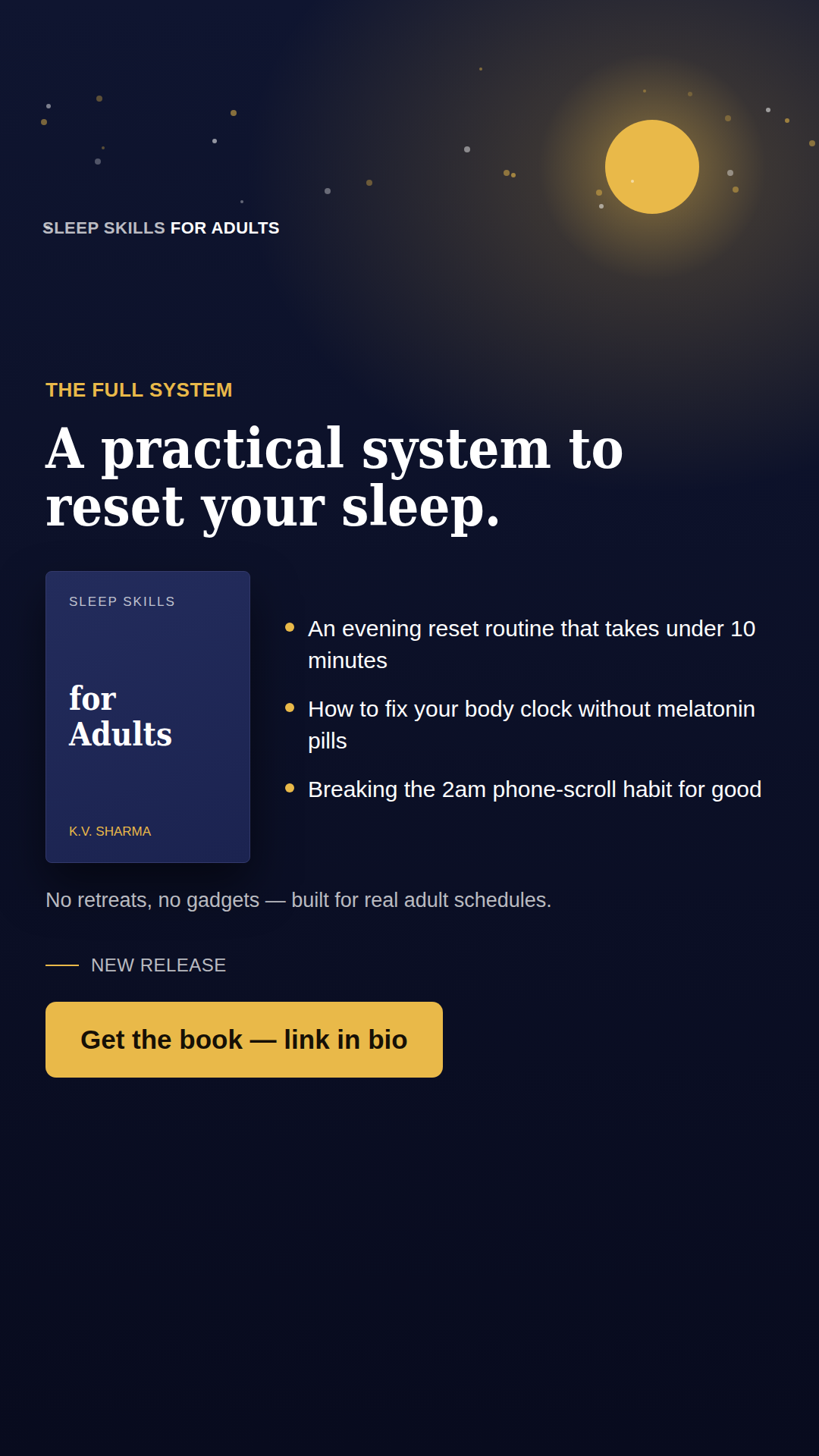
A Practical System to Reset Your Sleep
Sleep Skills for Adults — no retreats, no gadgets, built for real adult schedules. Inside:
- An evening reset routine that takes under 10 minutes
- How to fix your body clock without melatonin pills
- Breaking the 2am phone-scroll habit for good