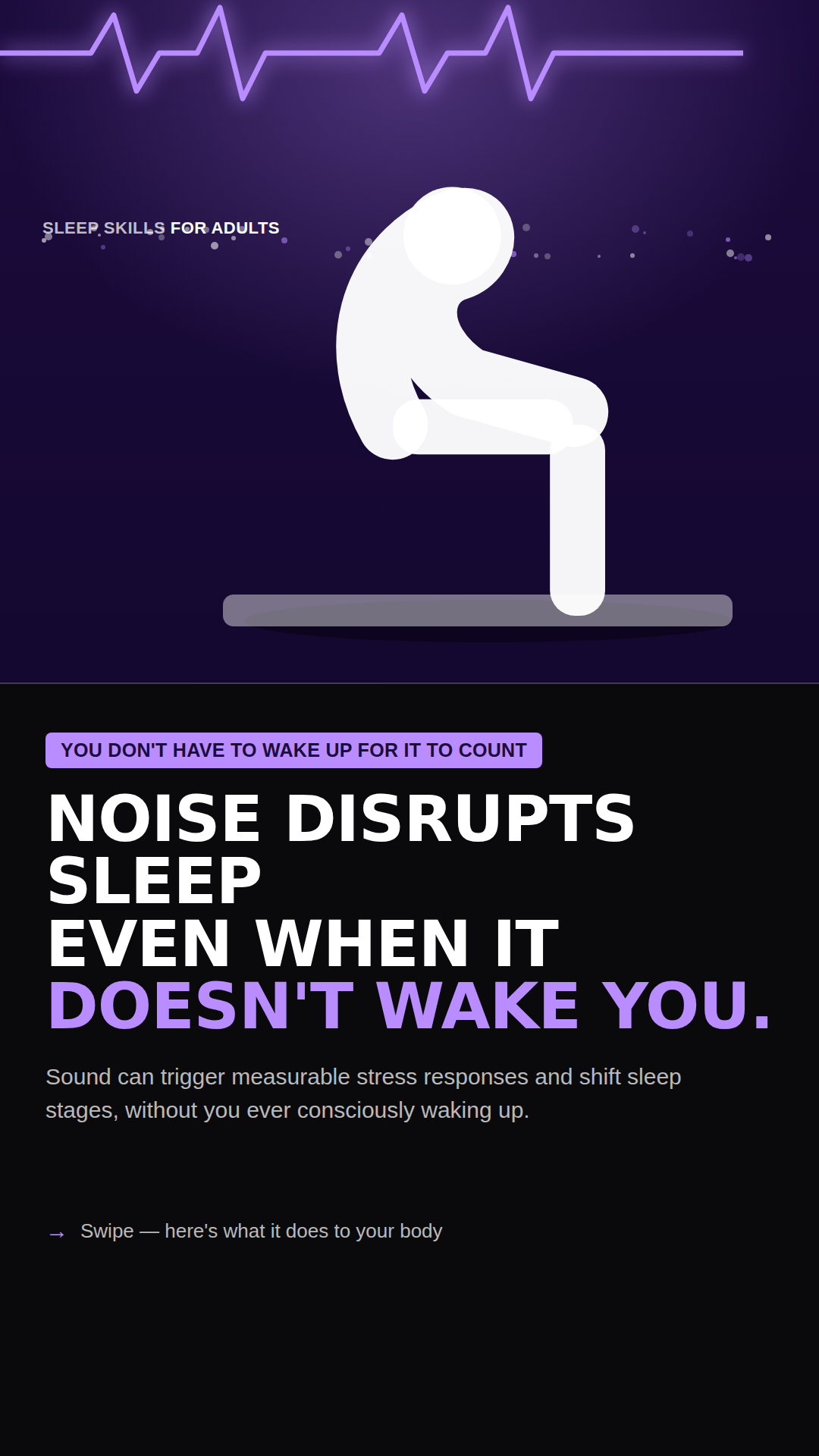
YOU DON'T HAVE TO WAKE UP FOR IT TO COUNT
Noise disrupts sleep even when it doesn't wake you.
Sound can trigger measurable stress responses and shift sleep stages, without you ever consciously waking up.
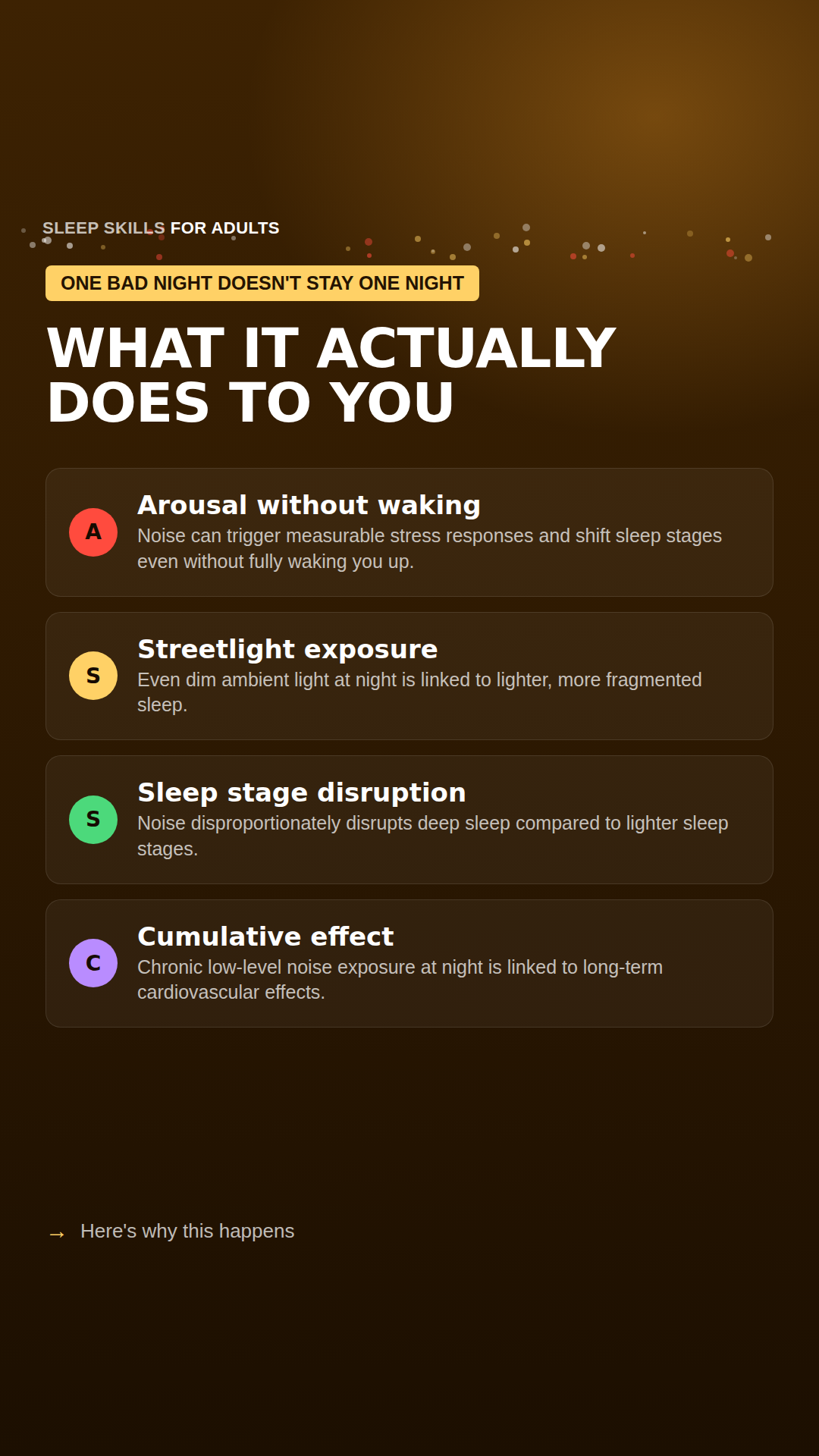
What It Actually Does to You
Arousal without waking — Noise can trigger measurable stress responses and shift sleep stages even without fully waking you up.
Streetlight exposure — Even dim ambient light at night is linked to lighter, more fragmented sleep.
Sleep stage disruption — Noise disproportionately disrupts deep sleep compared to lighter sleep stages.
Cumulative effect — Chronic low-level noise exposure at night is linked to long-term cardiovascular effects.
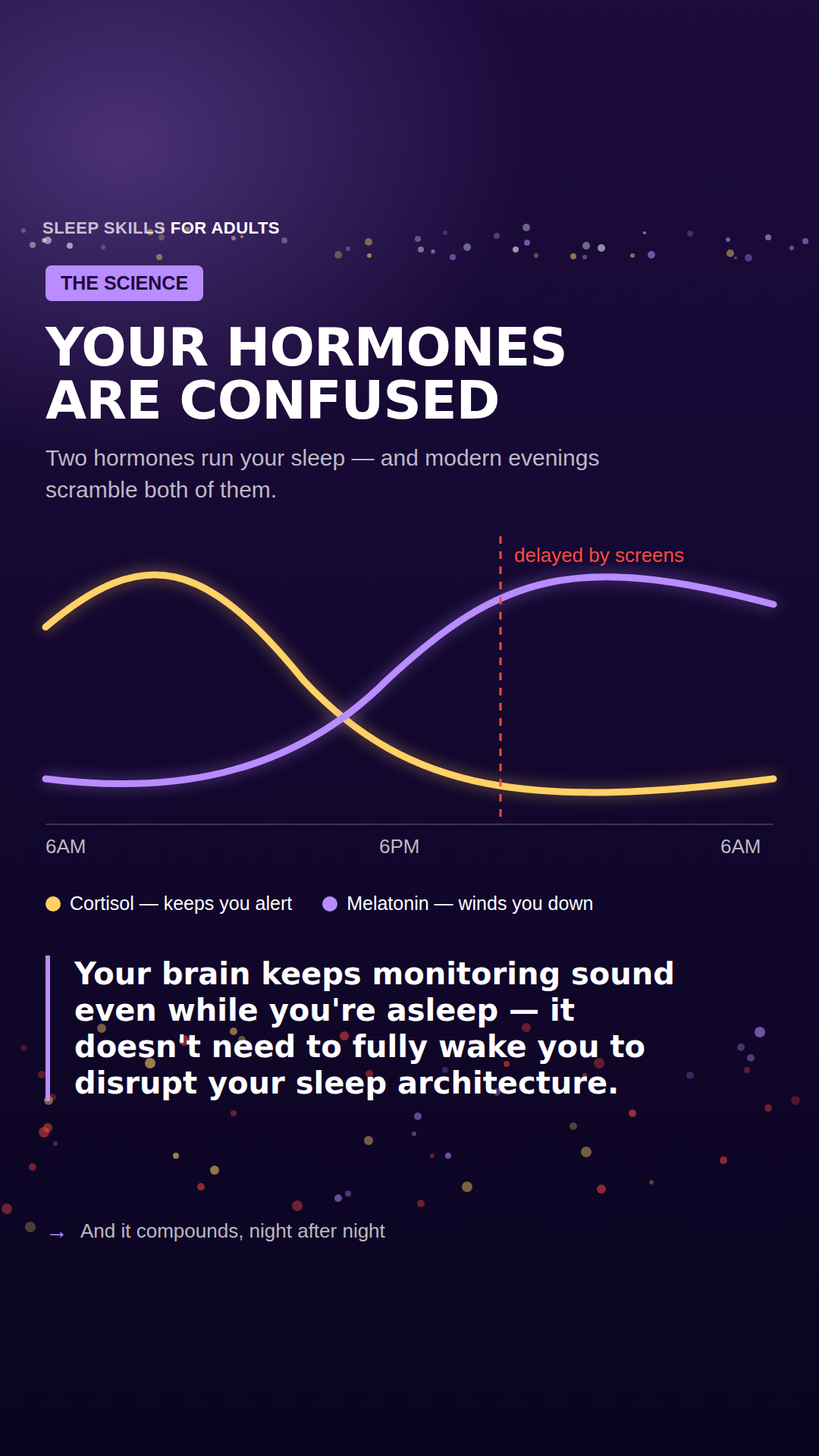
The Science
Two hormones run your sleep — and modern evenings scramble both of them. Cortisol keeps you alert; melatonin winds you down.
Your brain keeps monitoring sound even while you're asleep — it doesn't need to fully wake you to disrupt your sleep architecture.
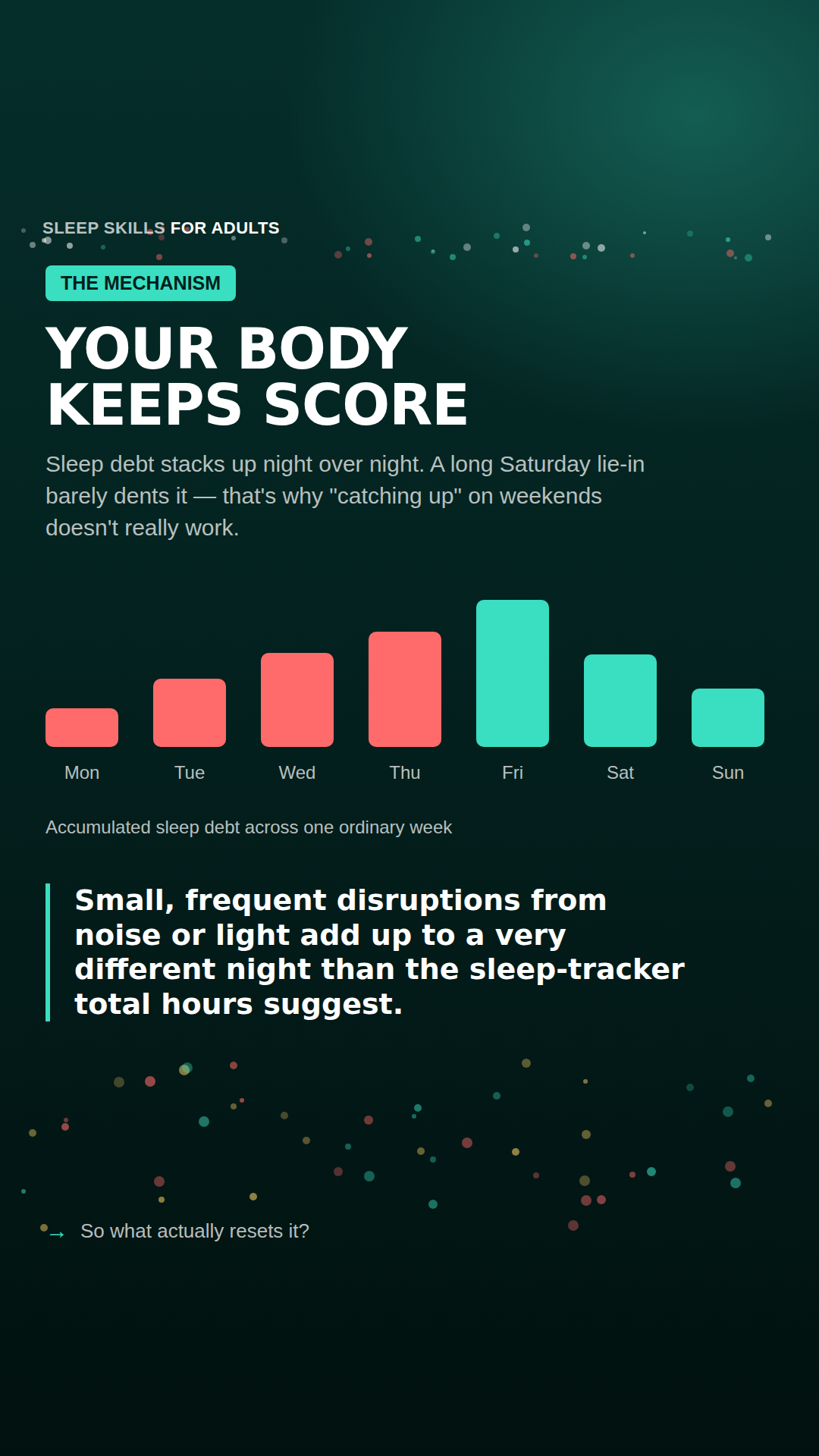
Your Body Keeps Score
Sleep debt stacks up night over night. A long Saturday lie-in barely dents it — that's why "catching up" on weekends doesn't really work.
Small, frequent disruptions from noise or light add up to a very different night than the sleep-tracker total hours suggest.
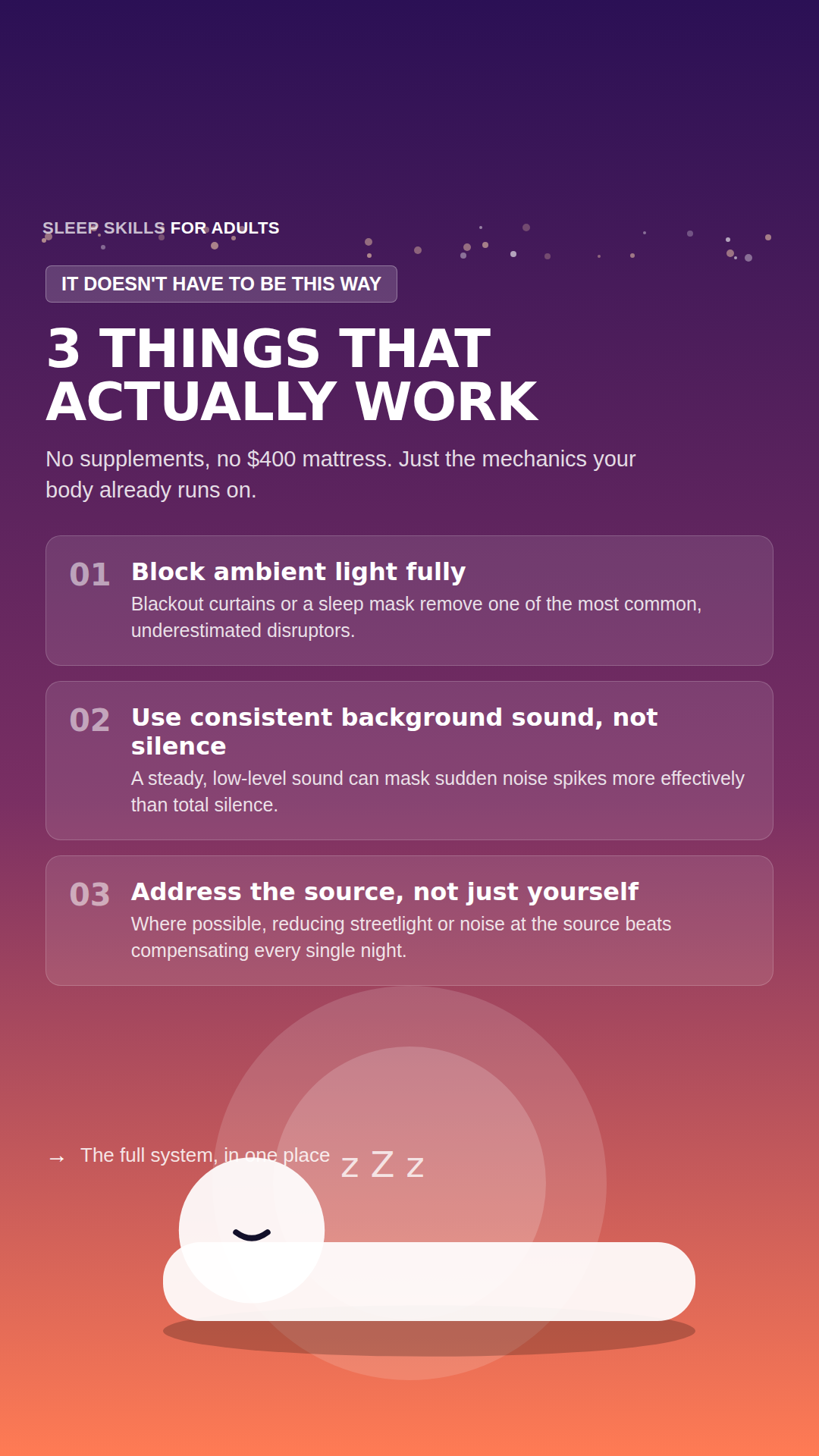
3 Things That Actually Work
- Block ambient light fully — Blackout curtains or a sleep mask remove one of the most common, underestimated disruptors.
- Use consistent background sound, not silence — A steady, low-level sound can mask sudden noise spikes more effectively than total silence.
- Address the source, not just yourself — Where possible, reducing streetlight or noise at the source beats compensating every single night.
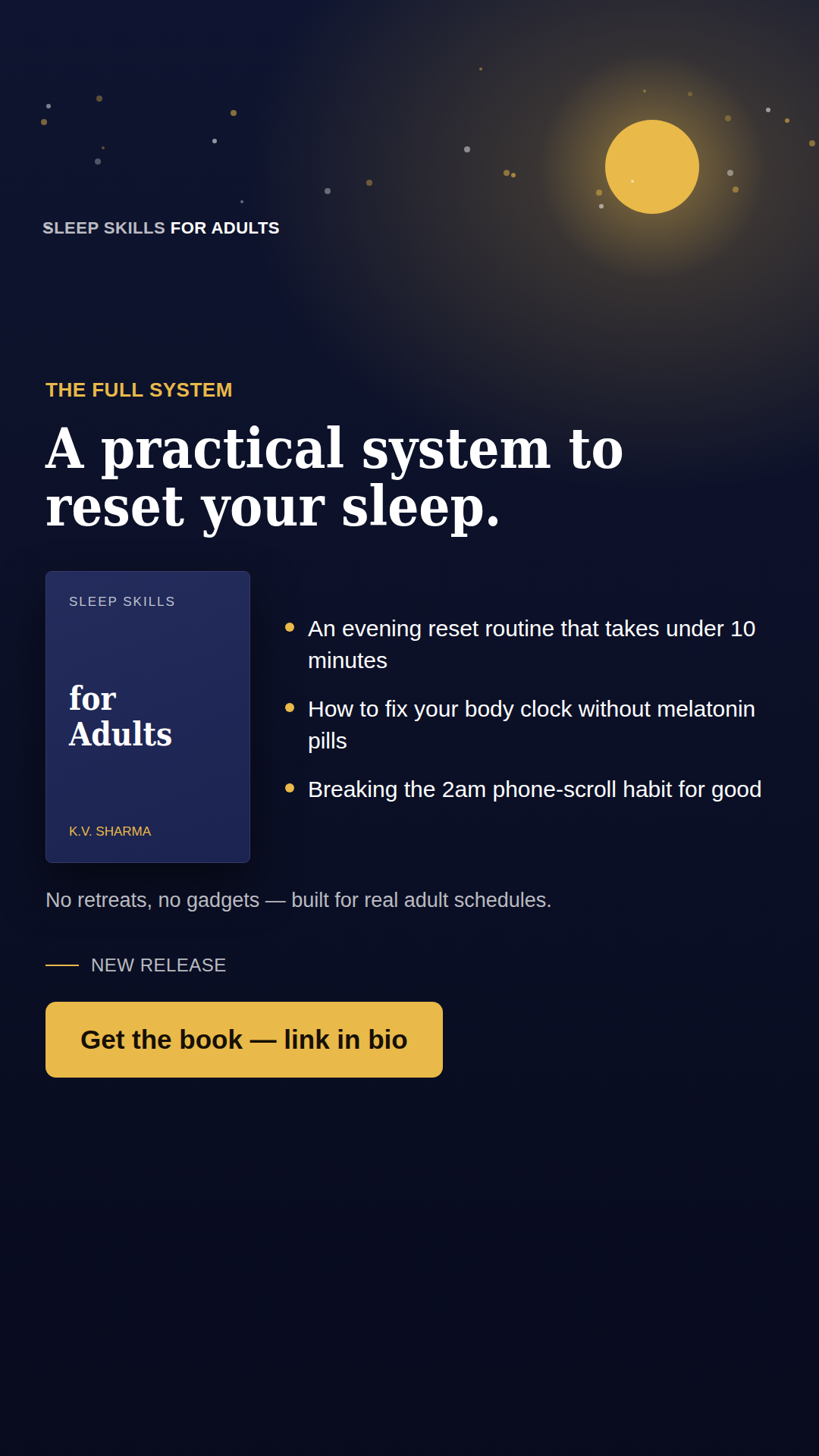
A Practical System to Reset Your Sleep
Sleep Skills for Adults — no retreats, no gadgets, built for real adult schedules. Inside:
- An evening reset routine that takes under 10 minutes
- How to fix your body clock without melatonin pills
- Breaking the 2am phone-scroll habit for good