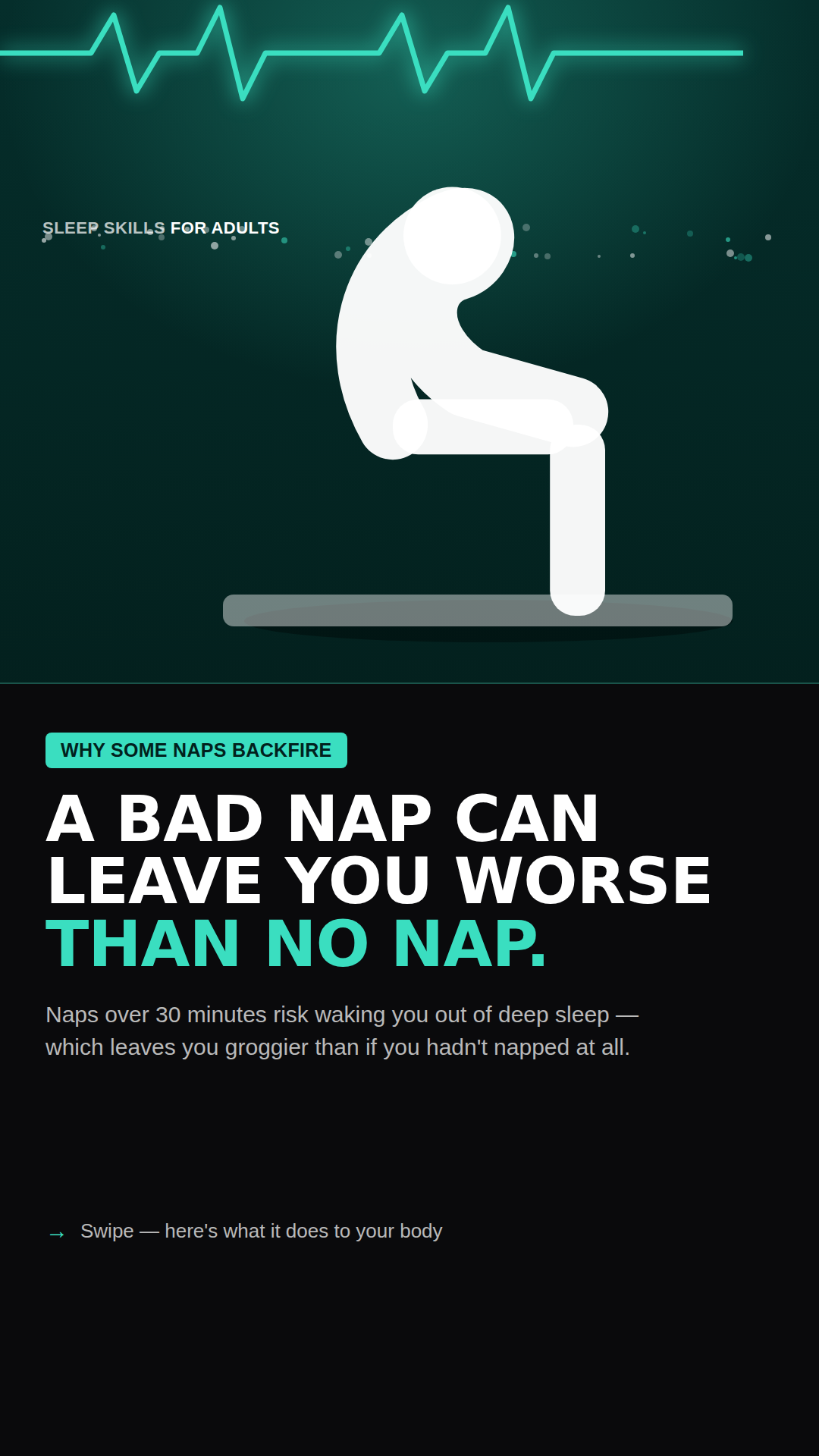
WHY SOME NAPS BACKFIRE
A bad nap can leave you worse than no nap.
Naps over 30 minutes risk waking you out of deep sleep — which leaves you groggier than if you hadn't napped at all.
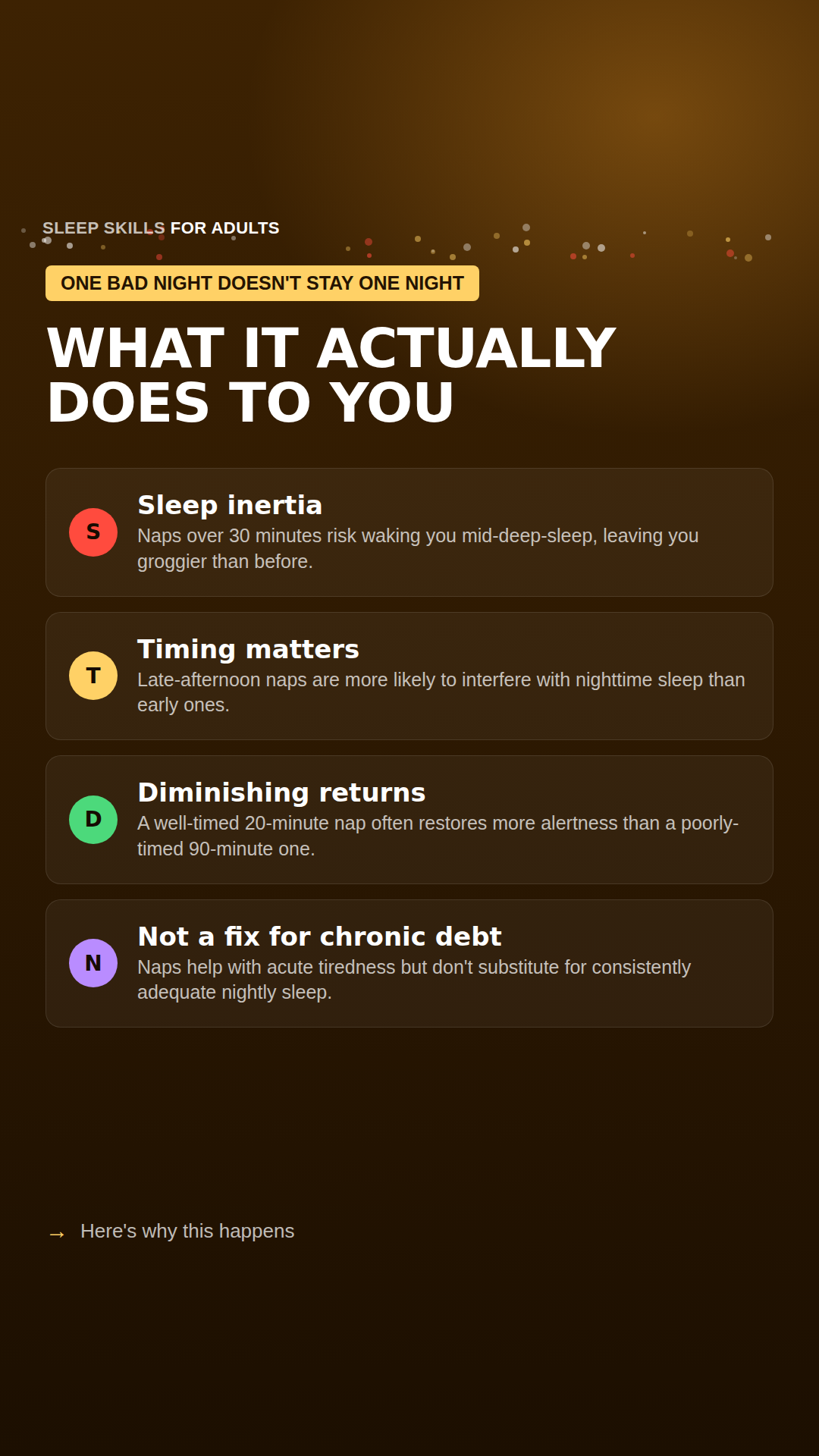
What It Actually Does to You
Sleep inertia — Naps over 30 minutes risk waking you mid-deep-sleep, leaving you groggier than before.
Timing matters — Late-afternoon naps are more likely to interfere with nighttime sleep than early ones.
Diminishing returns — A well-timed 20-minute nap often restores more alertness than a poorly-timed 90-minute one.
Not a fix for chronic debt — Naps help with acute tiredness but don't substitute for consistently adequate nightly sleep.
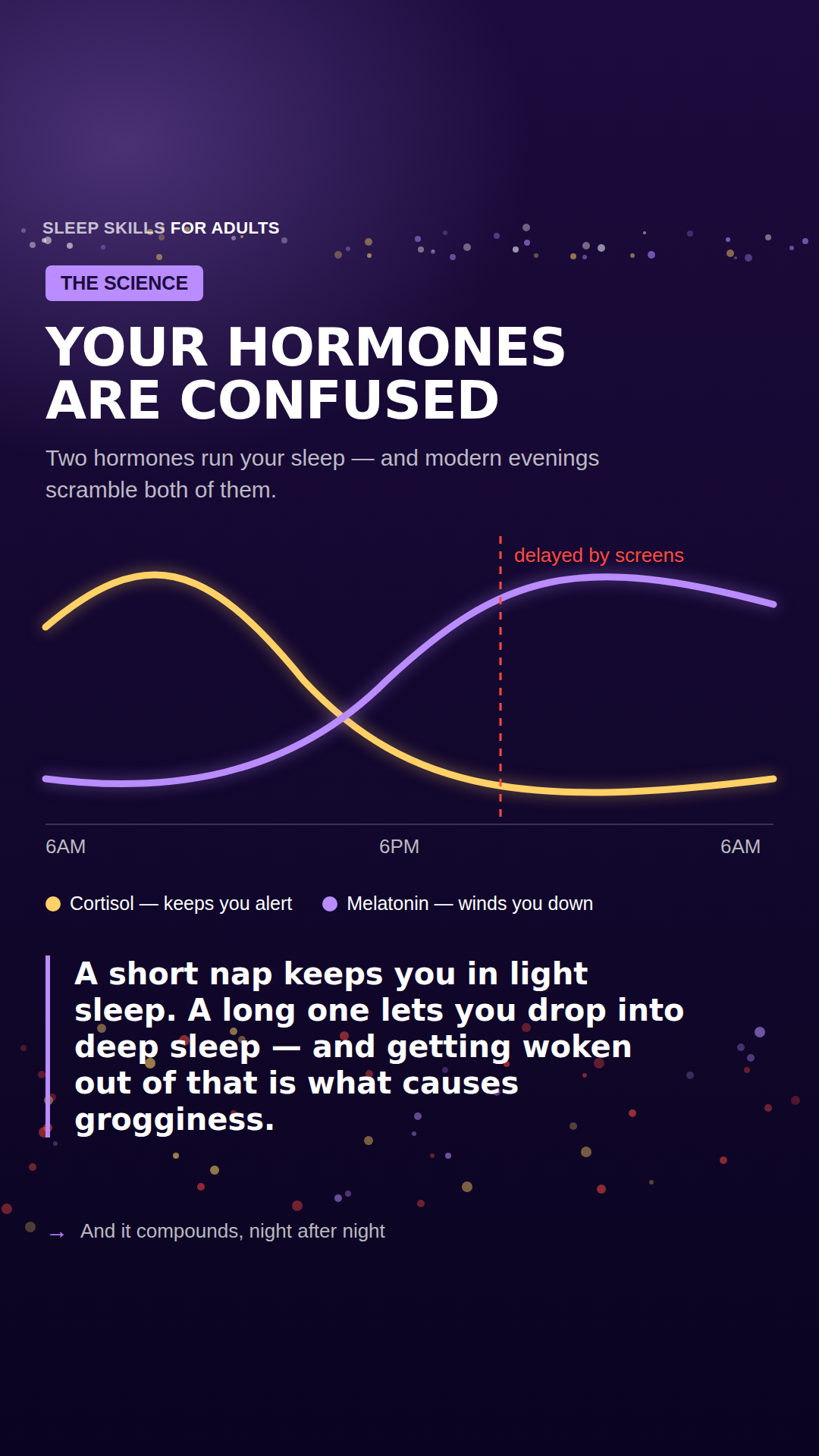
The Science
Two hormones run your sleep — and modern evenings scramble both of them. Cortisol keeps you alert; melatonin winds you down.
A short nap keeps you in light sleep. A long one lets you drop into deep sleep — and getting woken out of that is what causes grogginess.
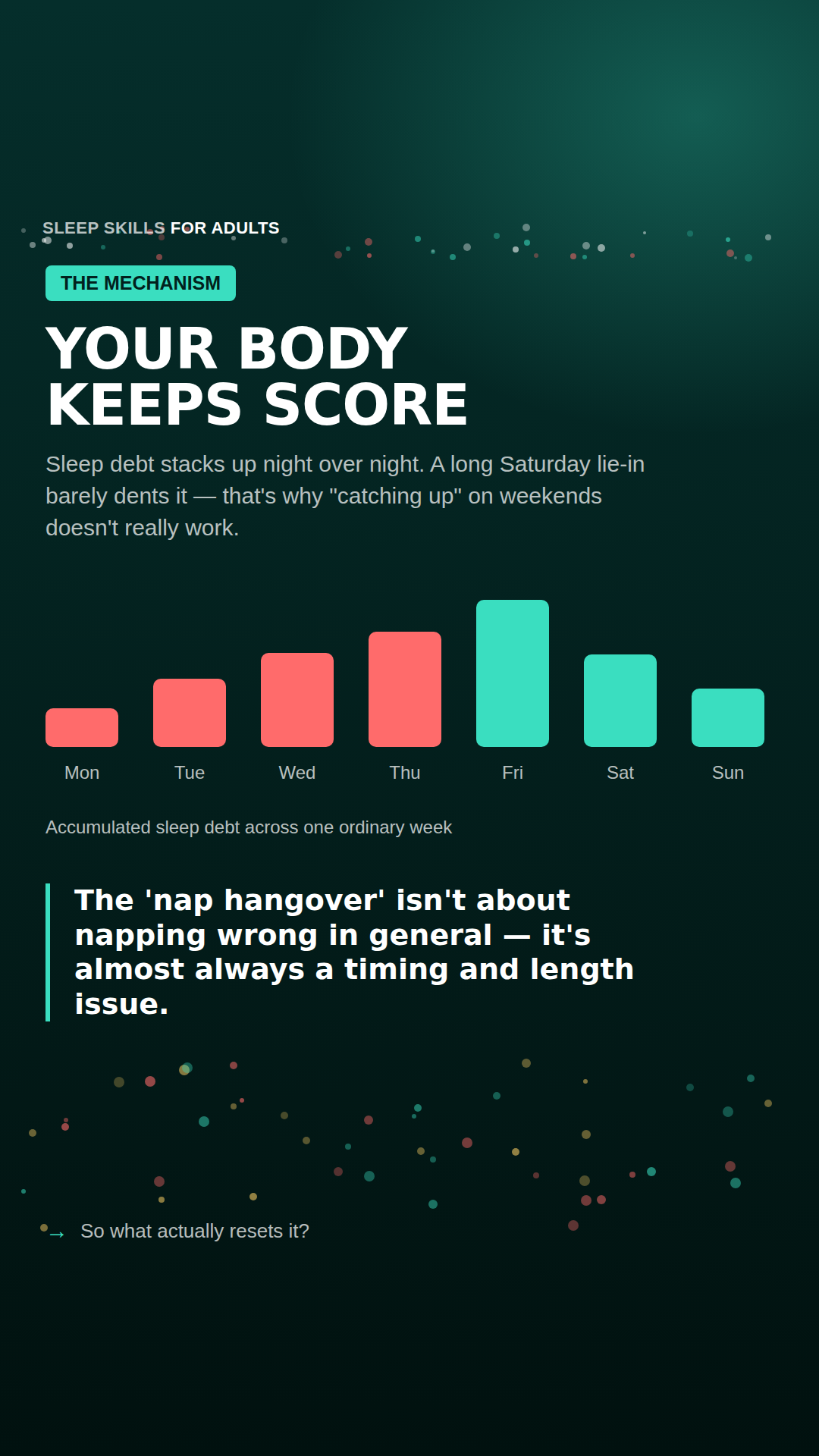
Your Body Keeps Score
Sleep debt stacks up night over night. A long Saturday lie-in barely dents it — that's why "catching up" on weekends doesn't really work.
The 'nap hangover' isn't about napping wrong in general — it's almost always a timing and length issue.
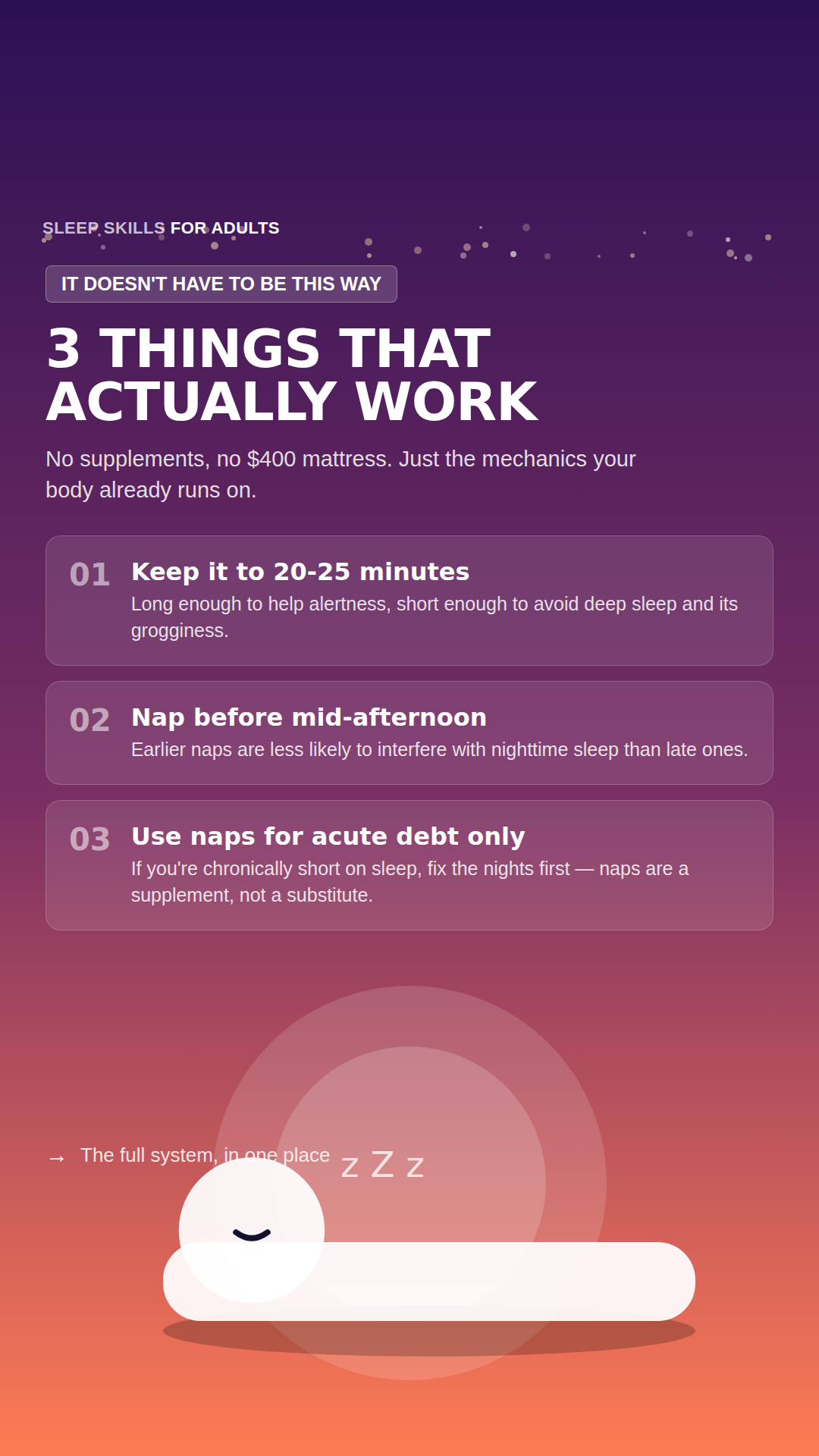
3 Things That Actually Work
- Keep it to 20-25 minutes — Long enough to help alertness, short enough to avoid deep sleep and its grogginess.
- Nap before mid-afternoon — Earlier naps are less likely to interfere with nighttime sleep than late ones.
- Use naps for acute debt only — If you're chronically short on sleep, fix the nights first — naps are a supplement, not a substitute.
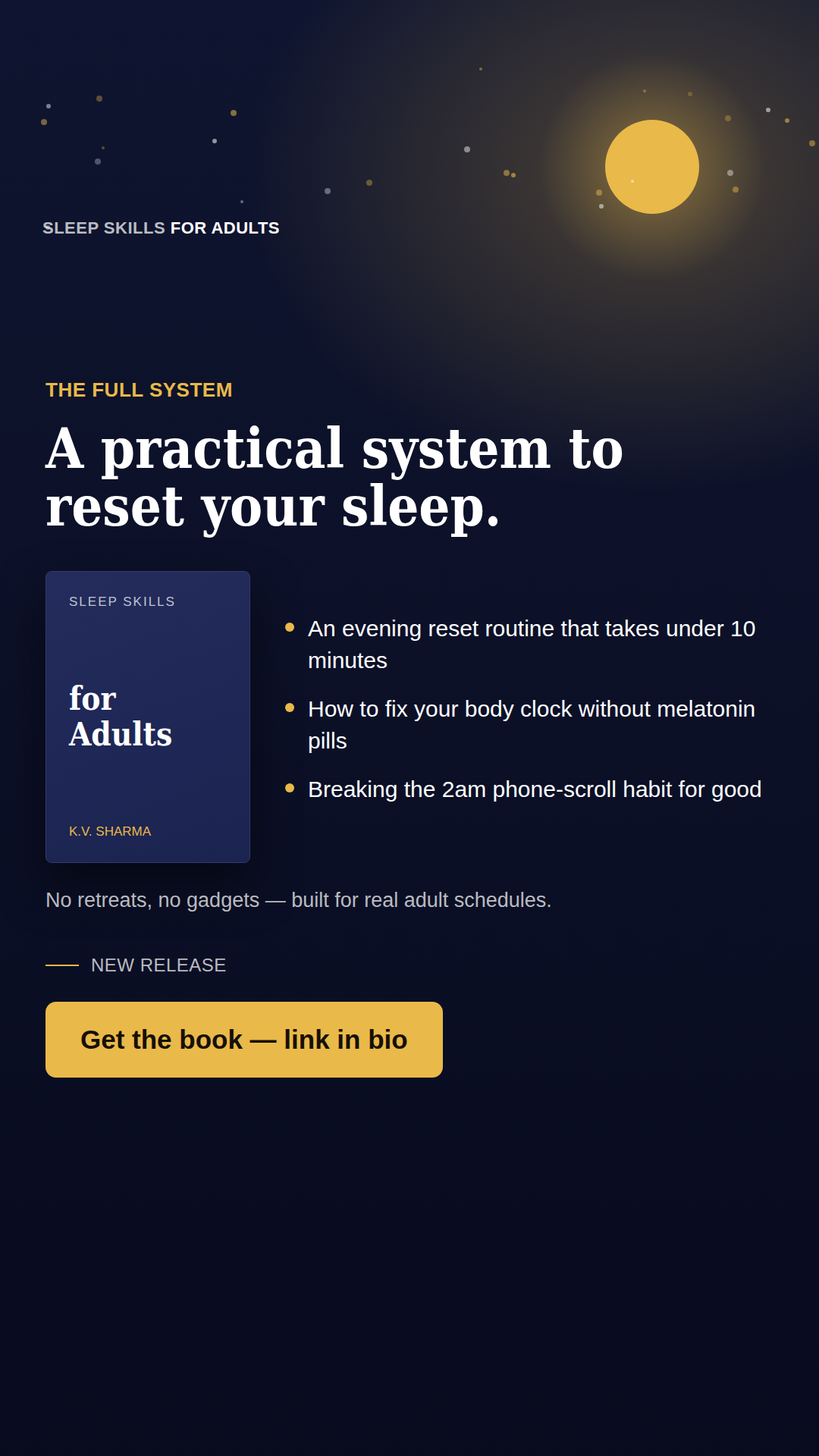
A Practical System to Reset Your Sleep
Sleep Skills for Adults — no retreats, no gadgets, built for real adult schedules. Inside:
- An evening reset routine that takes under 10 minutes
- How to fix your body clock without melatonin pills
- Breaking the 2am phone-scroll habit for good