YOUR BODY CAN'T DO BOTH AT ONCE
Digestion and deep sleep are competing for you.
Eating close to bedtime forces digestion and sleep processes to compete for the same bodily resources.
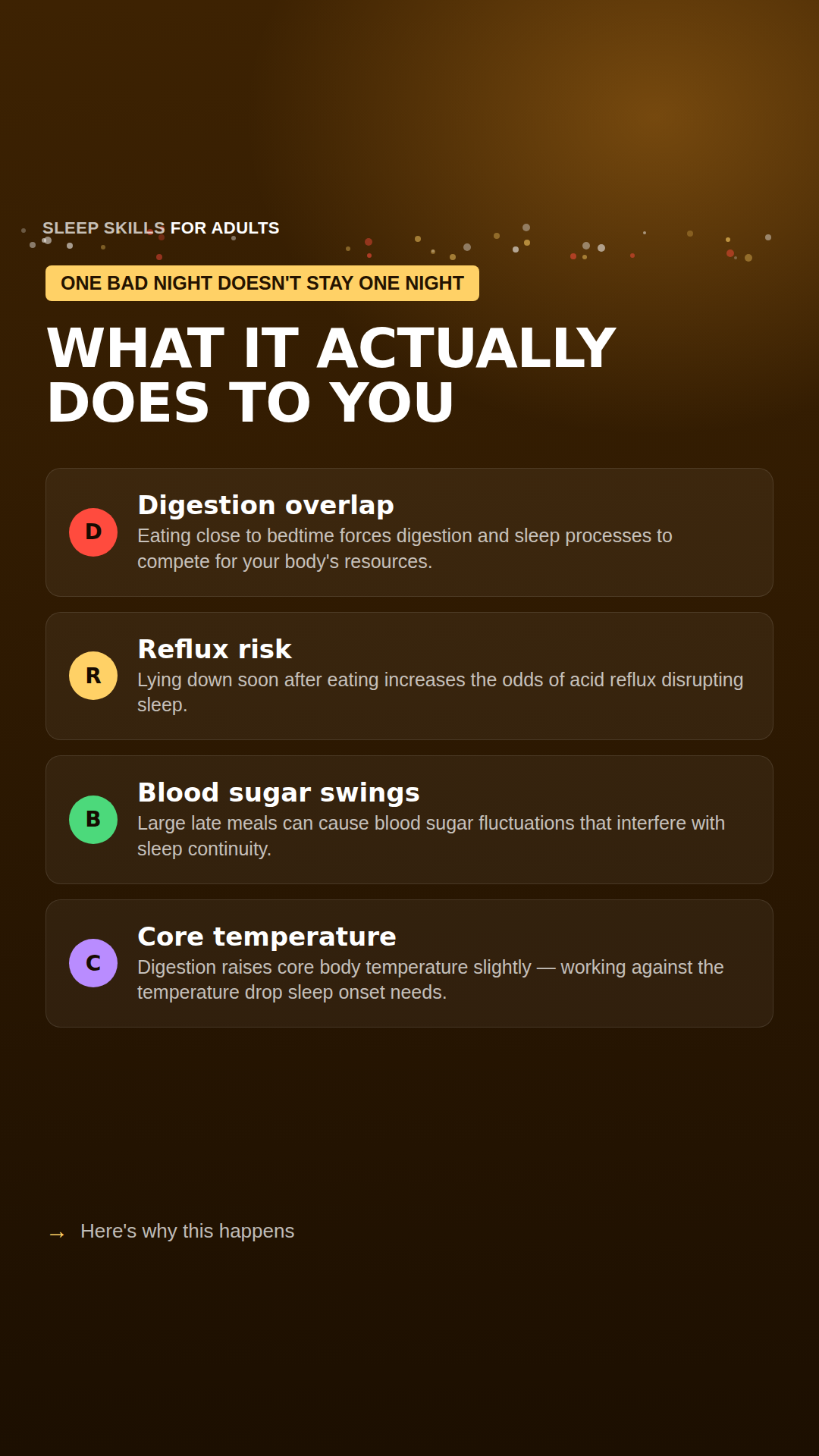
What It Actually Does to You
Digestion overlap — Eating close to bedtime forces digestion and sleep processes to compete for your body's resources.
Reflux risk — Lying down soon after eating increases the odds of acid reflux disrupting sleep.
Blood sugar swings — Large late meals can cause blood sugar fluctuations that interfere with sleep continuity.
Core temperature — Digestion raises core body temperature slightly — working against the temperature drop sleep onset needs.
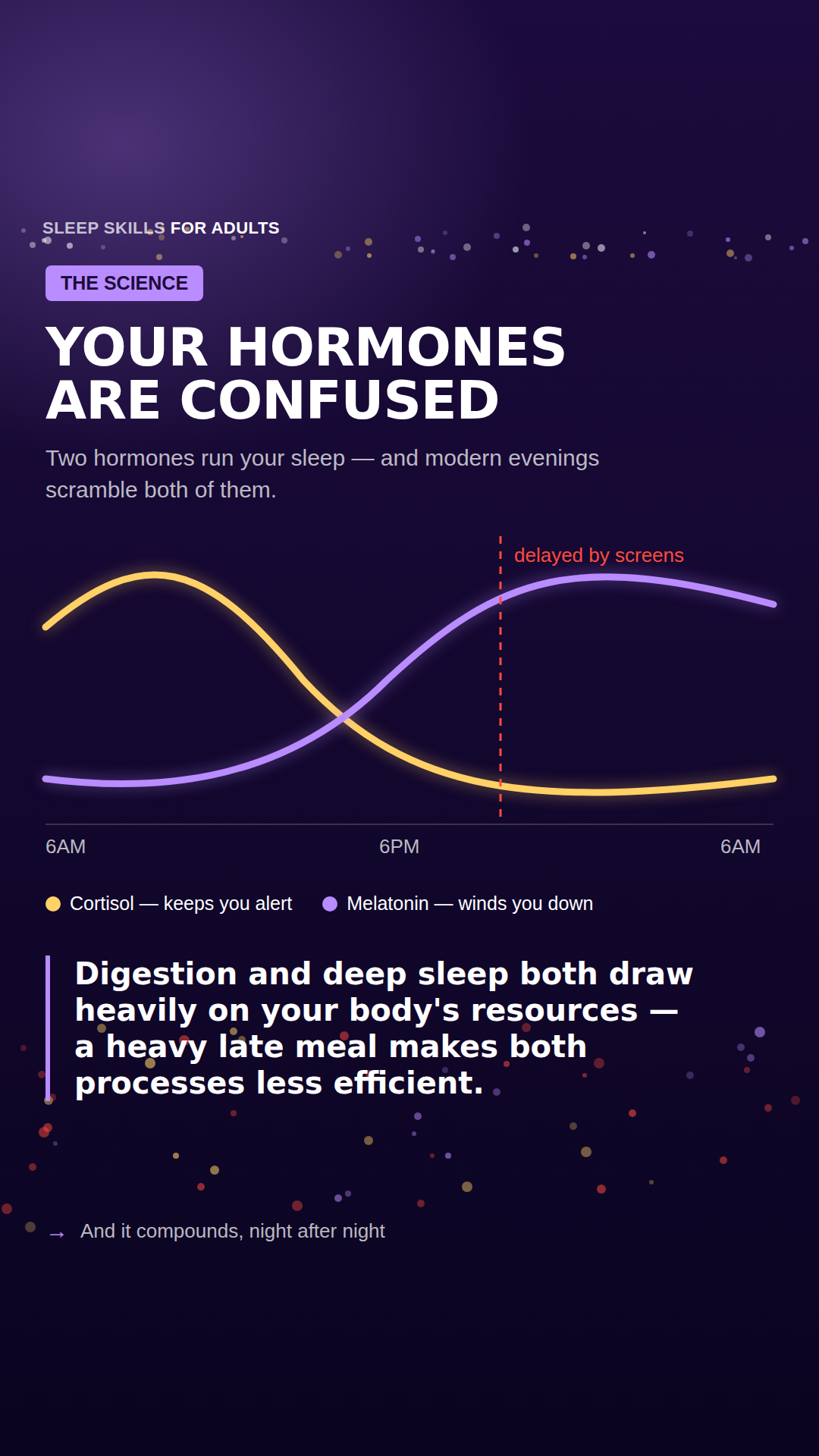
The Science
Two hormones run your sleep — and modern evenings scramble both of them. Cortisol keeps you alert; melatonin winds you down.
Digestion and deep sleep both draw heavily on your body's resources — a heavy late meal makes both processes less efficient.
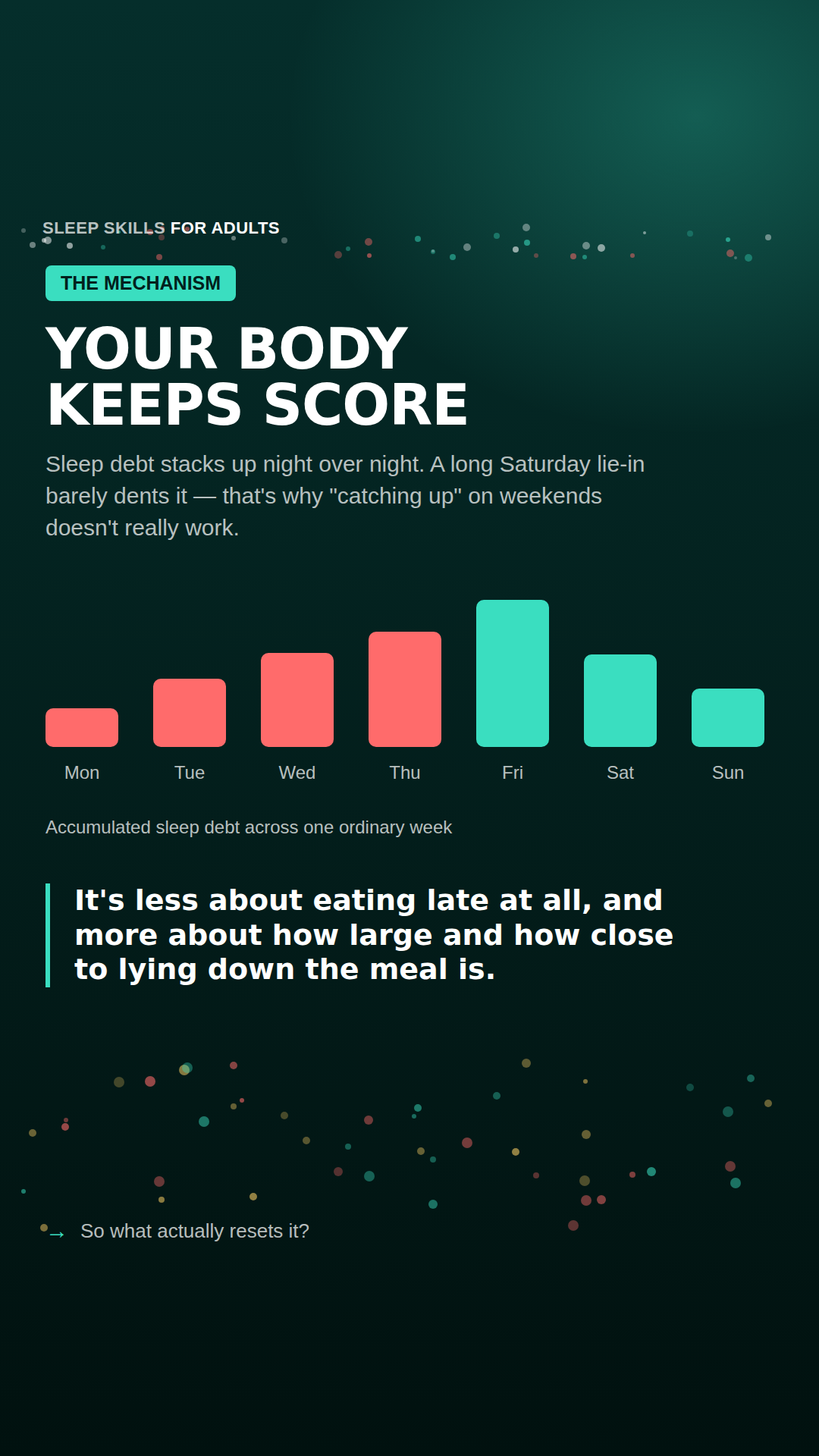
Your Body Keeps Score
Sleep debt stacks up night over night. A long Saturday lie-in barely dents it — that's why "catching up" on weekends doesn't really work.
It's less about eating late at all, and more about how large and how close to lying down the meal is.
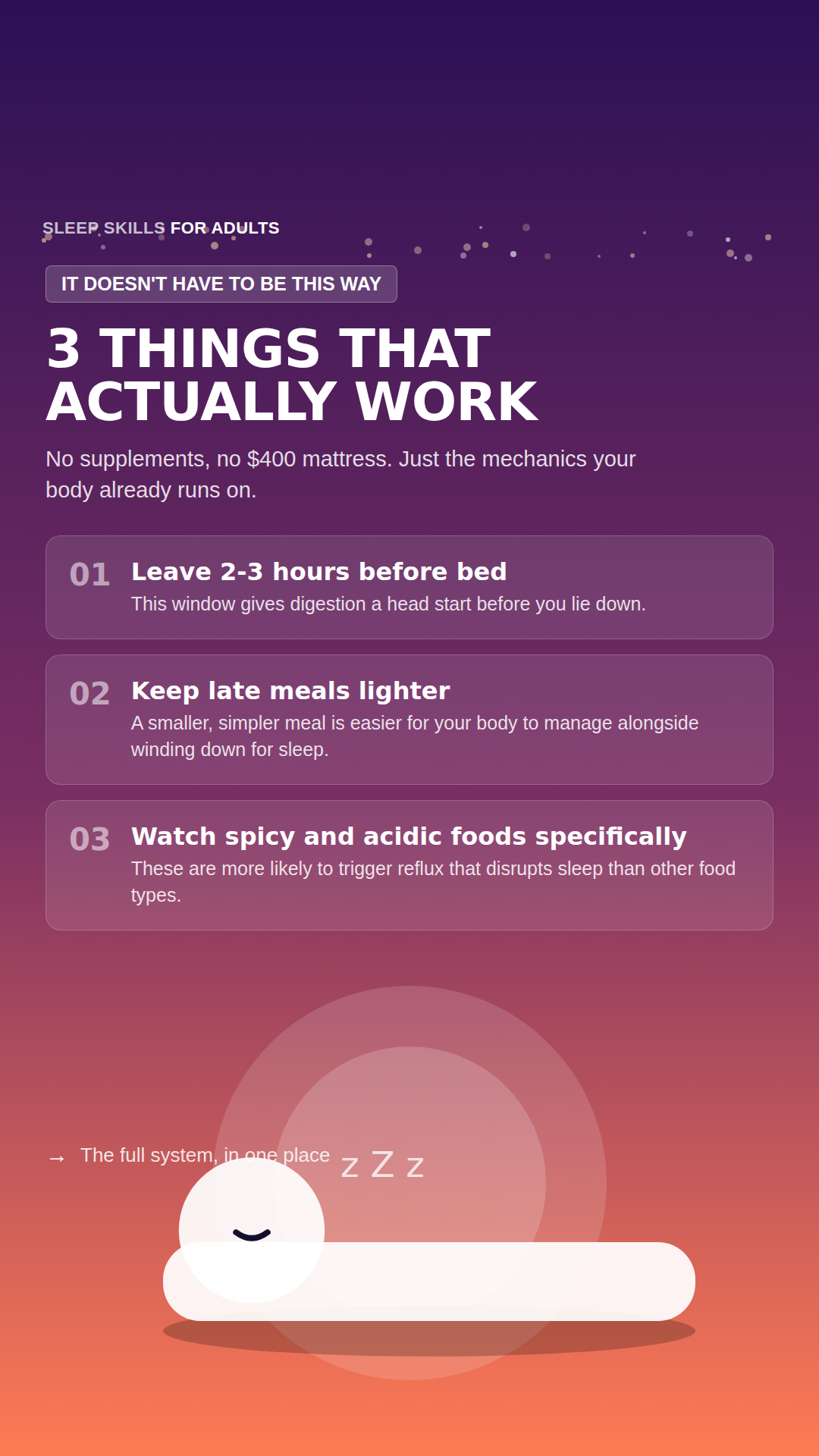
3 Things That Actually Work
- Leave 2-3 hours before bed — This window gives digestion a head start before you lie down.
- Keep late meals lighter — A smaller, simpler meal is easier for your body to manage alongside winding down for sleep.
- Watch spicy and acidic foods specifically — These are more likely to trigger reflux that disrupts sleep than other food types.
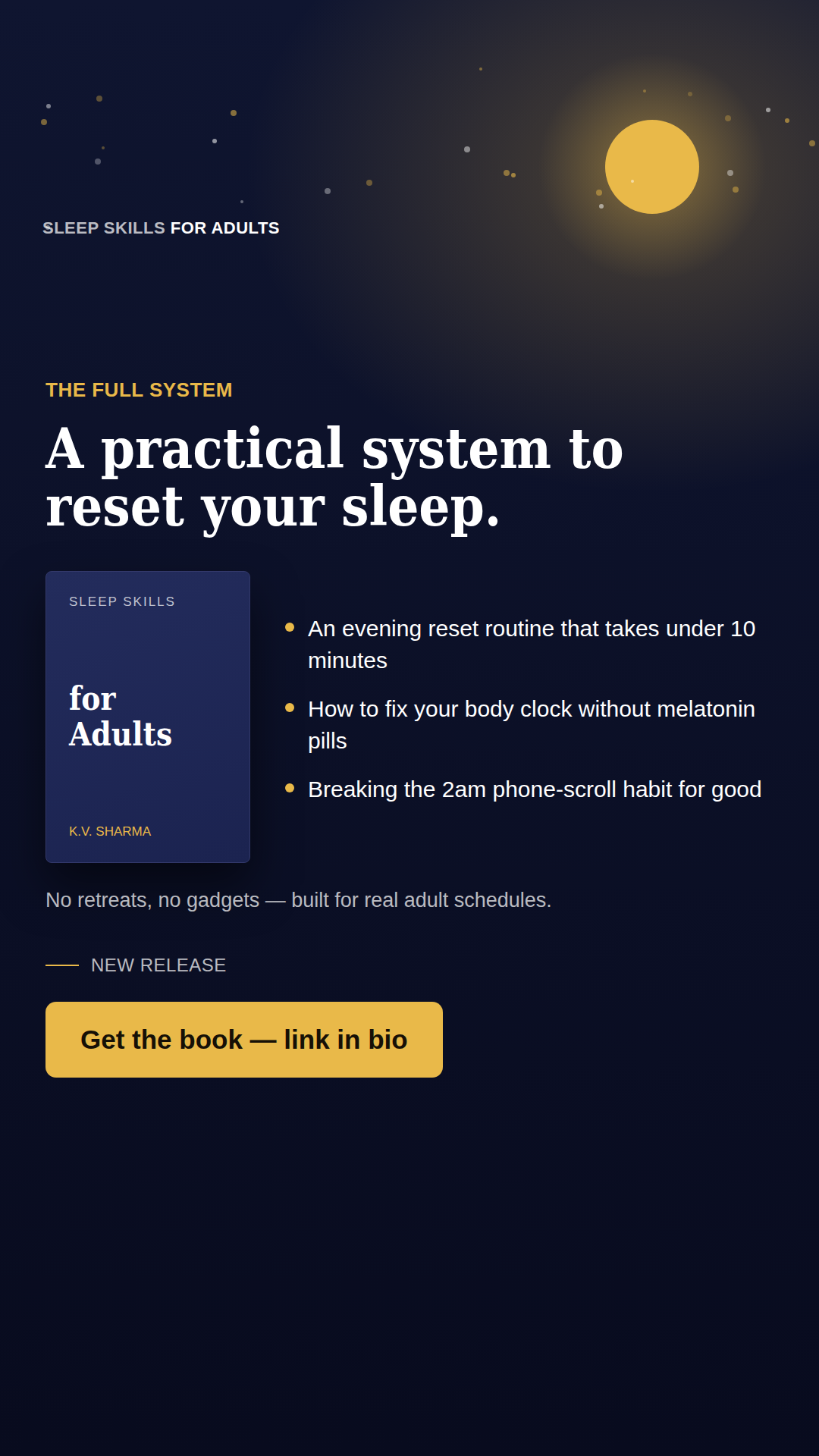
A Practical System to Reset Your Sleep
Sleep Skills for Adults — no retreats, no gadgets, built for real adult schedules. Inside:
- An evening reset routine that takes under 10 minutes
- How to fix your body clock without melatonin pills
- Breaking the 2am phone-scroll habit for good