TIMING MATTERS MORE THAN YOU THINK
A late intense workout can fight your own sleep.
Vigorous exercise close to bedtime raises core temperature and alertness — right when both need to be dropping.
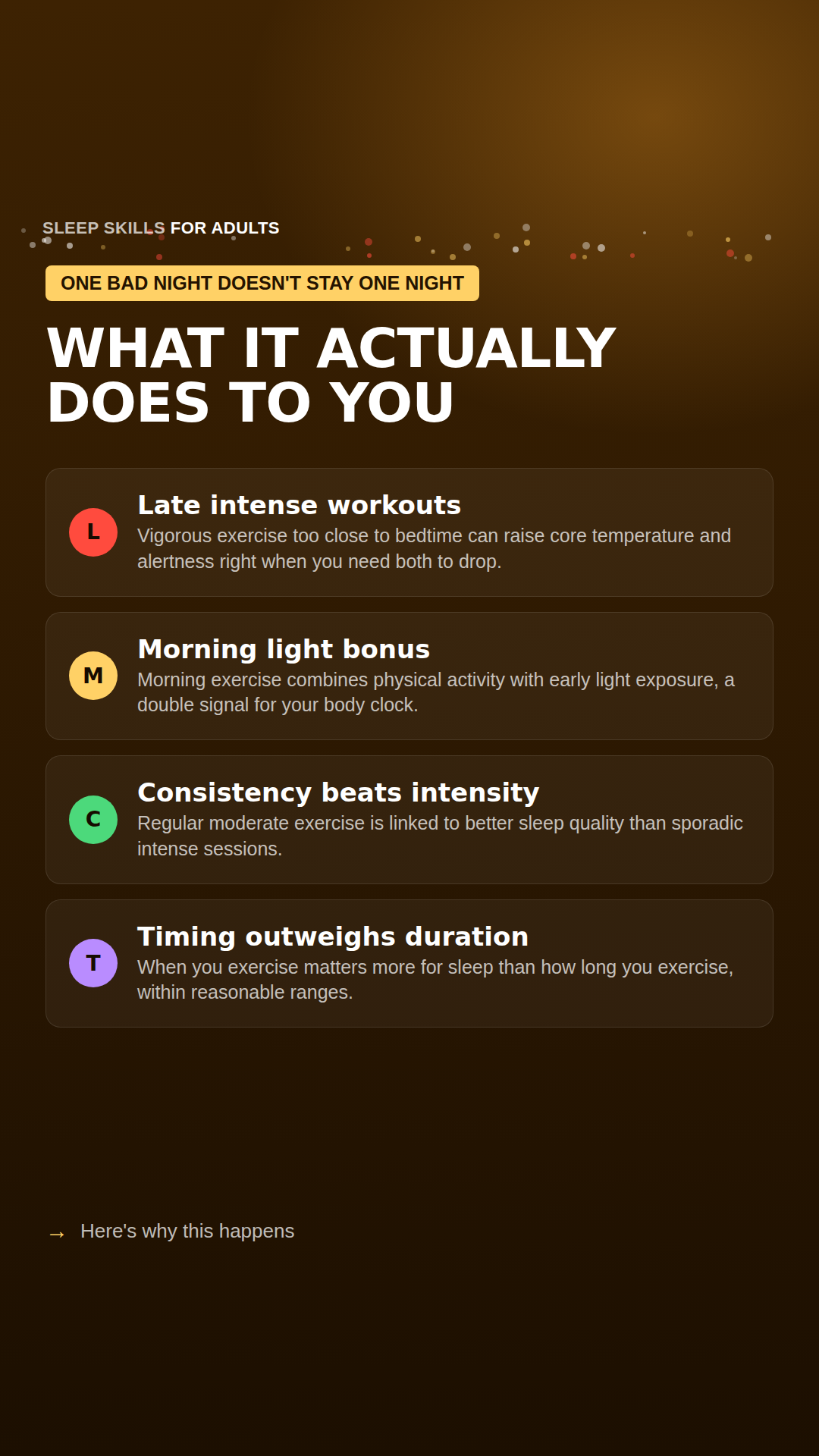
What It Actually Does to You
Late intense workouts — Vigorous exercise too close to bedtime can raise core temperature and alertness right when you need both to drop.
Morning light bonus — Morning exercise combines physical activity with early light exposure, a double signal for your body clock.
Consistency beats intensity — Regular moderate exercise is linked to better sleep quality than sporadic intense sessions.
Timing outweighs duration — When you exercise matters more for sleep than how long you exercise, within reasonable ranges.
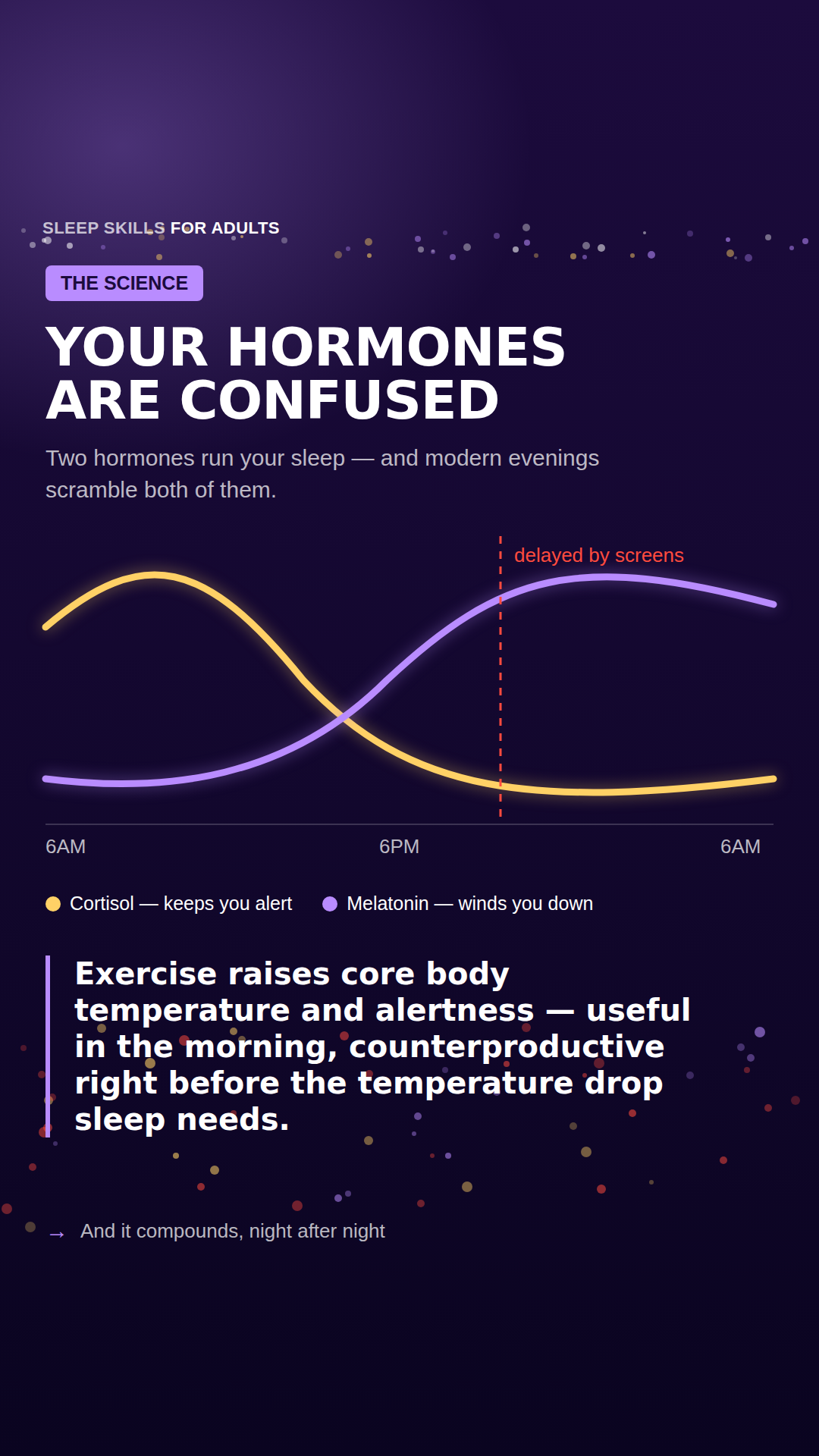
The Science
Two hormones run your sleep — and modern evenings scramble both of them. Cortisol keeps you alert; melatonin winds you down.
Exercise raises core body temperature and alertness — useful in the morning, counterproductive right before the temperature drop sleep needs.
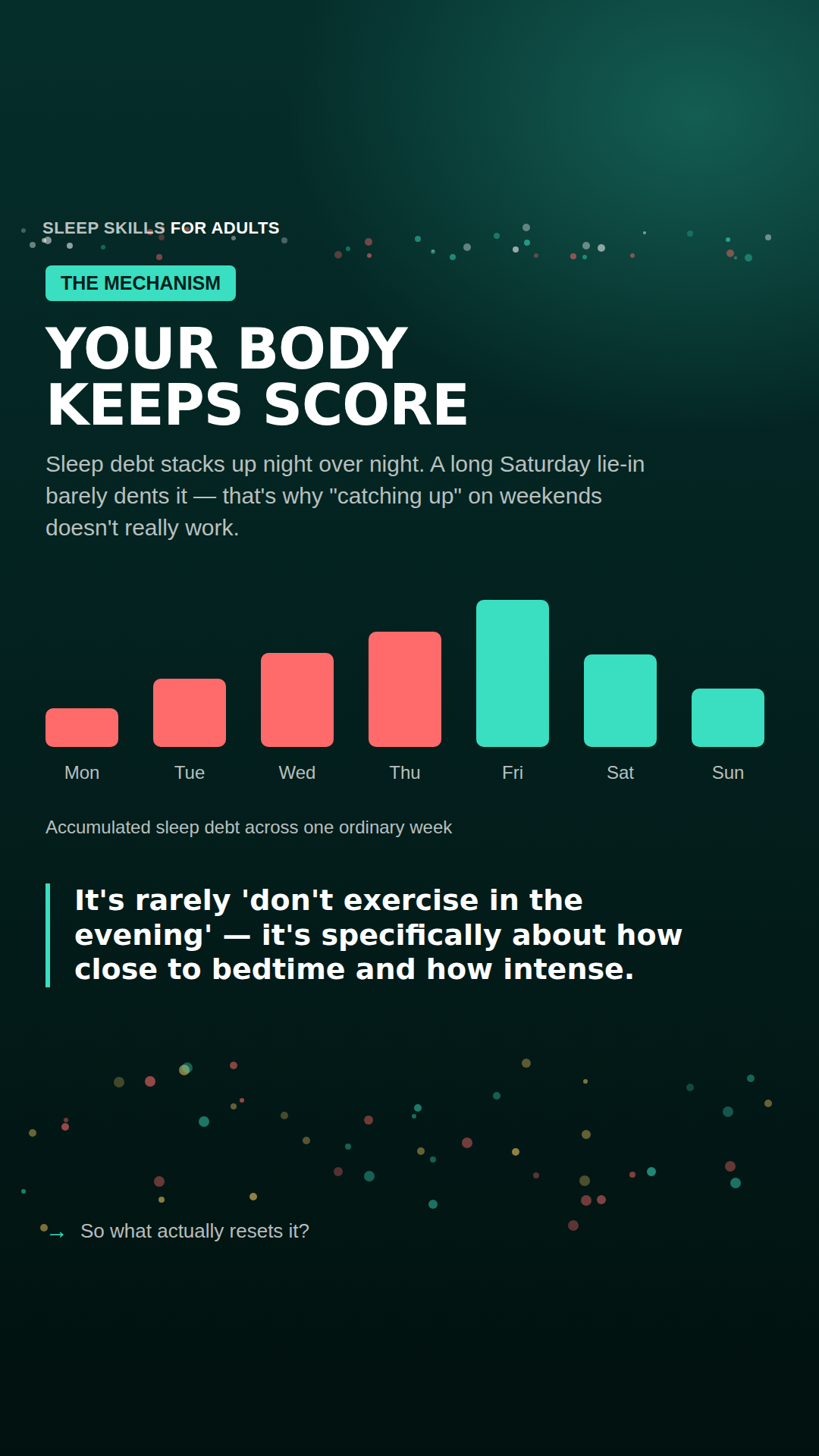
Your Body Keeps Score
Sleep debt stacks up night over night. A long Saturday lie-in barely dents it — that's why "catching up" on weekends doesn't really work.
It's rarely 'don't exercise in the evening' — it's specifically about how close to bedtime and how intense.
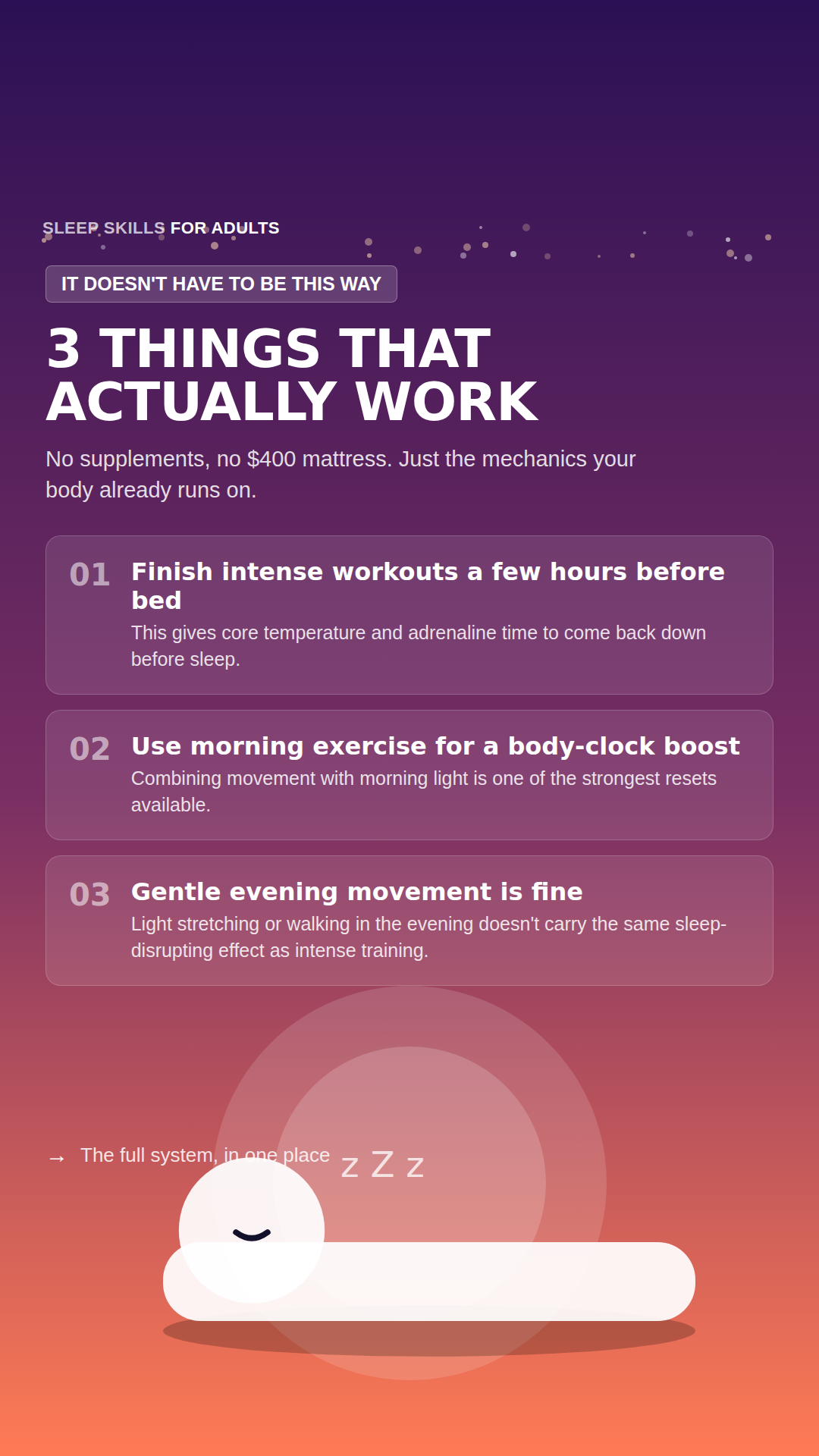
3 Things That Actually Work
- Finish intense workouts a few hours before bed — This gives core temperature and adrenaline time to come back down before sleep.
- Use morning exercise for a body-clock boost — Combining movement with morning light is one of the strongest resets available.
- Gentle evening movement is fine — Light stretching or walking in the evening doesn't carry the same sleep-disrupting effect as intense training.
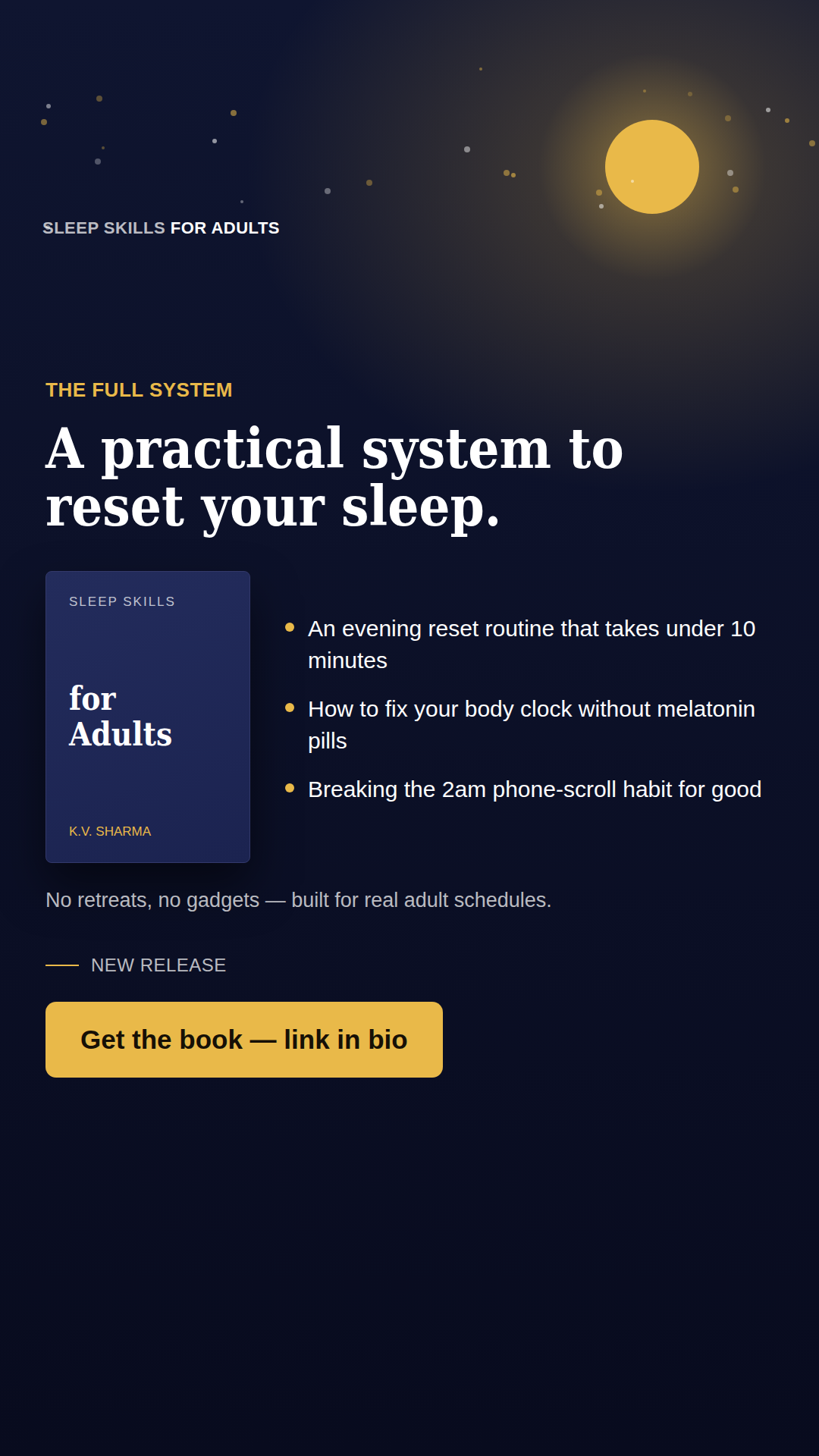
A Practical System to Reset Your Sleep
Sleep Skills for Adults — no retreats, no gadgets, built for real adult schedules. Inside:
- An evening reset routine that takes under 10 minutes
- How to fix your body clock without melatonin pills
- Breaking the 2am phone-scroll habit for good